We have been fans of Lincrusta for many years and Frank is an Approved Lincrusta Installer & Restorer based in north west England – just a couple of miles for where Lincrusta continues to be manufactured in Morecambe!
In our work we are often asked similar questions over and again so we decided that it’s time we publish our most Frequently Asked Questions for all to read.
- What is Lincrusta?
- What is the difference between Lincrusta and Anaglypta?
- Can Lincrusta be painted?
- There’s some damage to my Lincrusta dado. Is this design still available?
- My Lincrusta frieze is water damaged, can it be restored?
- We blocked up a doorway. Is it possible to extend my Victorian Lincrusta dado panelling?
- Why employ an Approved Lincrusta Installer?
We hope our answers about Lincrusta and Anaglypta will help to inform your choices when renovating or decorating your homes and commercial spaces.
Q. What is Lincrusta?
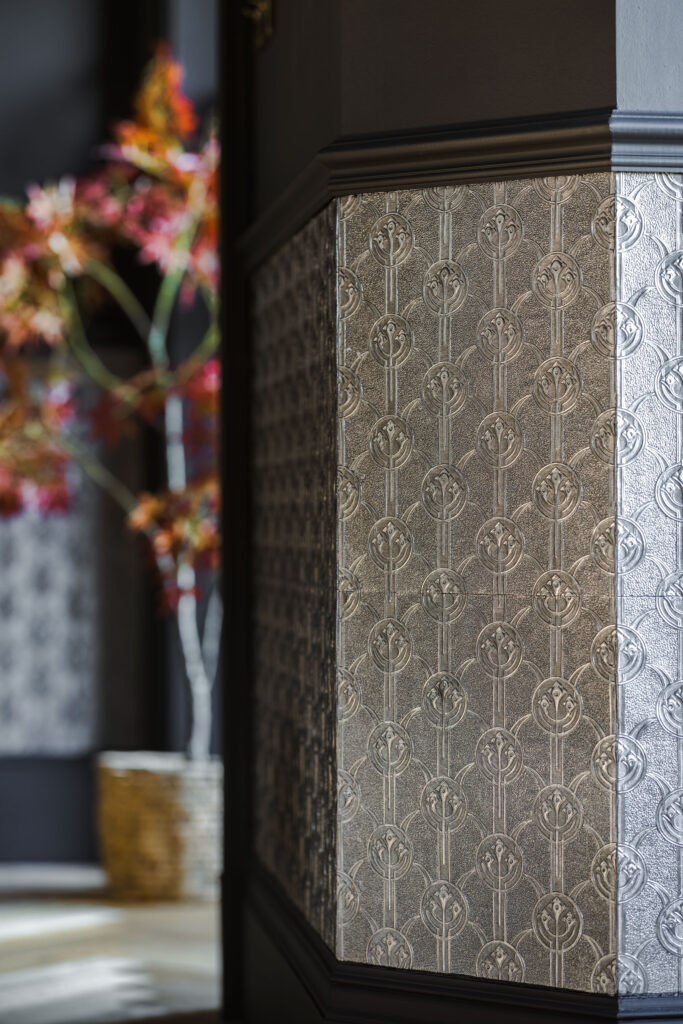
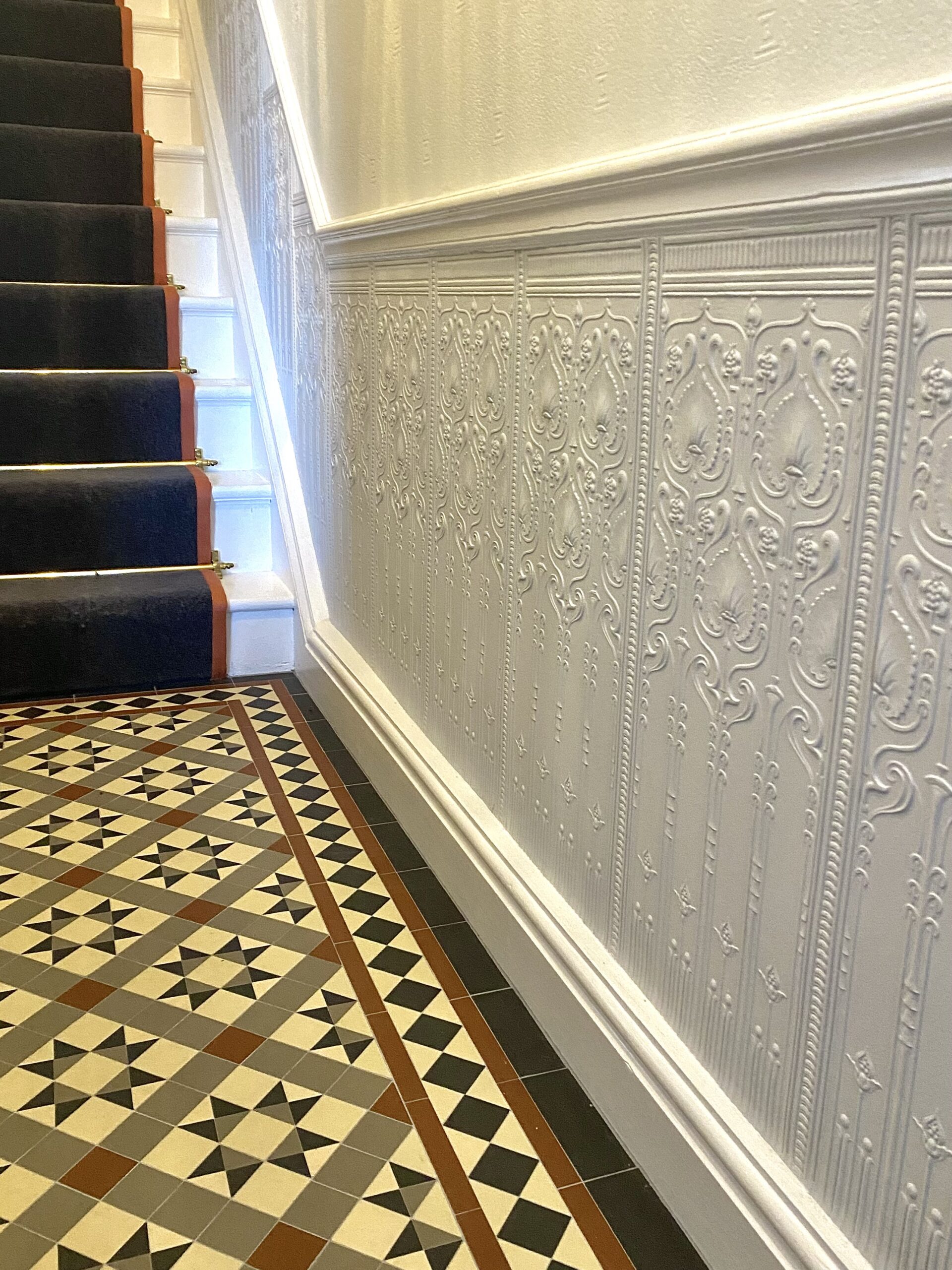
Lincrusta textured wallcoverings have been around since 1877 and are made from natural ingredients – a Linseed-based paste pressed onto a backing paper. Lincrusta is available in a range of classic and contemporary designs and currently manufactured in Morecambe, Lancashire, using the same traditional methods. Lincrusta is both water resistant and fire retardant, making it a durable and versatile solution for decorating any room. Available in 10m rolls.
Q. What is the difference between Lincrusta and Anaglypta?
Lincrusta relief wallpaper is solid all the way through to the backing paper. Lincrusta is washable and cures with age making it much more durable than Anaglypta. Anaglypta is an embossed paper pulp, which is hollow and easily flattened when pressed.
Identifying which is which.
Frank’s simple TOP TIP to tell the difference:
- Tap the raised relief with your fingernail. If your paper is Anaglypta it will sound hollow compared to tapping the flat area of the pattern. Alternatively, try pressing the raised relief with your thumbnail or a pin in an inconspicuous area to check it if is solid or hollow.
Q. Can Lincrusta be painted?
As Lincrusta ages, it also cures/hardens, making it extremely durable, lasting for years to come. That is why you see many installations in period homes still wearing well today. Lincrusta once installed and primed, can be painted in any finish to suit your interior style and personal taste. Add optional decorative finishes to create your own unique backdrop. Just re-paint it for a fresh new look!
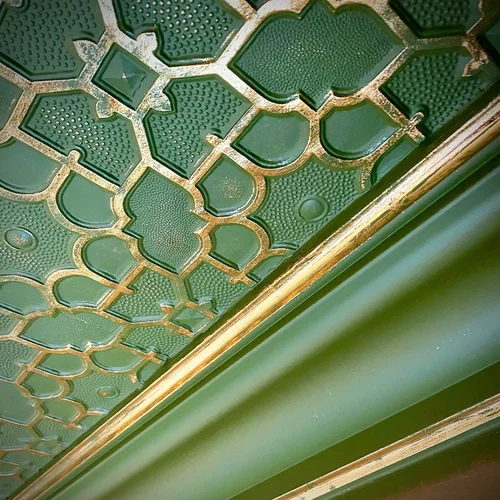
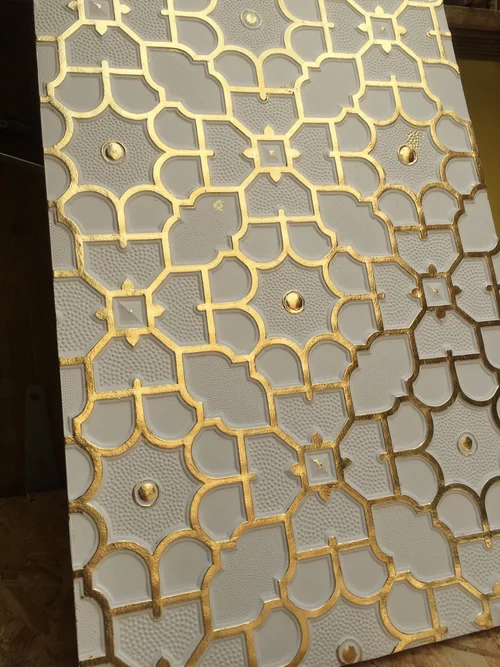
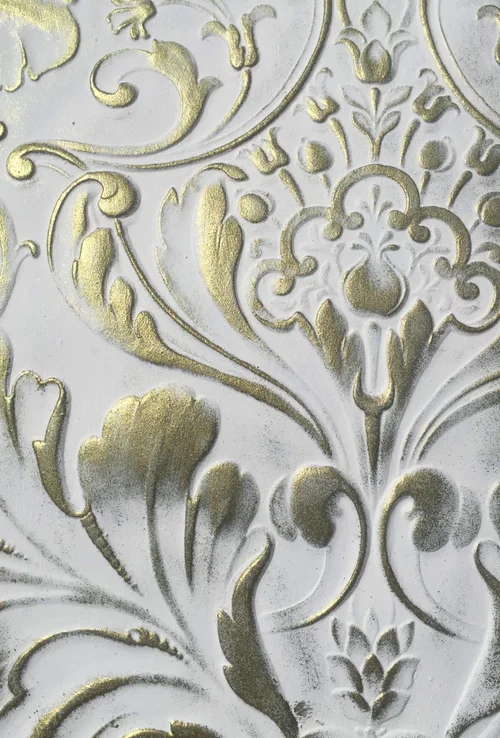
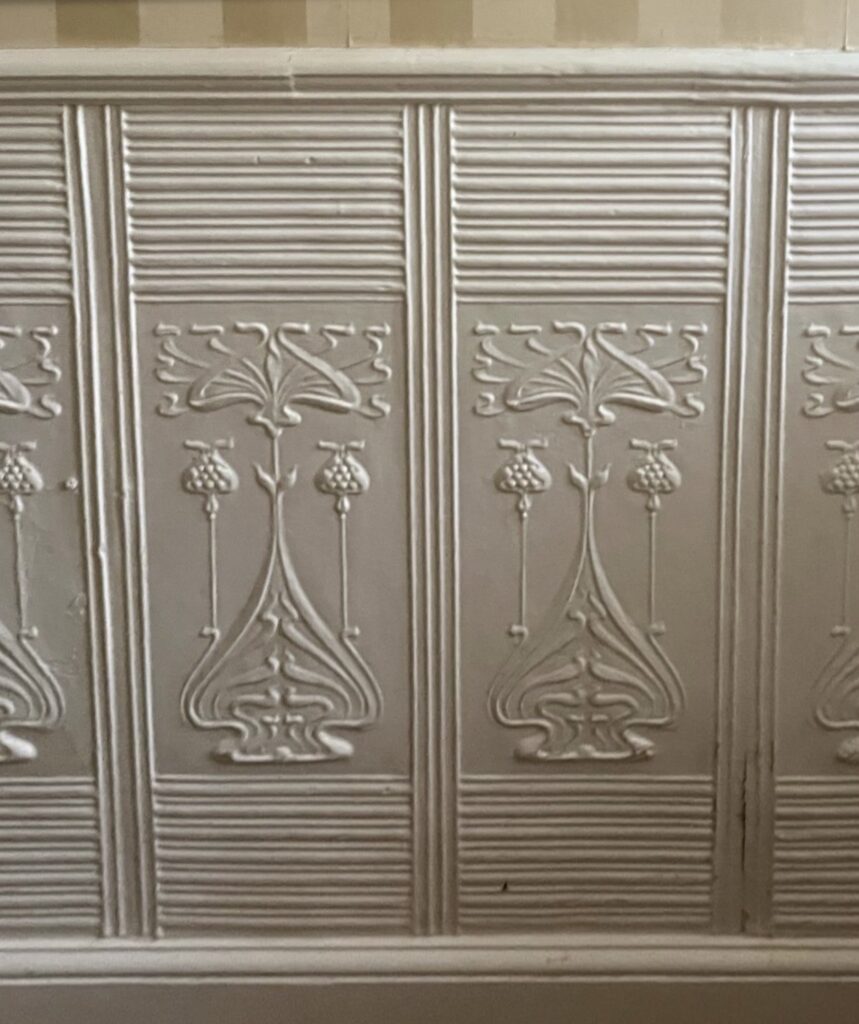
Q. There’s some damage to my Lincrusta/Anaglypta dado. Is this design still available?
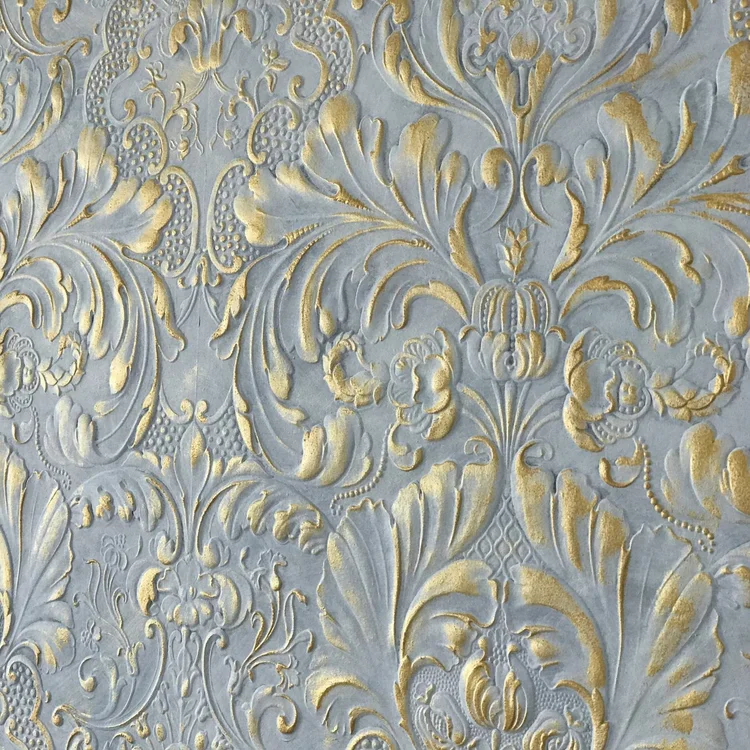
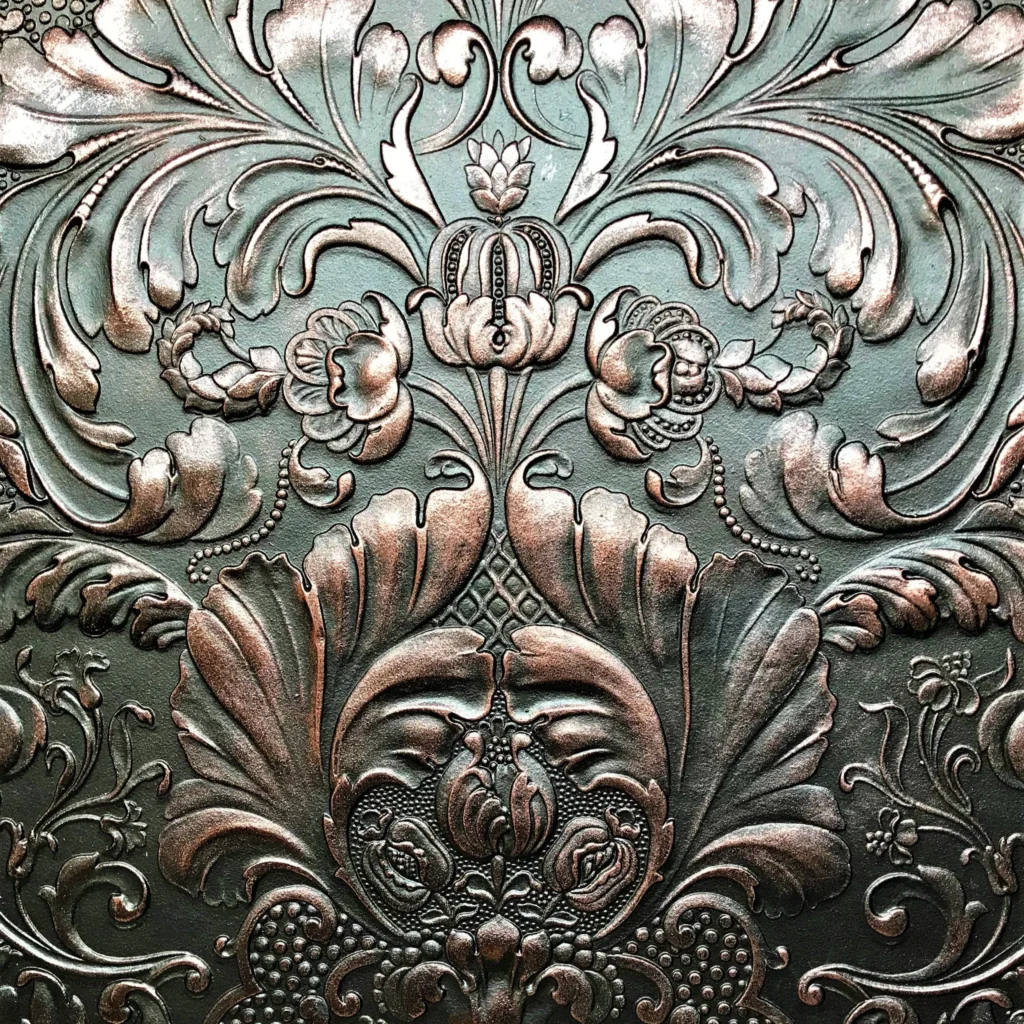
How old is your property? Many of the pre-1939 production rollers were melted down for the war effort, which means those period designs are now out of production. But, don’t worry – if you have a period property with a vintage Lincrusta or Anaglypta design in need of repairs – we have a solution!
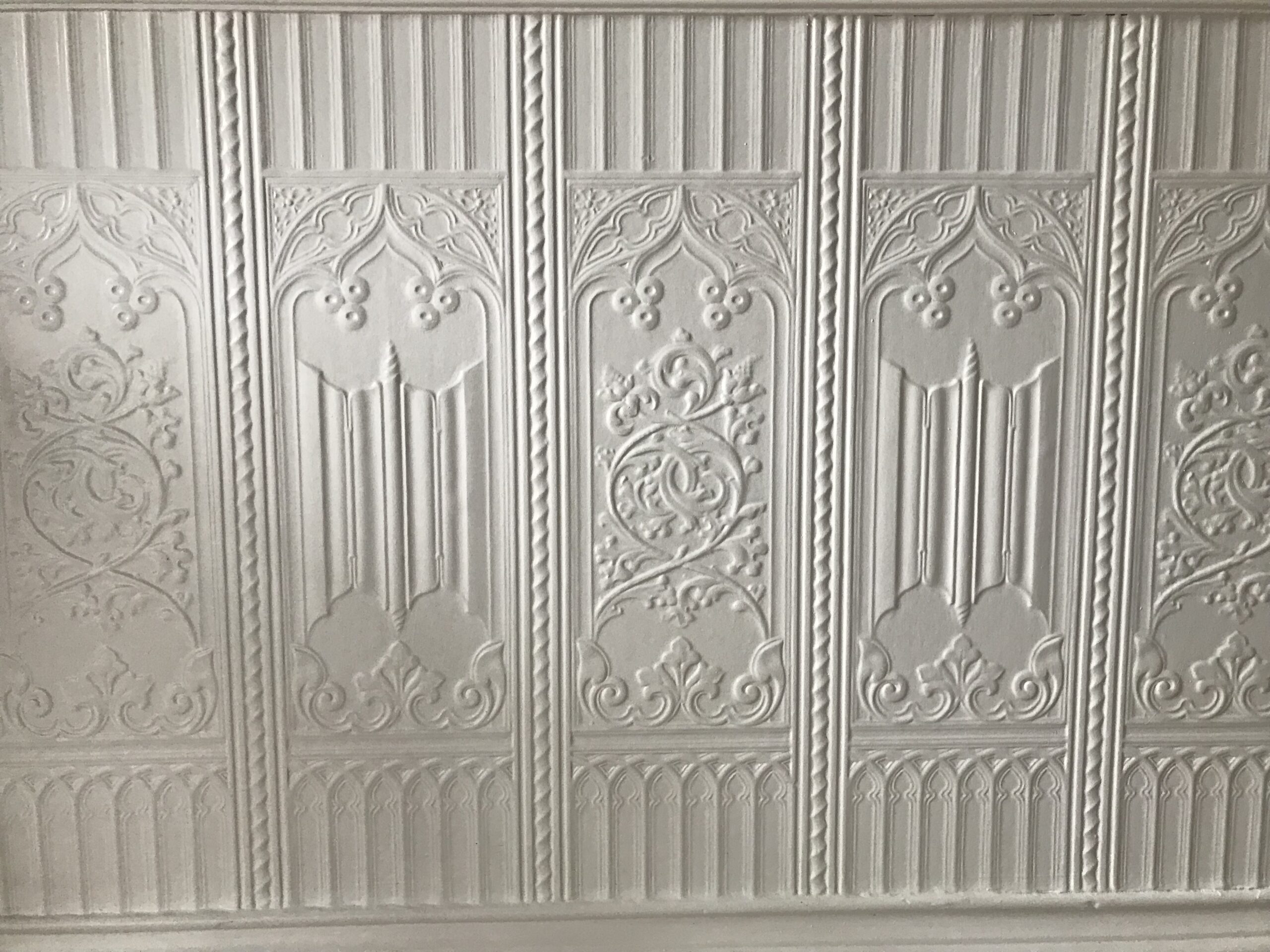
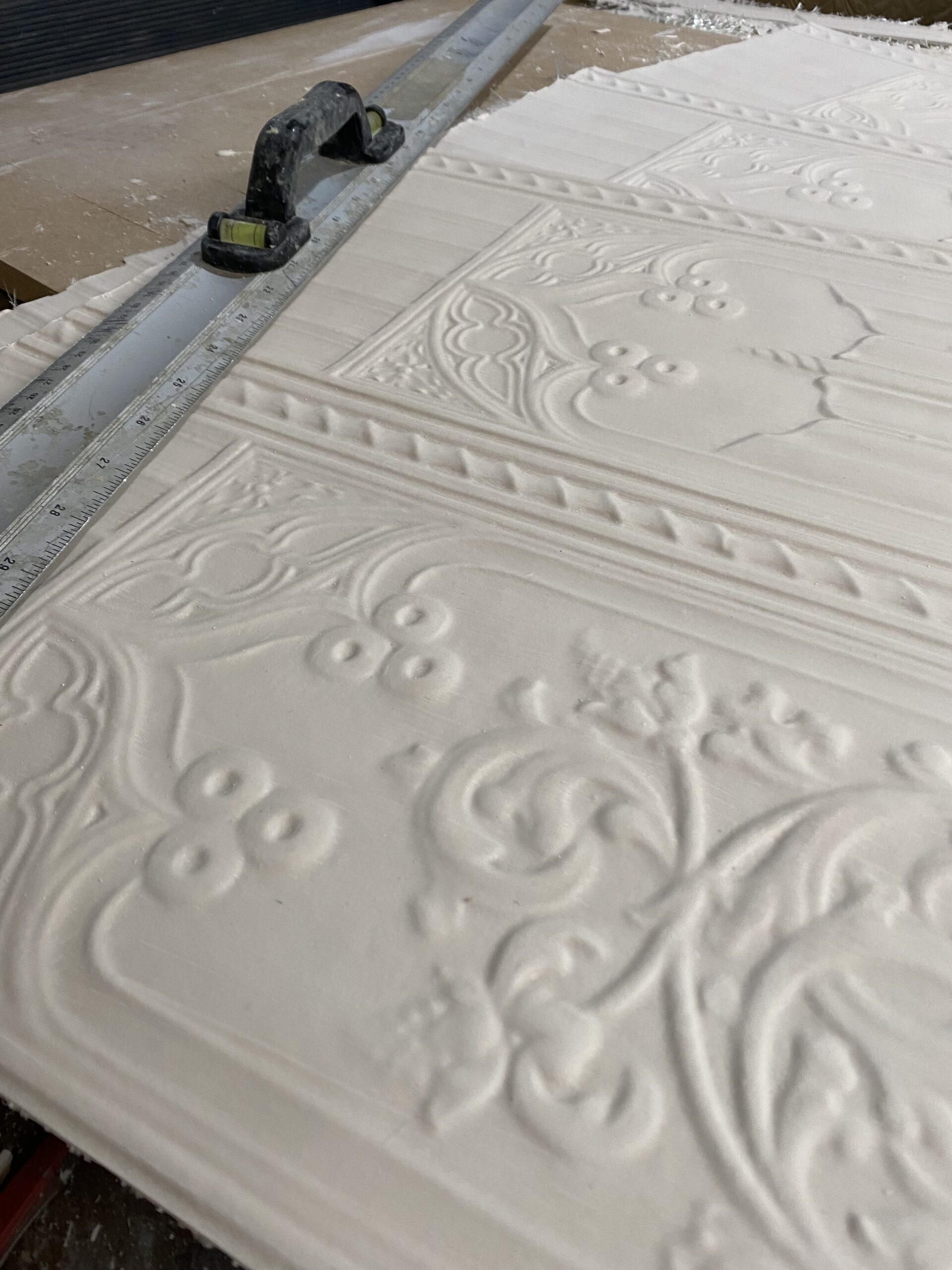
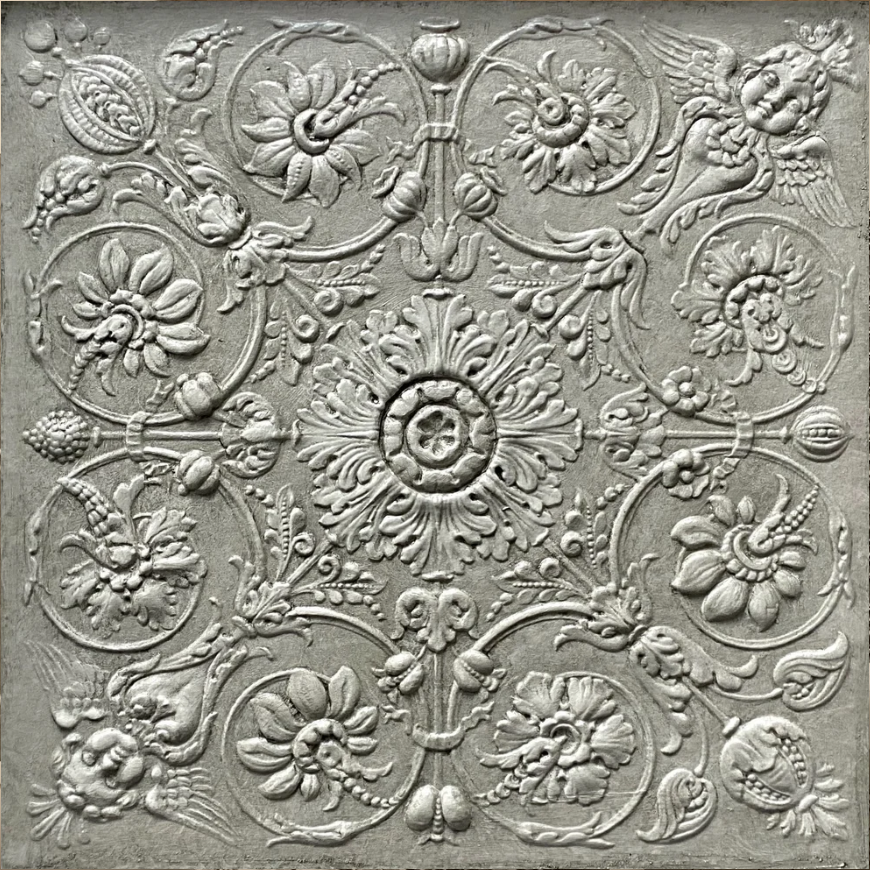
The Lincrusta Restoration Kit was developed specifically for restoring beautiful old designs like the one above. This method is also suitable for restoring heritage Anaglypta and other similar relief wallpapers that came to market from the 1870’s to 1900. Frank can make a mould from a good area, enabling him to replicate additional panels as needed for a sympathetic restoration of dados, friezes, wallpaper and ceilings.
Lincrusta and Anaglypta have a partly shared company history. Through our work we love to learn more about the history and designers behind these wonderful old wallpapers. We wanted to share our discoveries to inspire new generations of Victorian, Edwardian and Georgian homeowners and to help care for these treasures for generations to come.
Read our Lincrusta and Anaglpyta History discover which came first and how they are related.
We have access to both company archives, plus our own growing collection, which helps us to identify designs we are asked to to repair and restore.
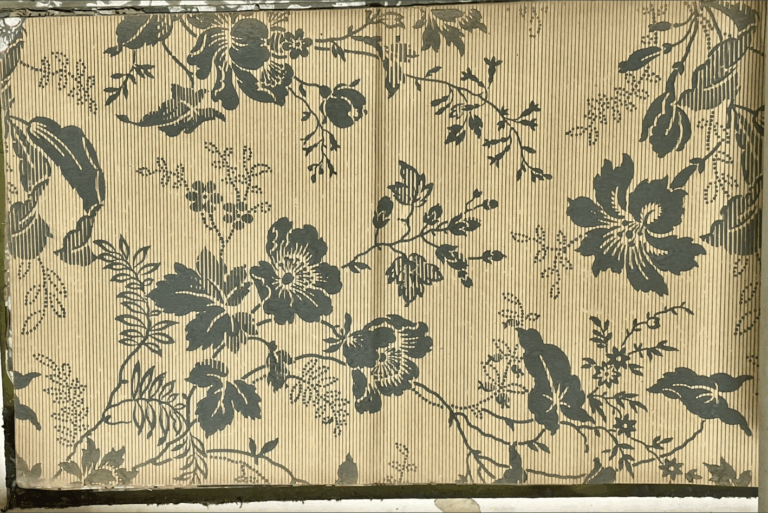
Looking for something unique, not on the high street? We take special commissions to reproduce rare vintage designs from our archive collection spanning the late Victorian, Art Nouveau, Edwardian and Art Deco styles. See more in our Heritage collection.