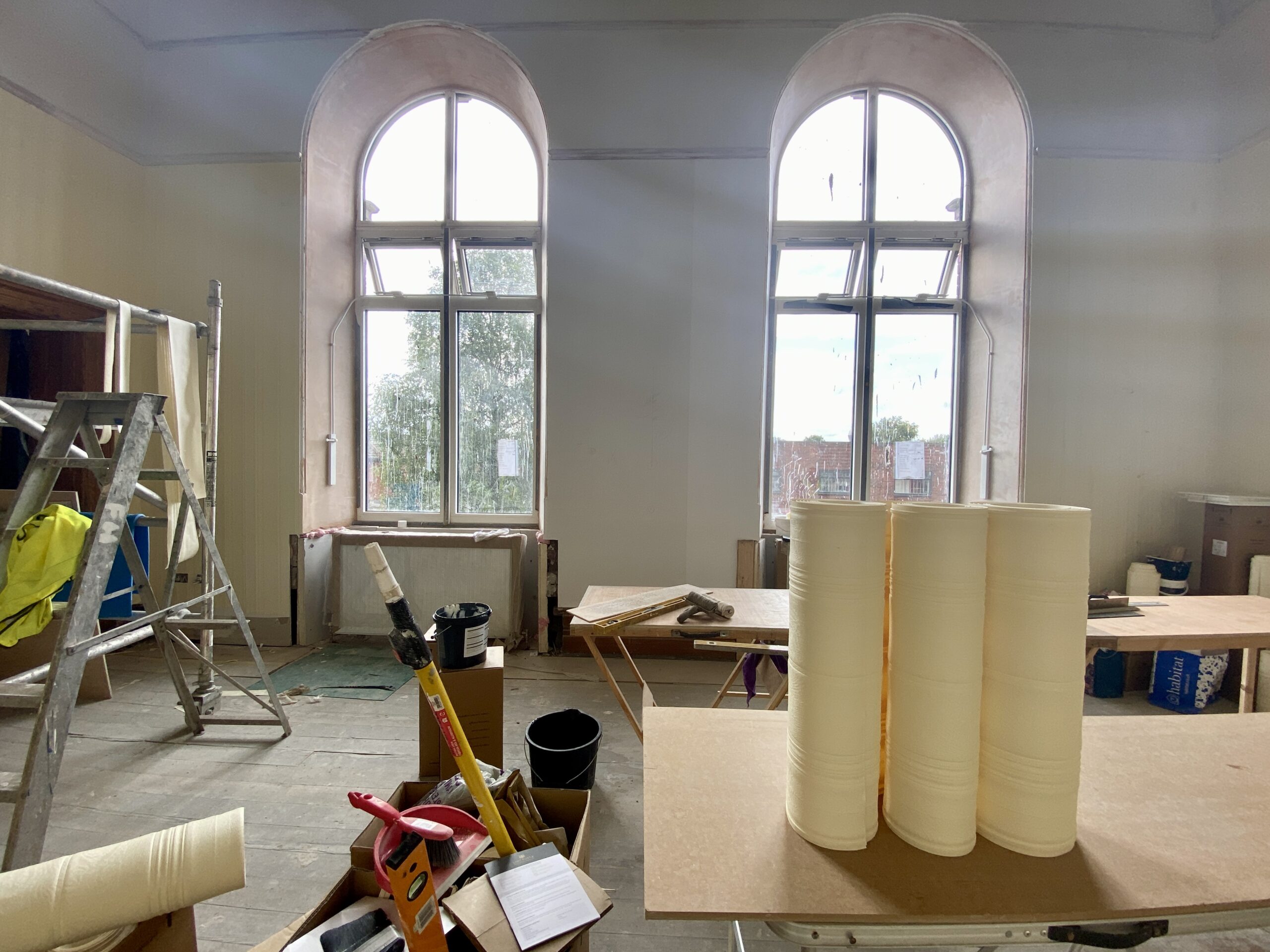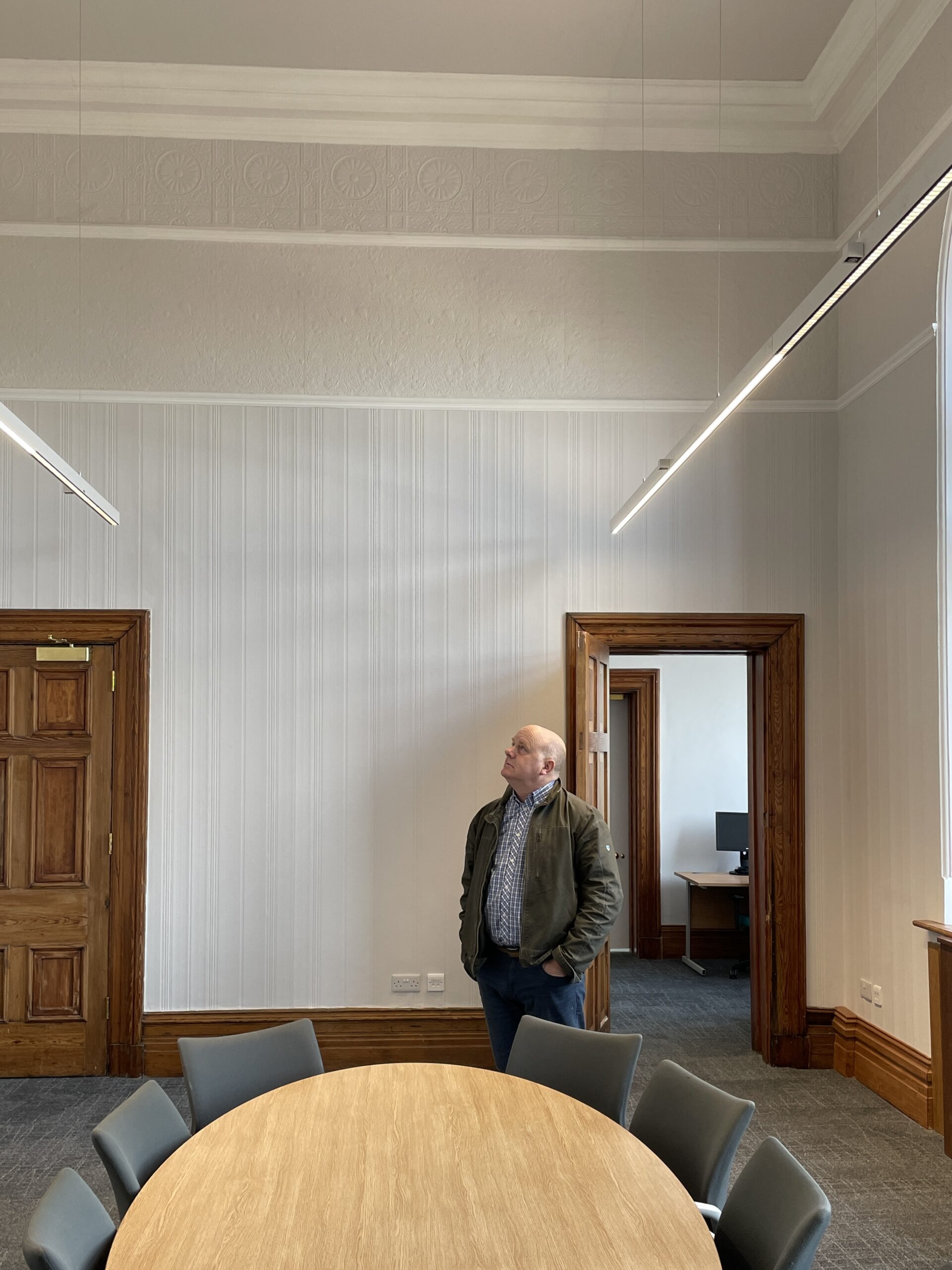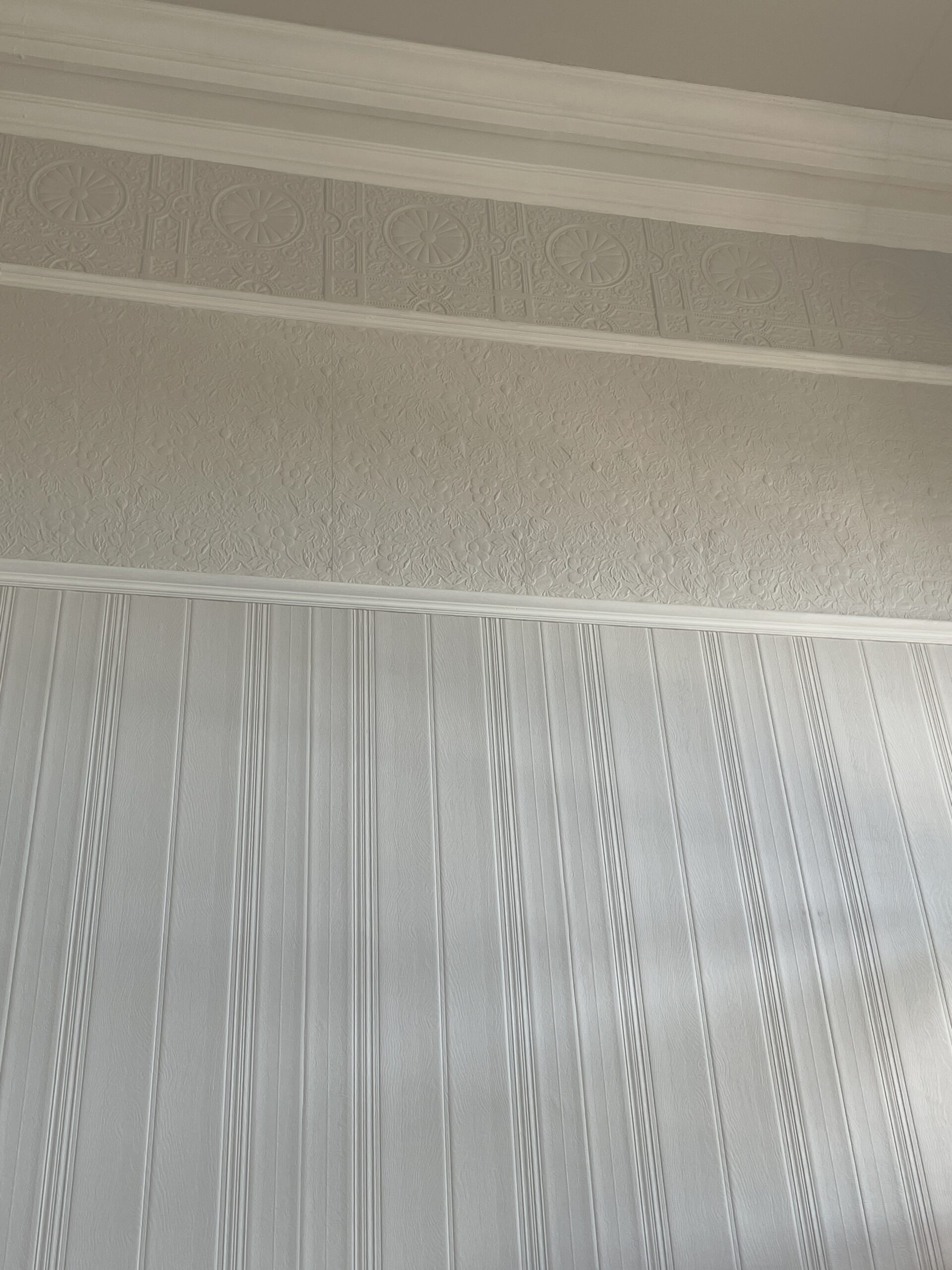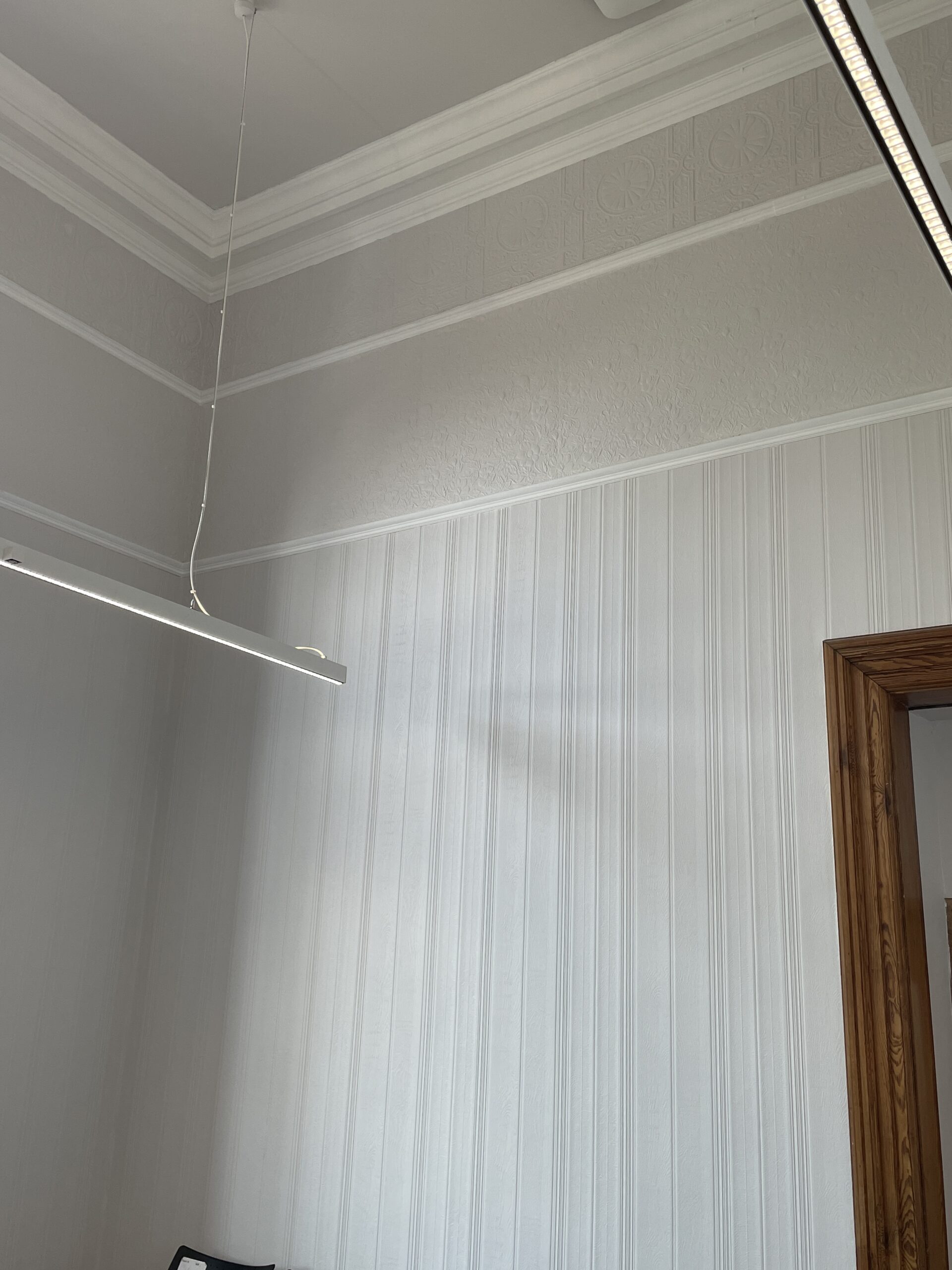
We love the variety of work and scale of the projects from our commerial clients, where we can work collaboratively to bring these magnificent historic spaces back to life. For an example of our commercial restoration work, please see below.
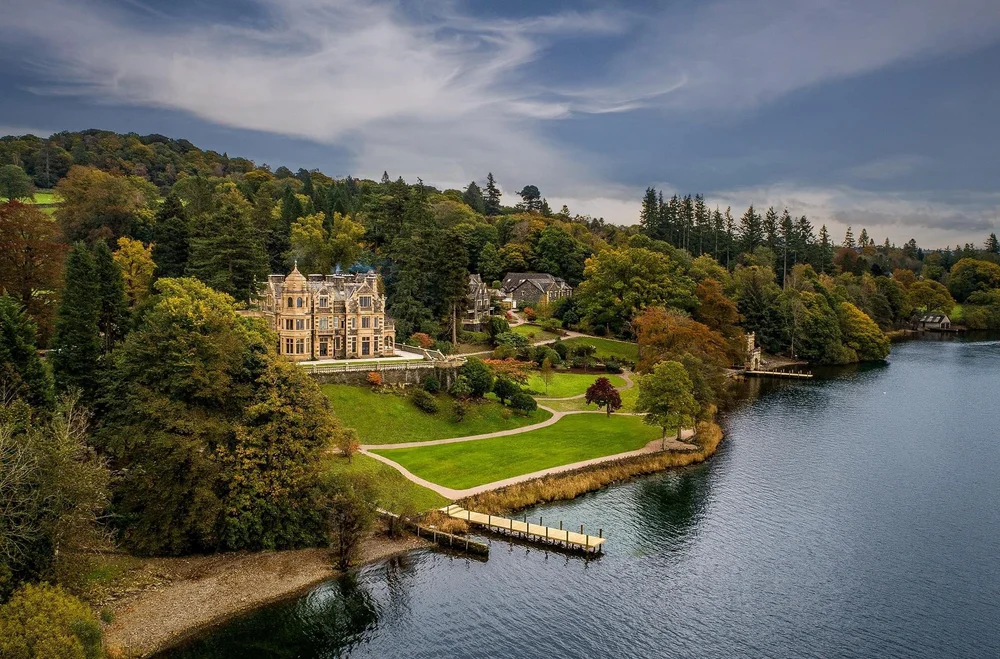
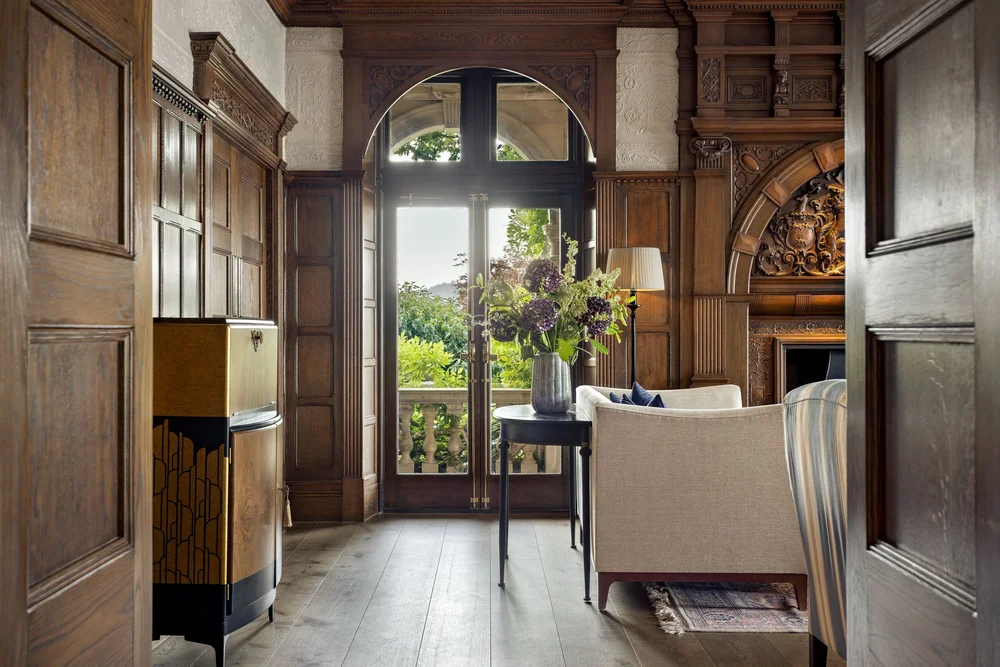
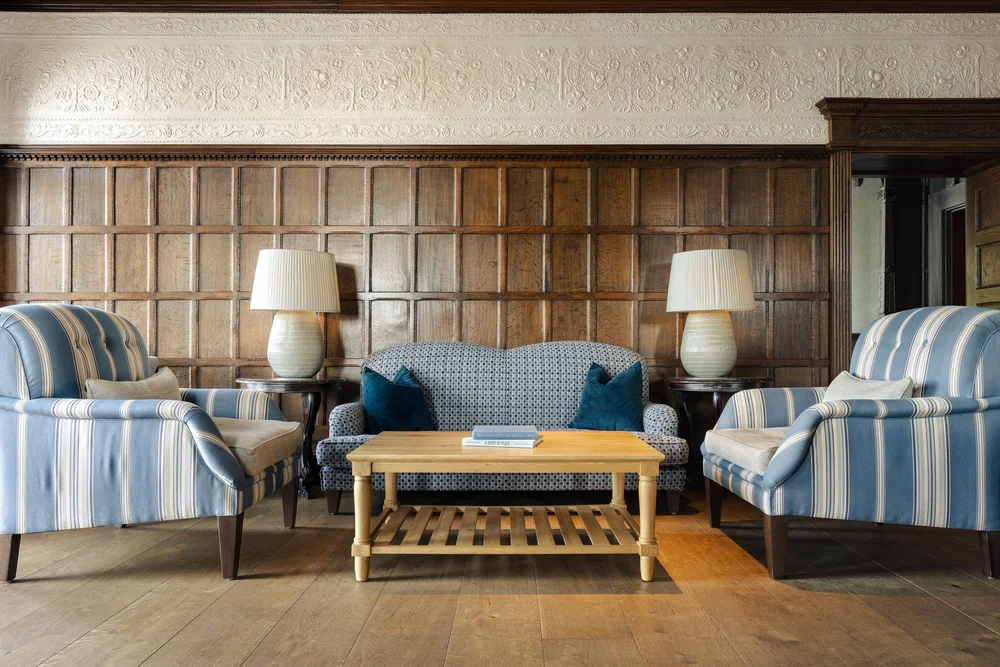
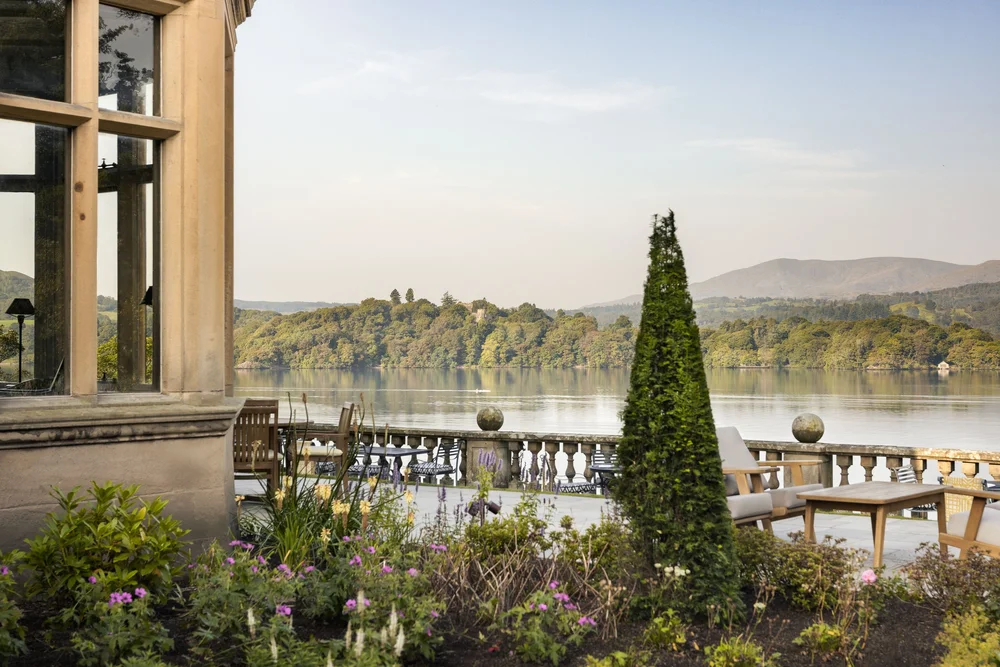
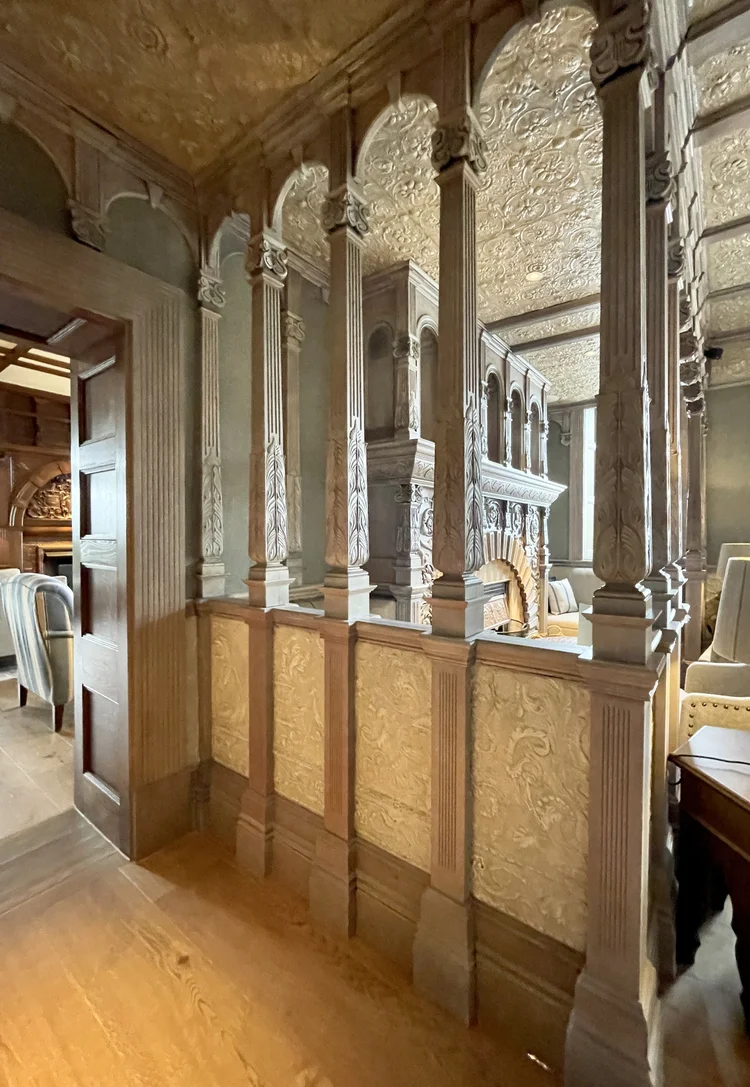
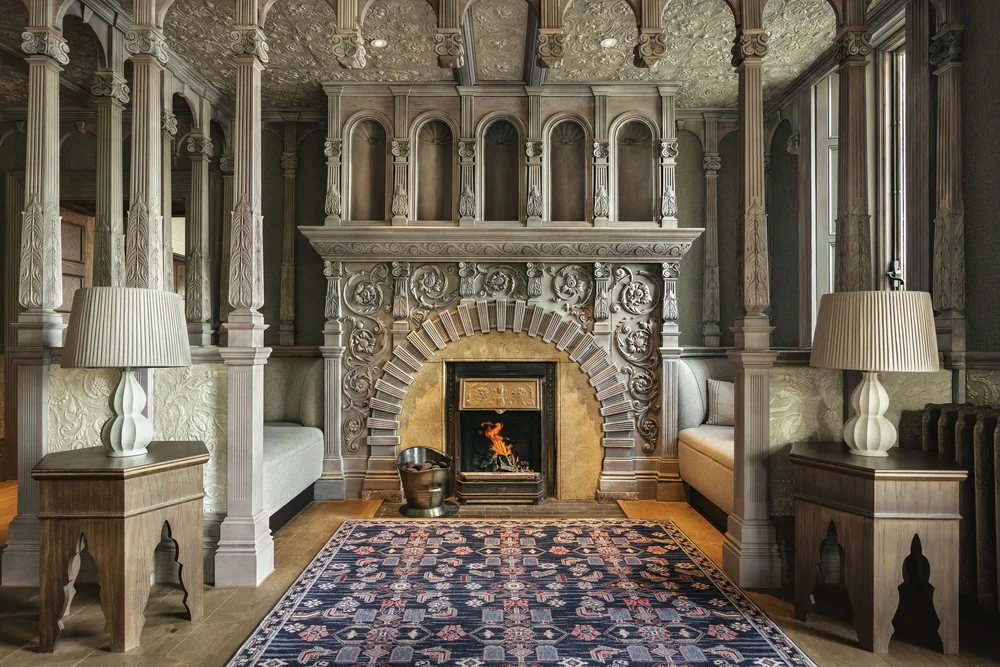
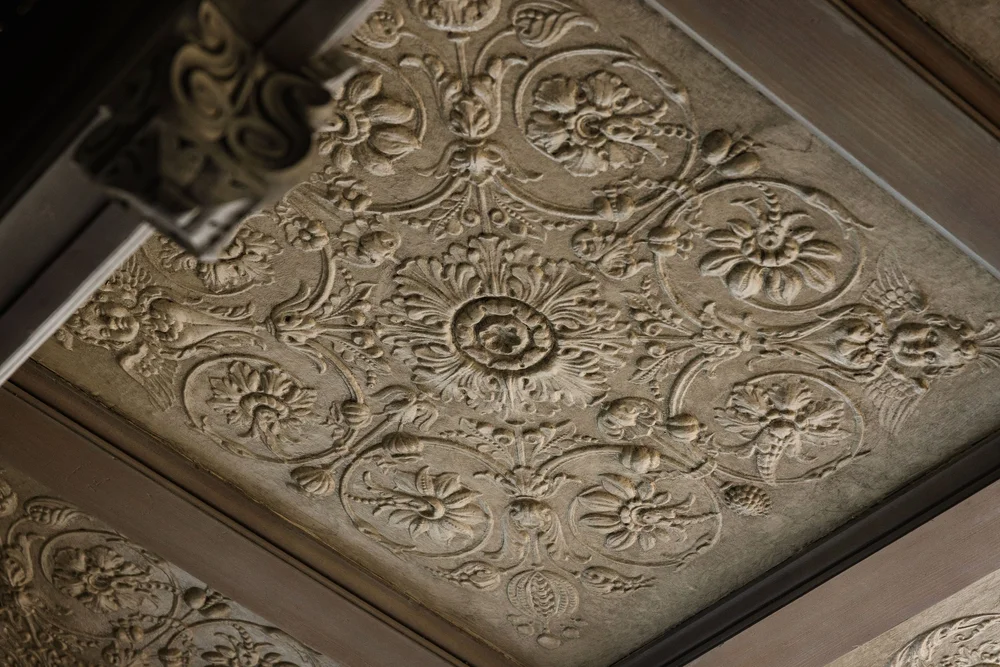
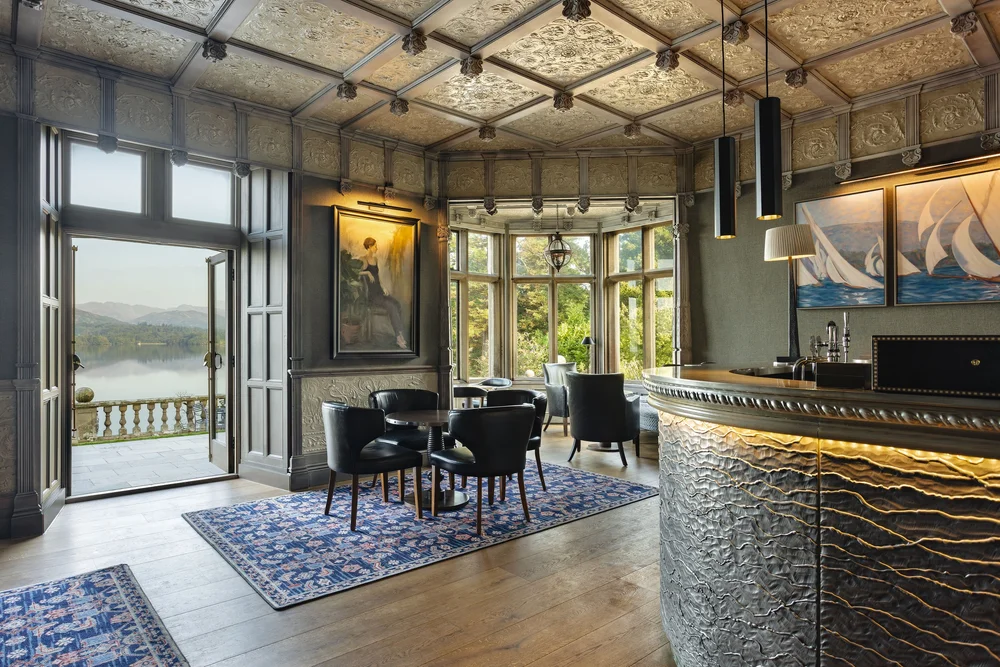
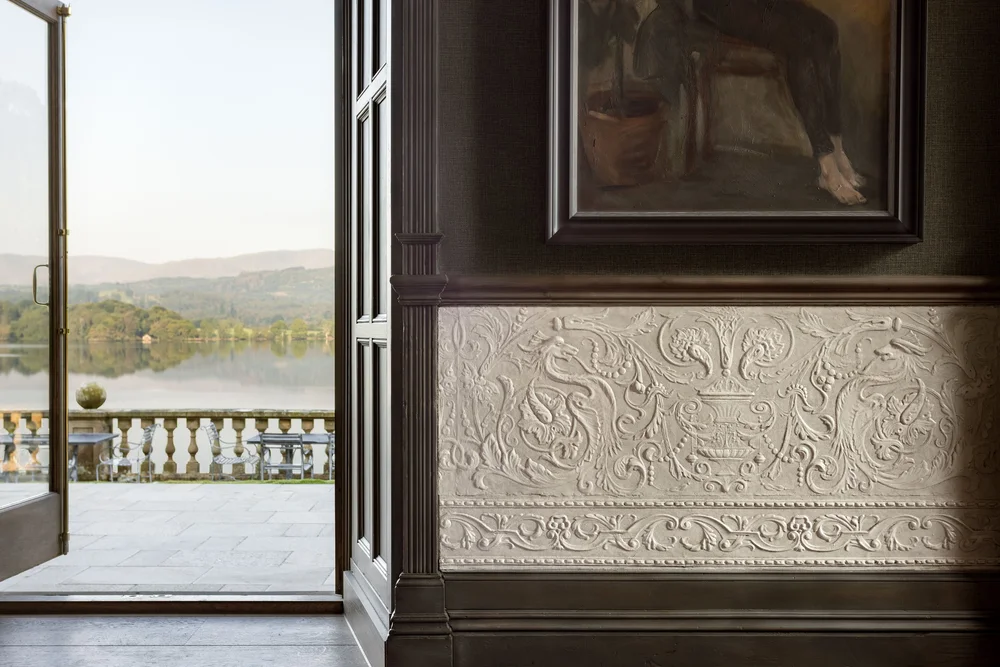
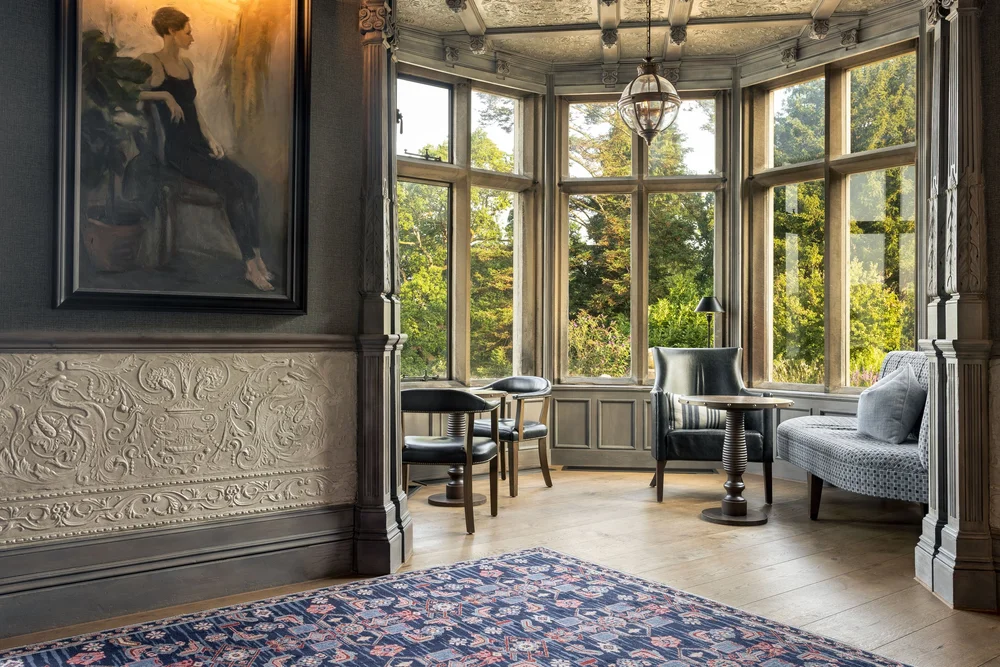
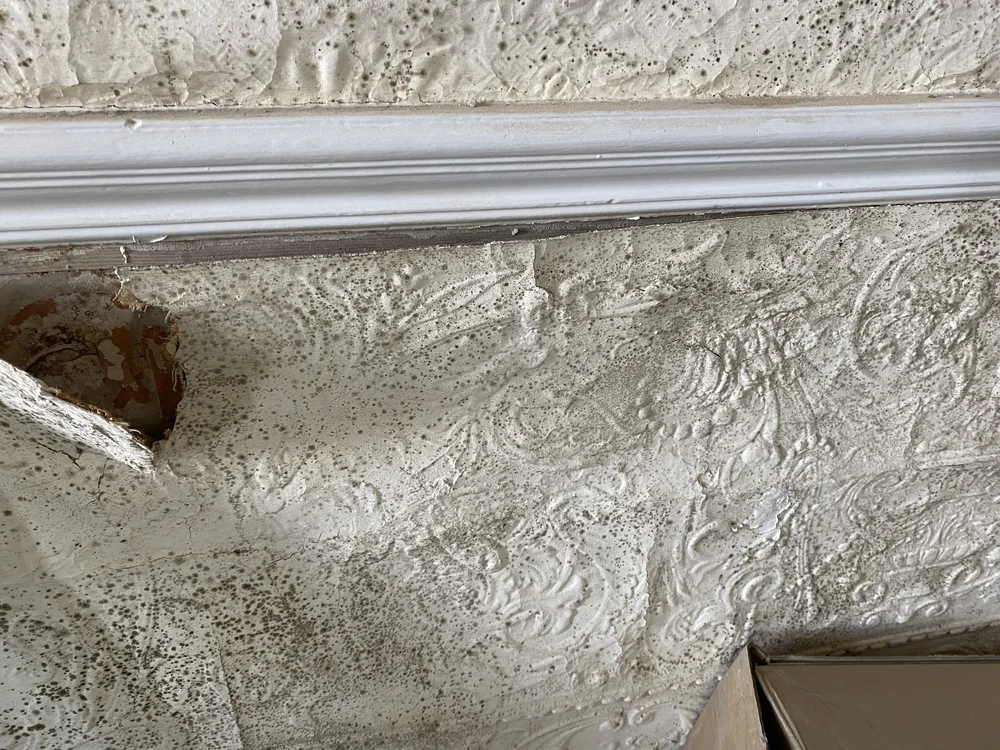
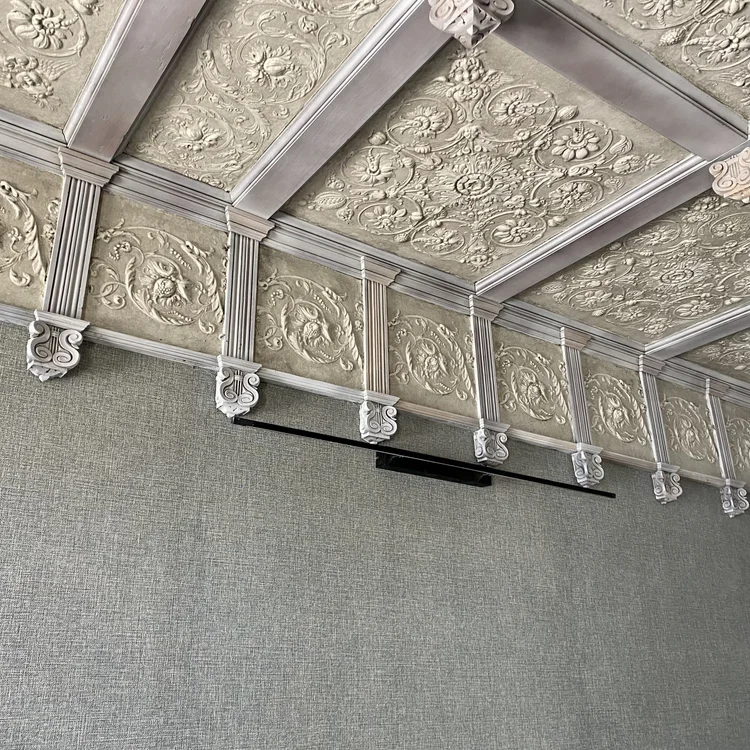
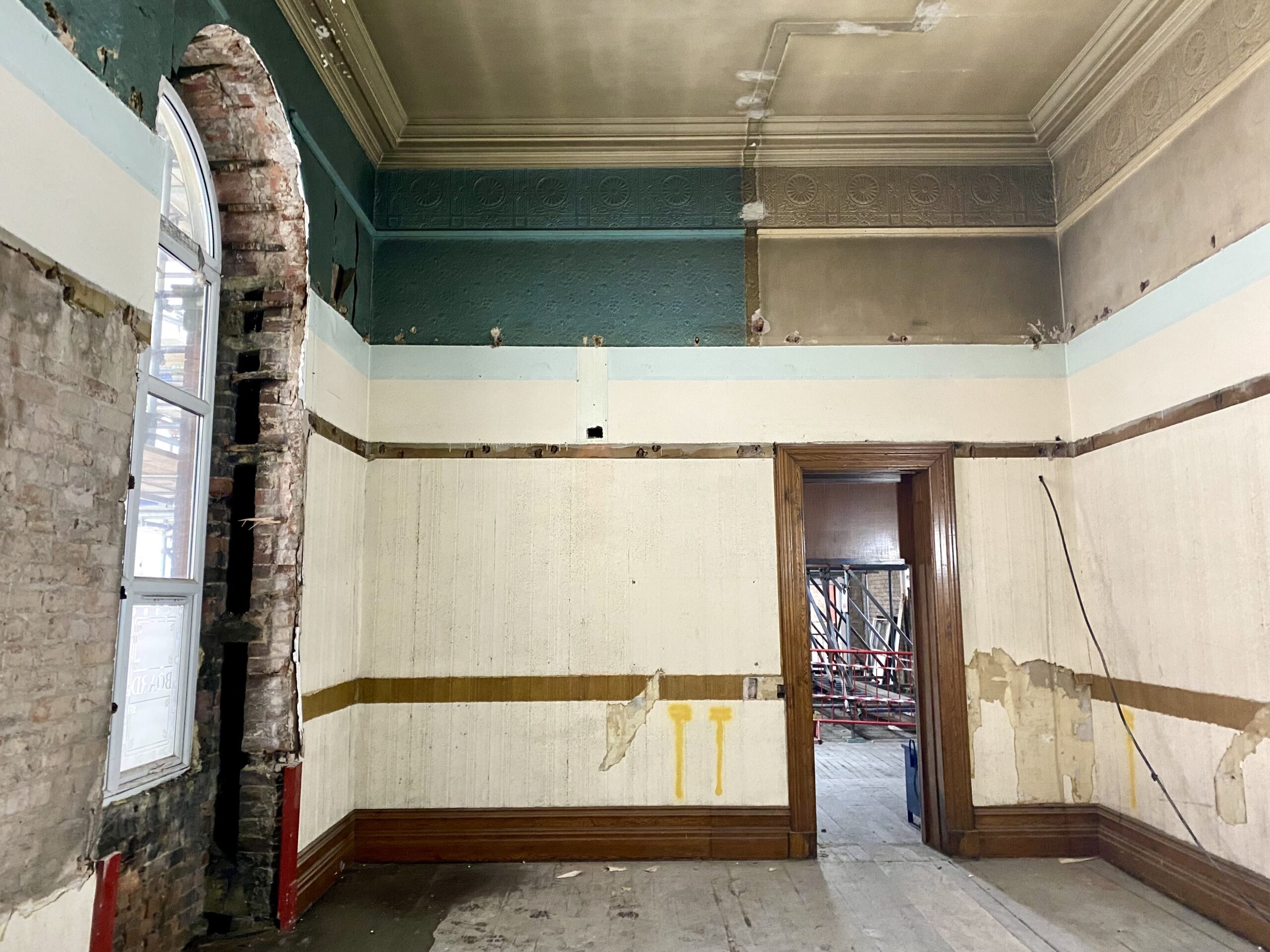
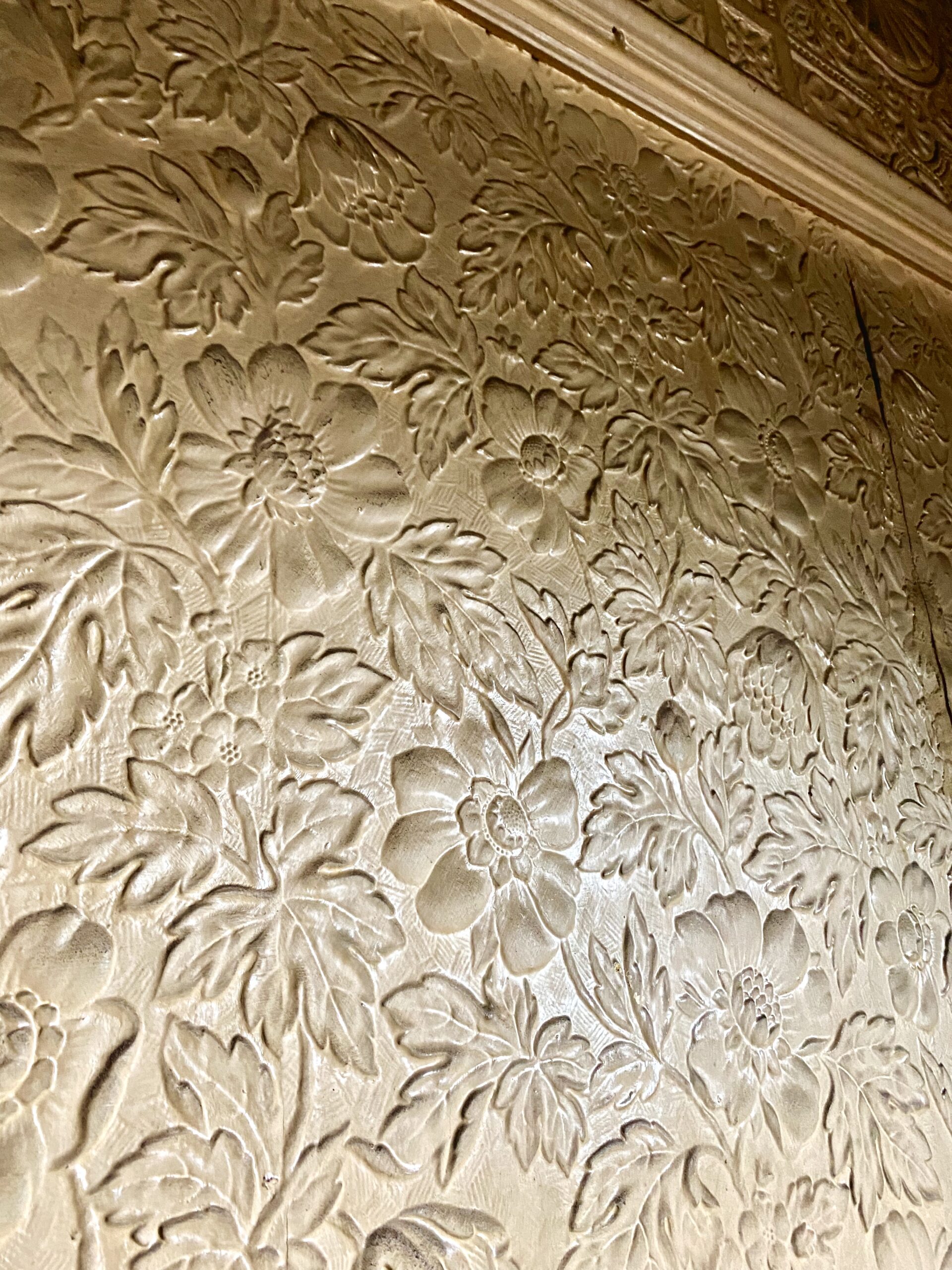
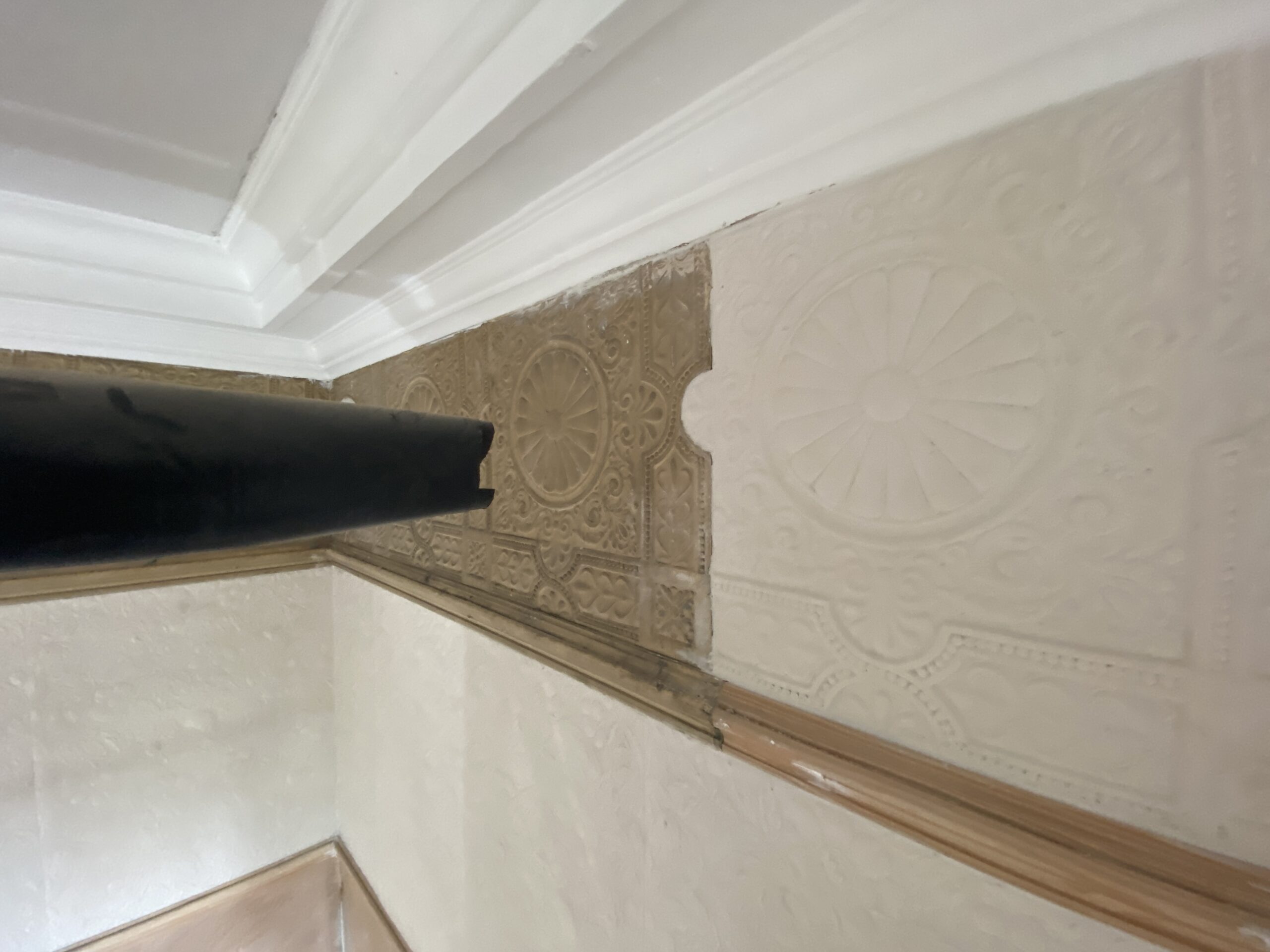
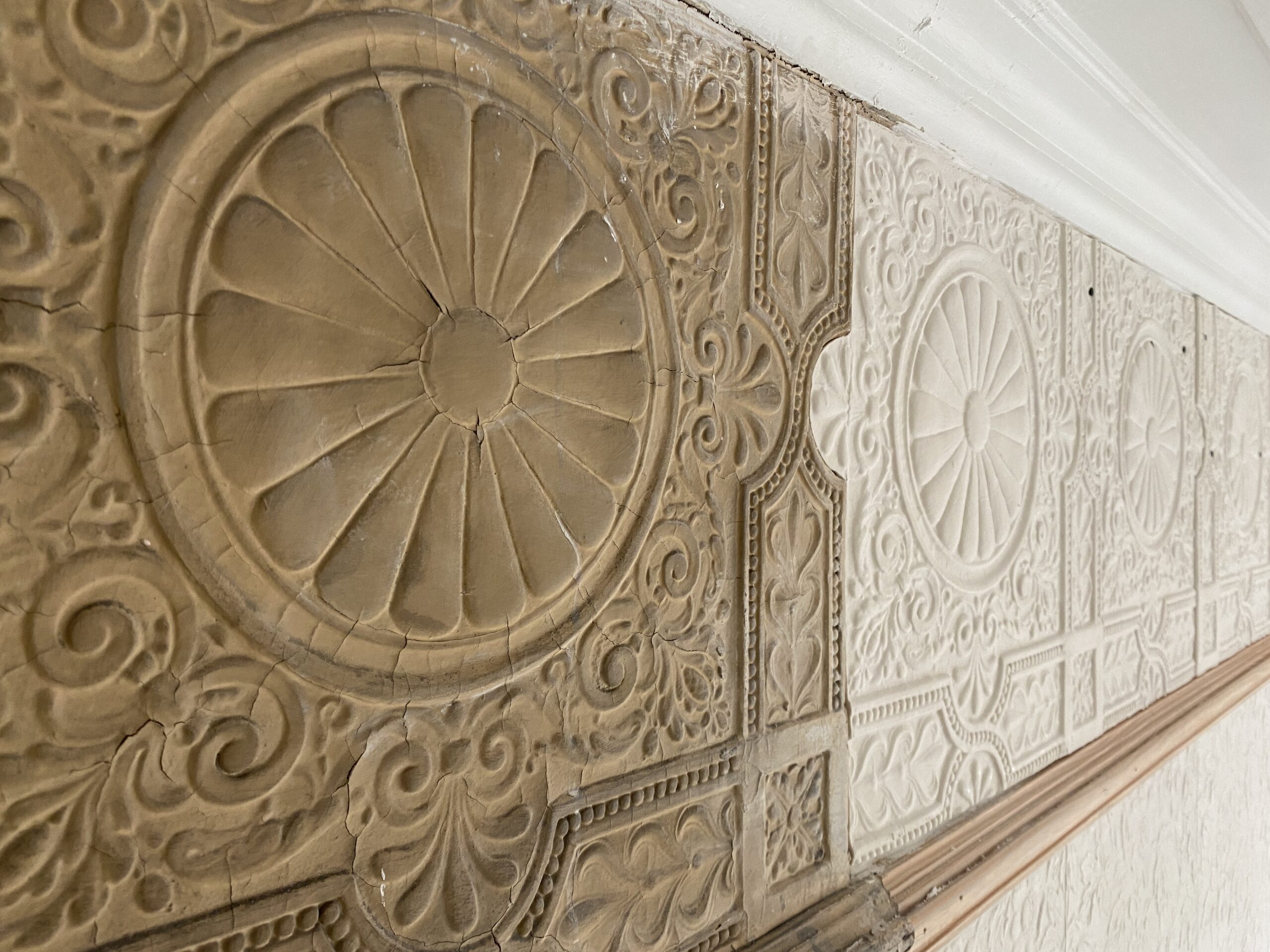
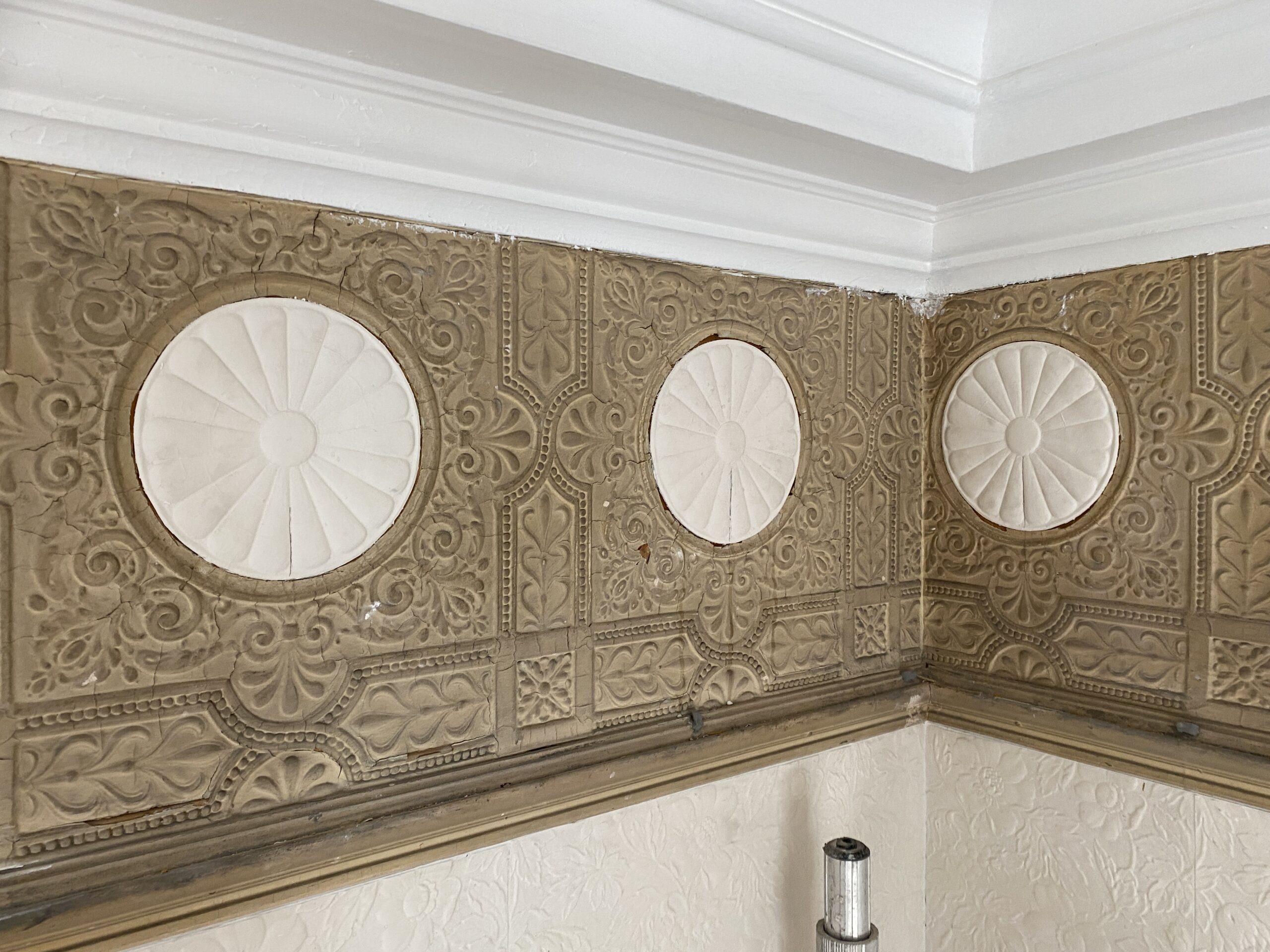
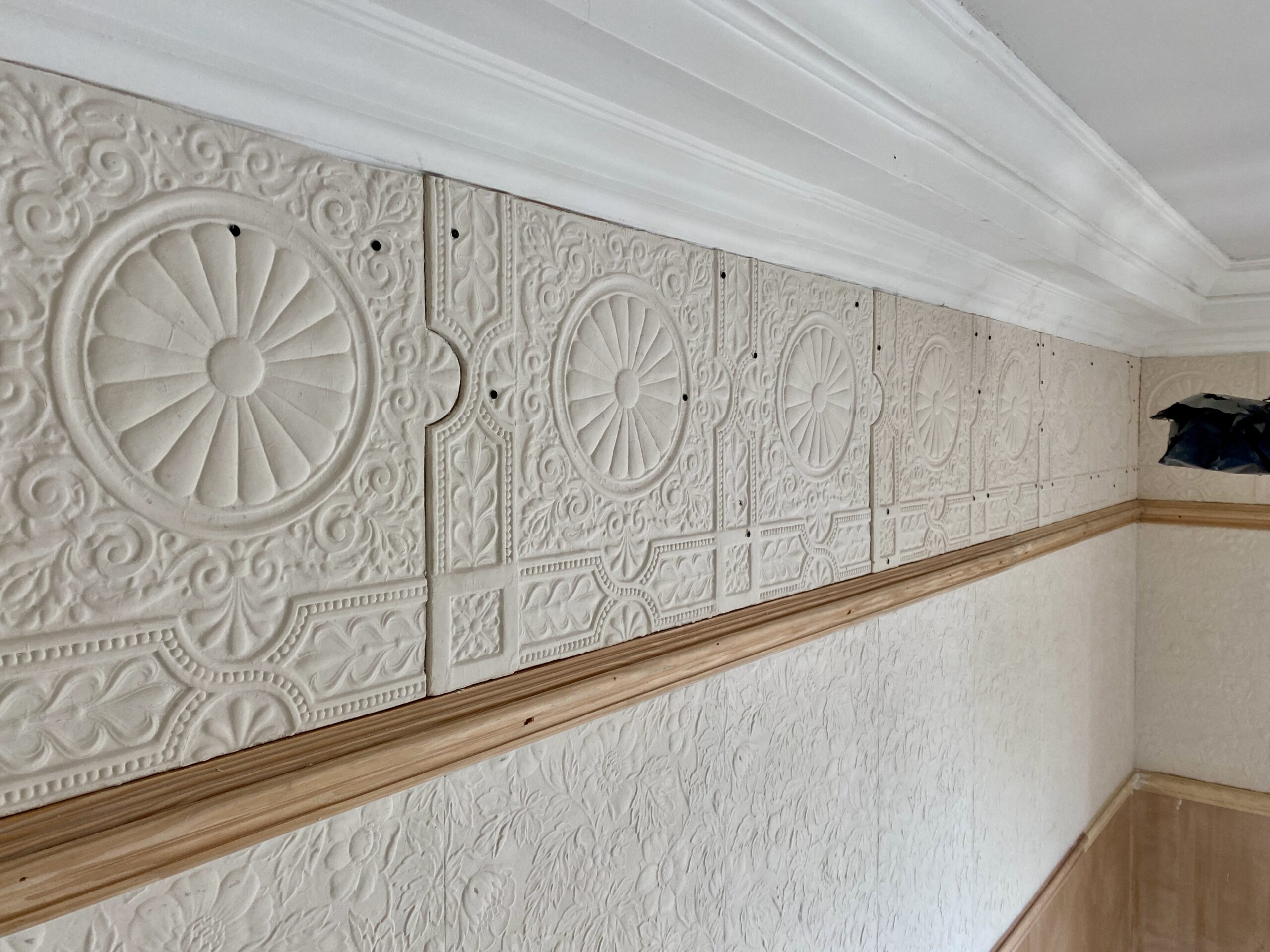
The Langdale Chase Hotel sits in an enviable position on the shores of Lake Windermere. Following a multi-million pound refurbishment the hotel reopened its doors to guests in November ‘23. Frank was privileged to play a small part in its continuing evolution when he was asked to restore and refinish what was thought to be Lincrusta in the lounges.
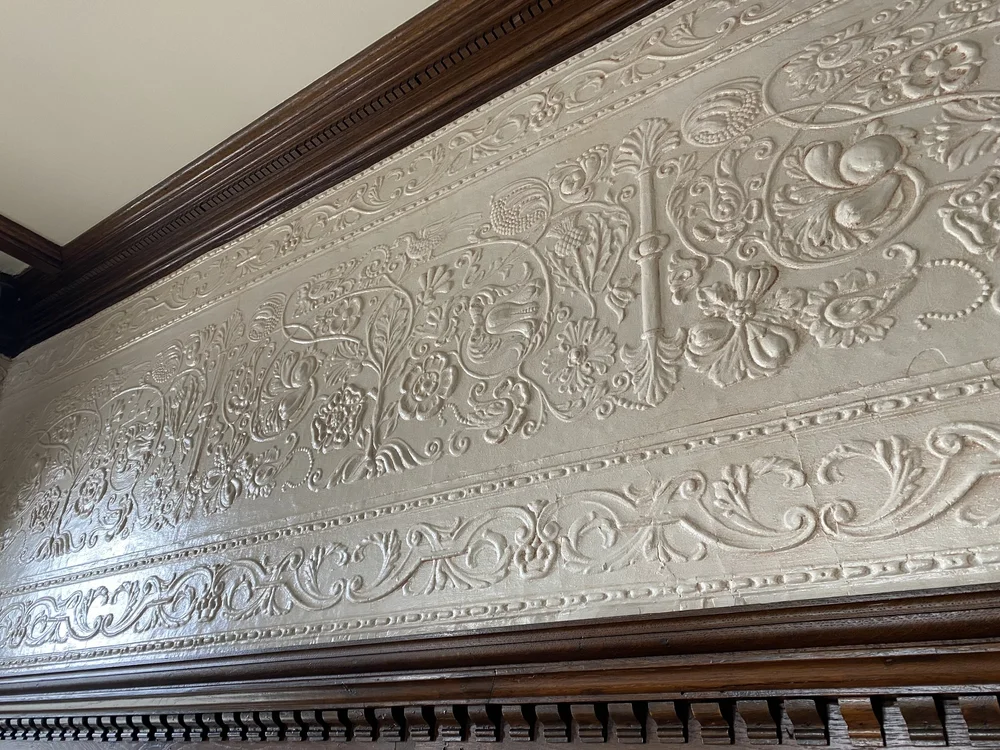
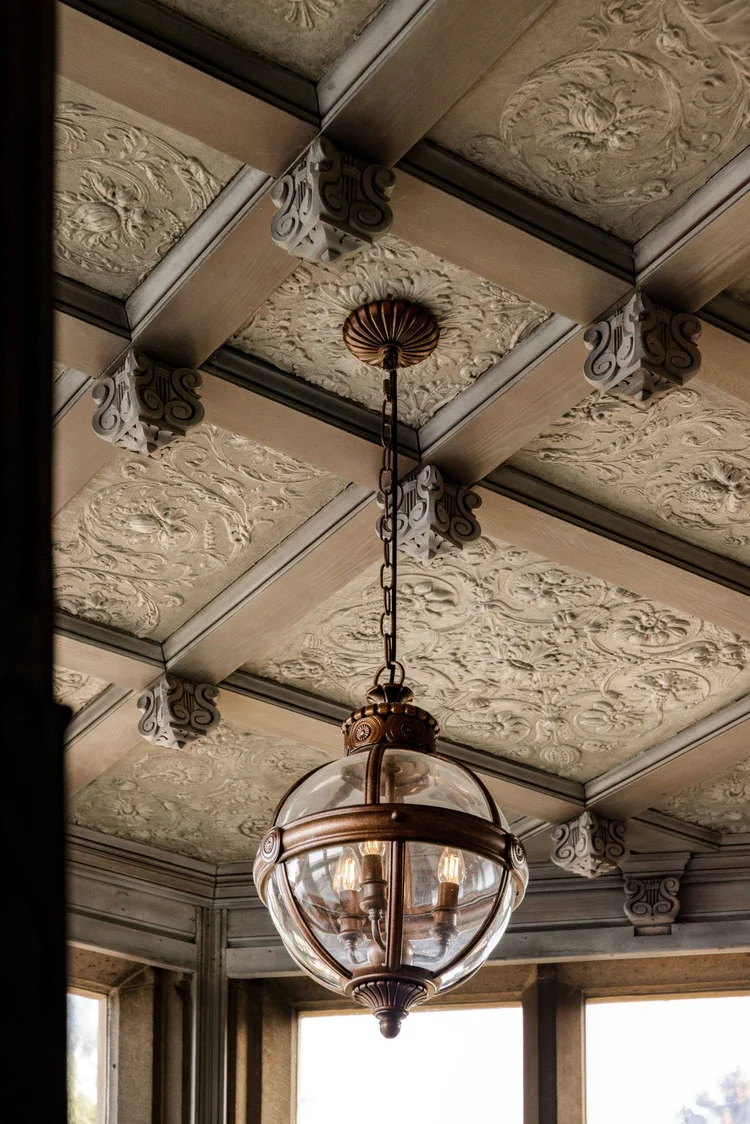
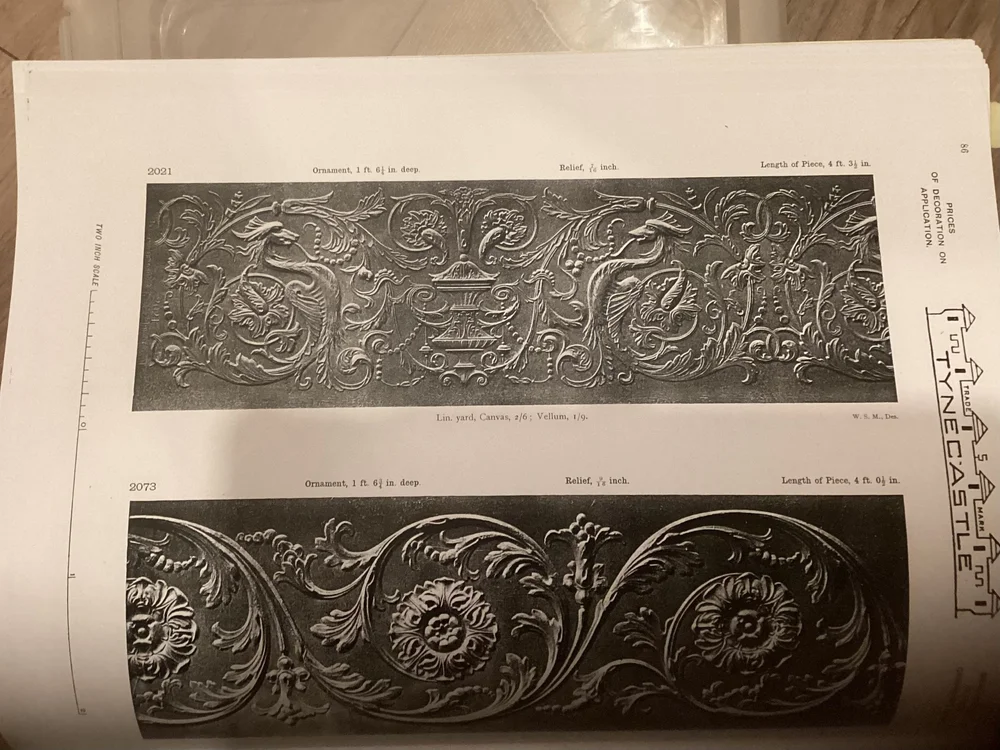
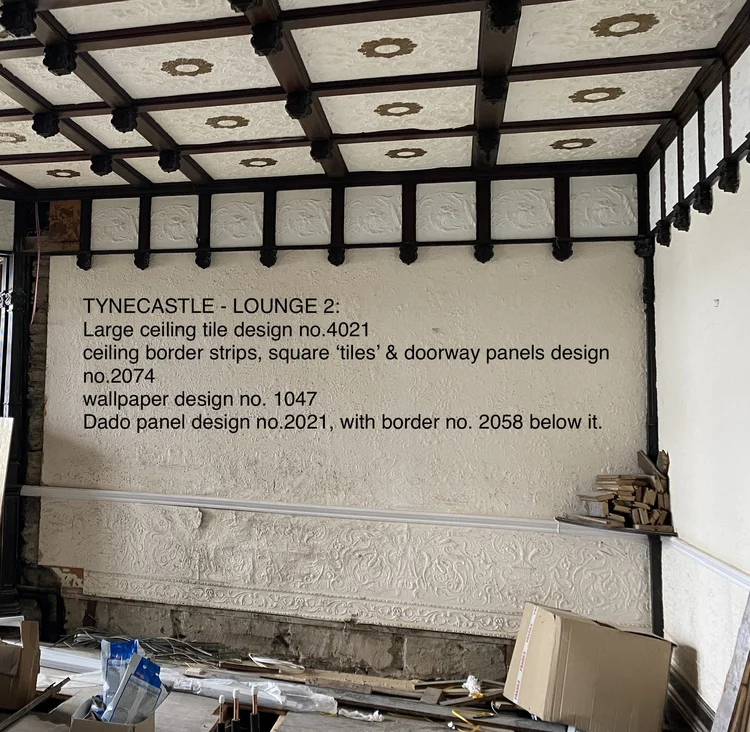
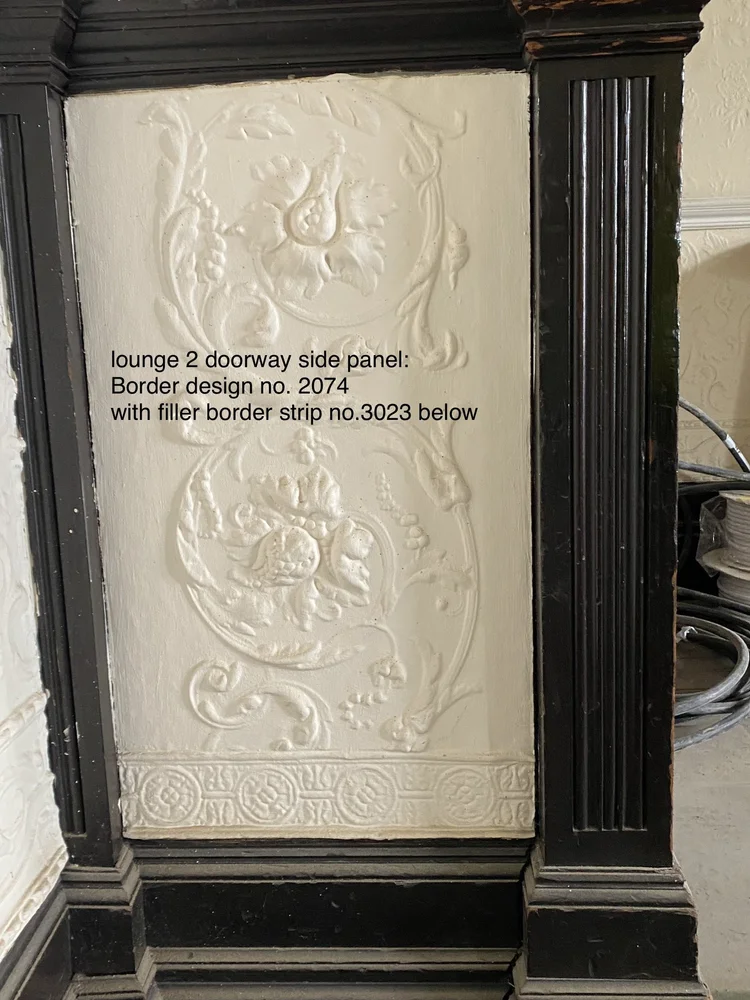
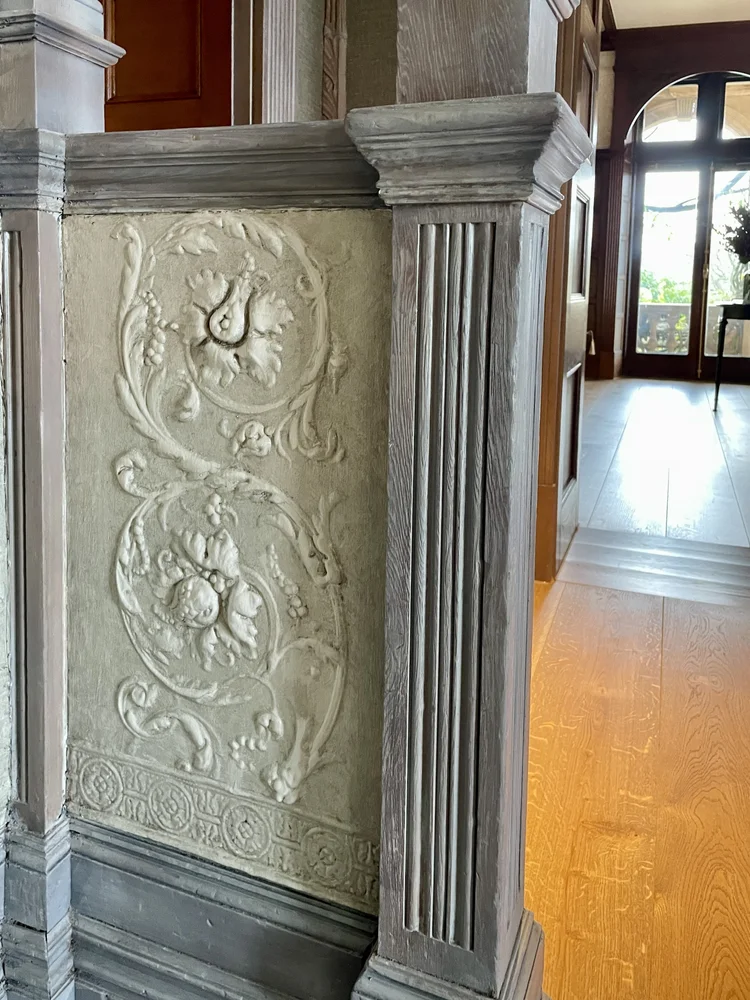
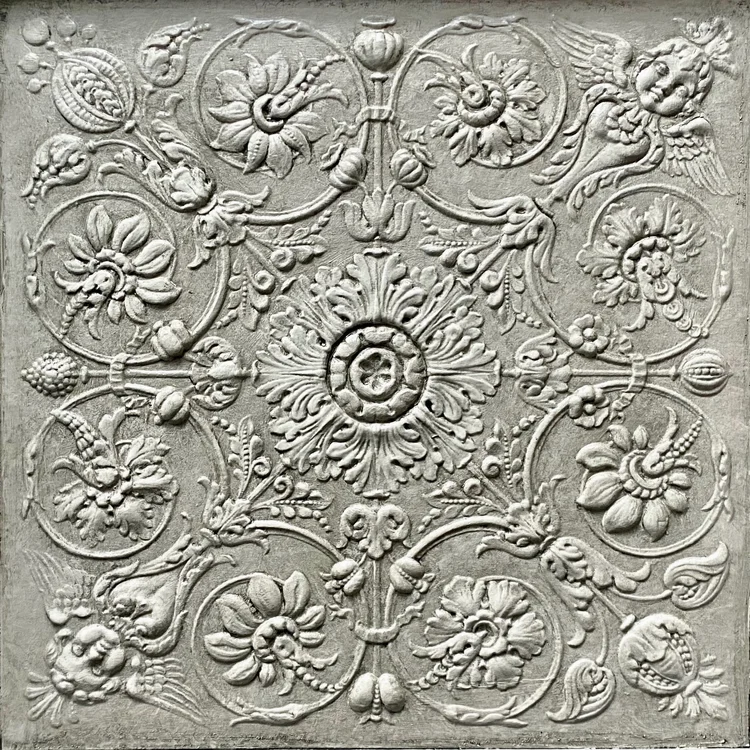
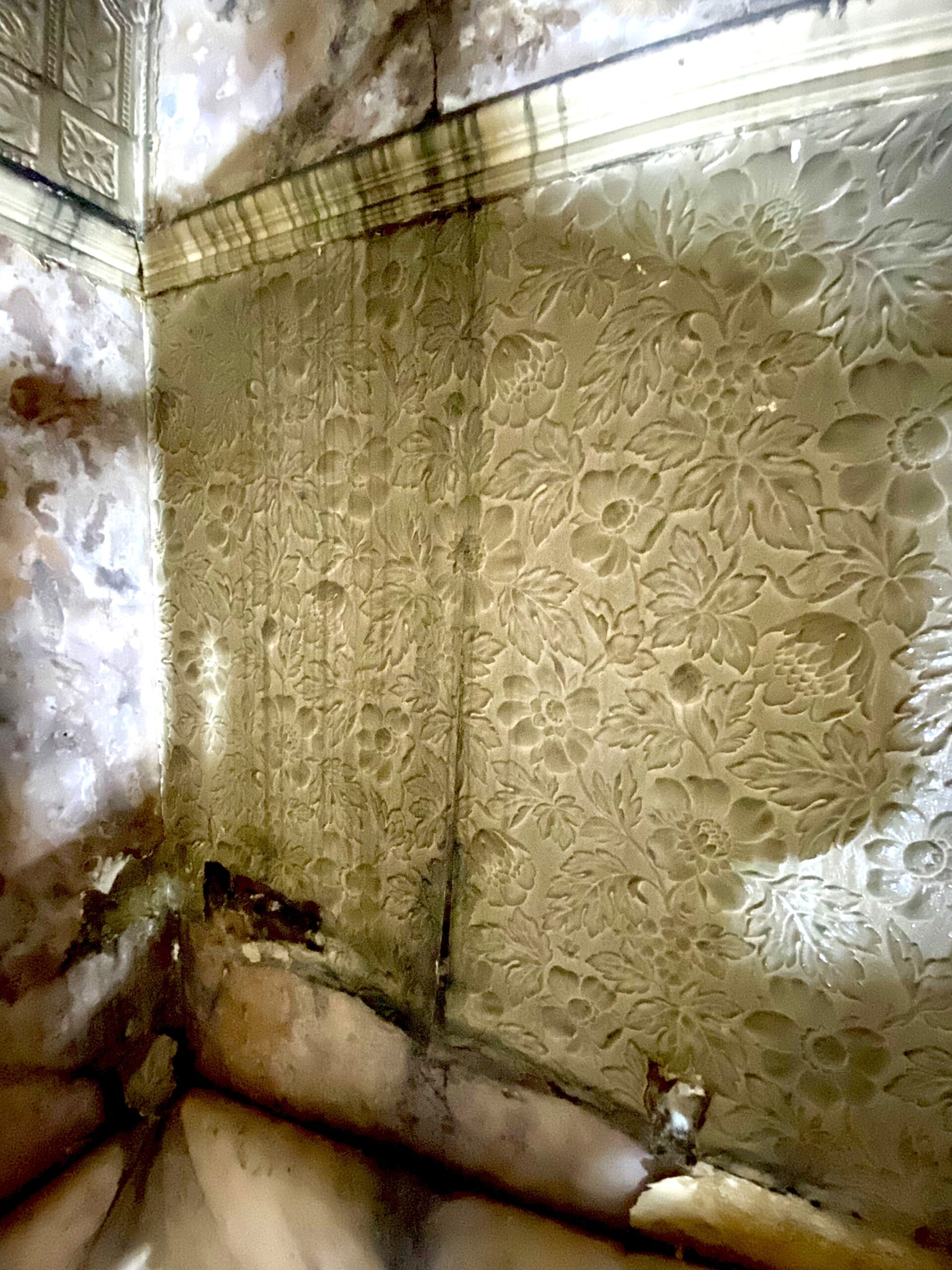
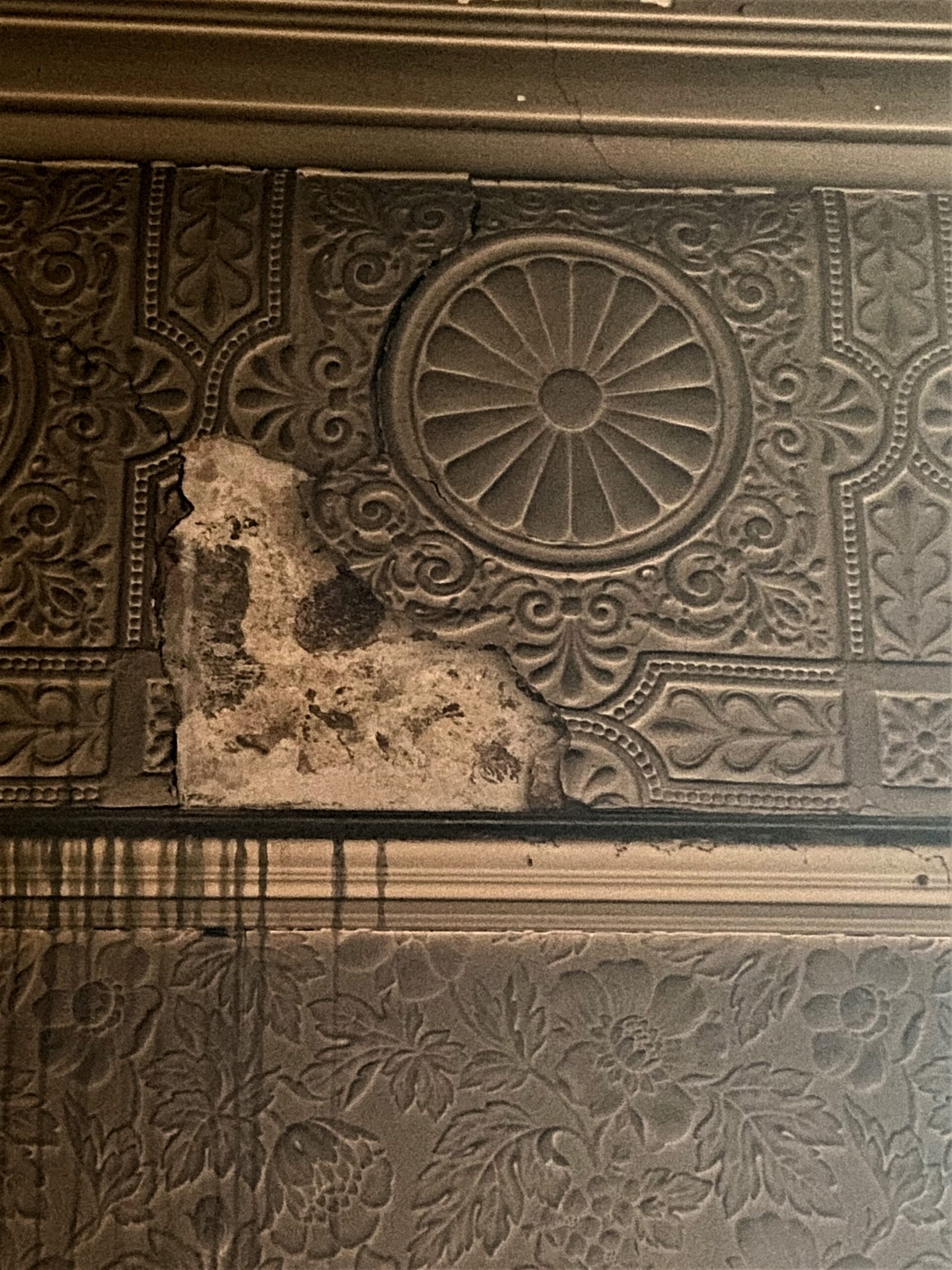
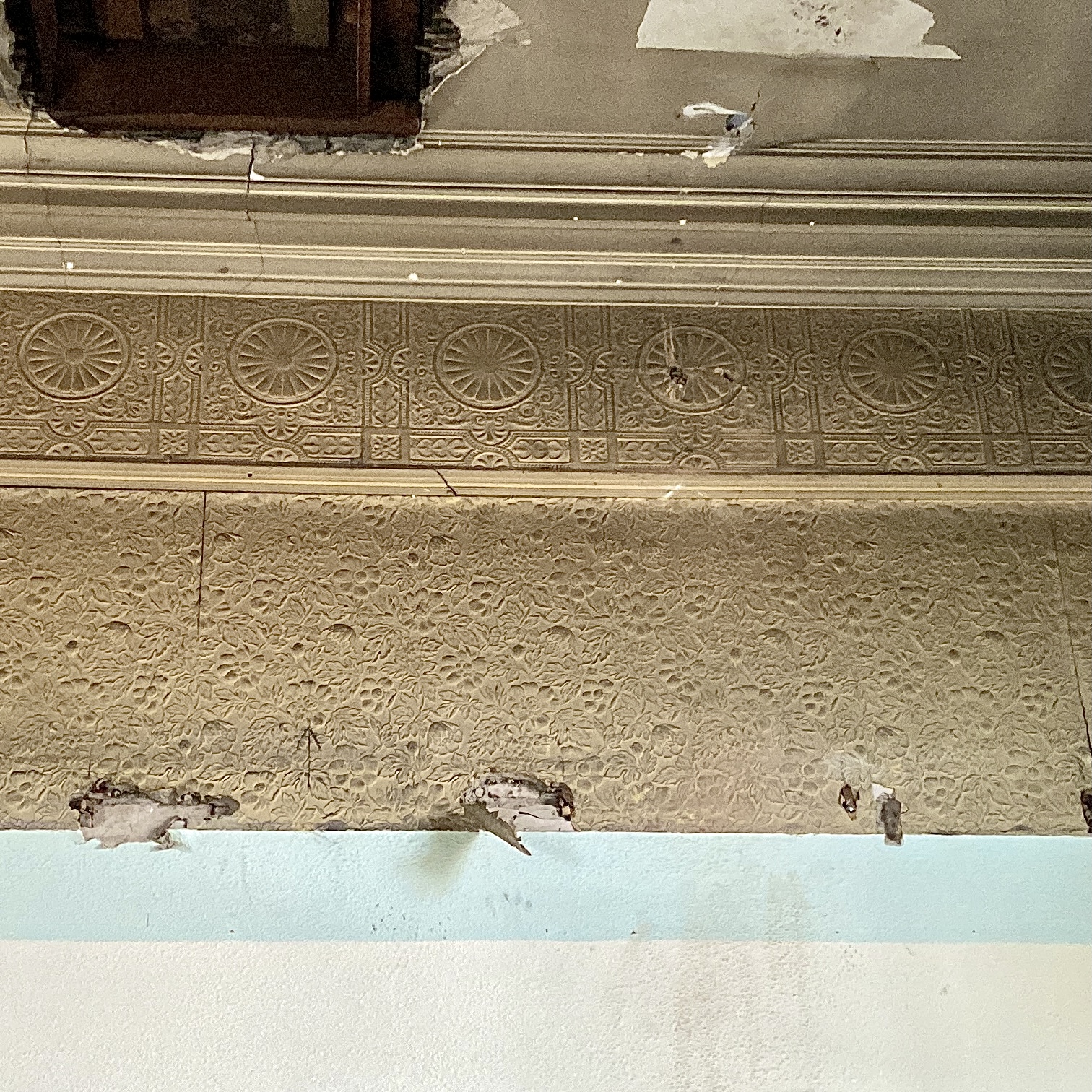
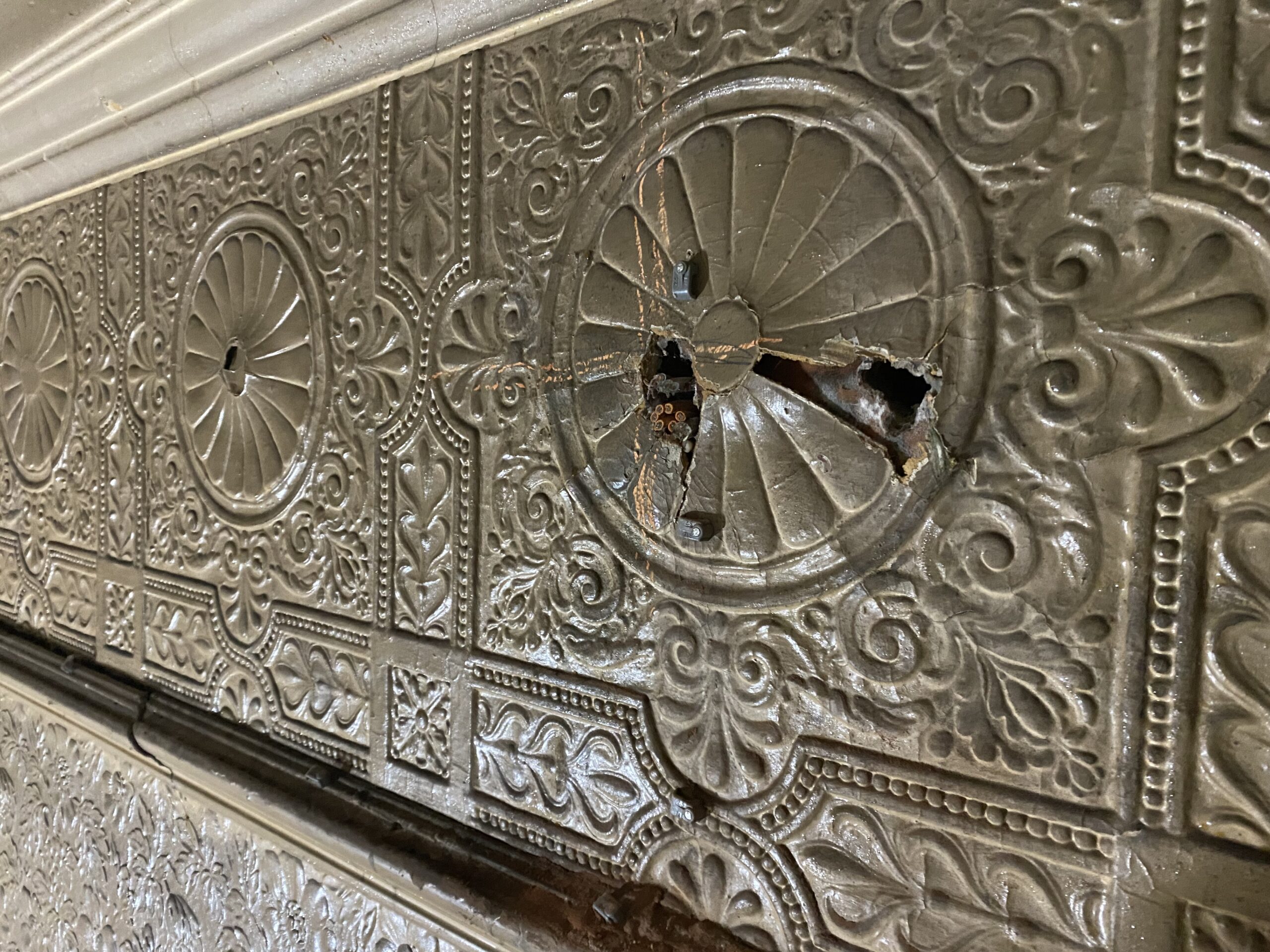
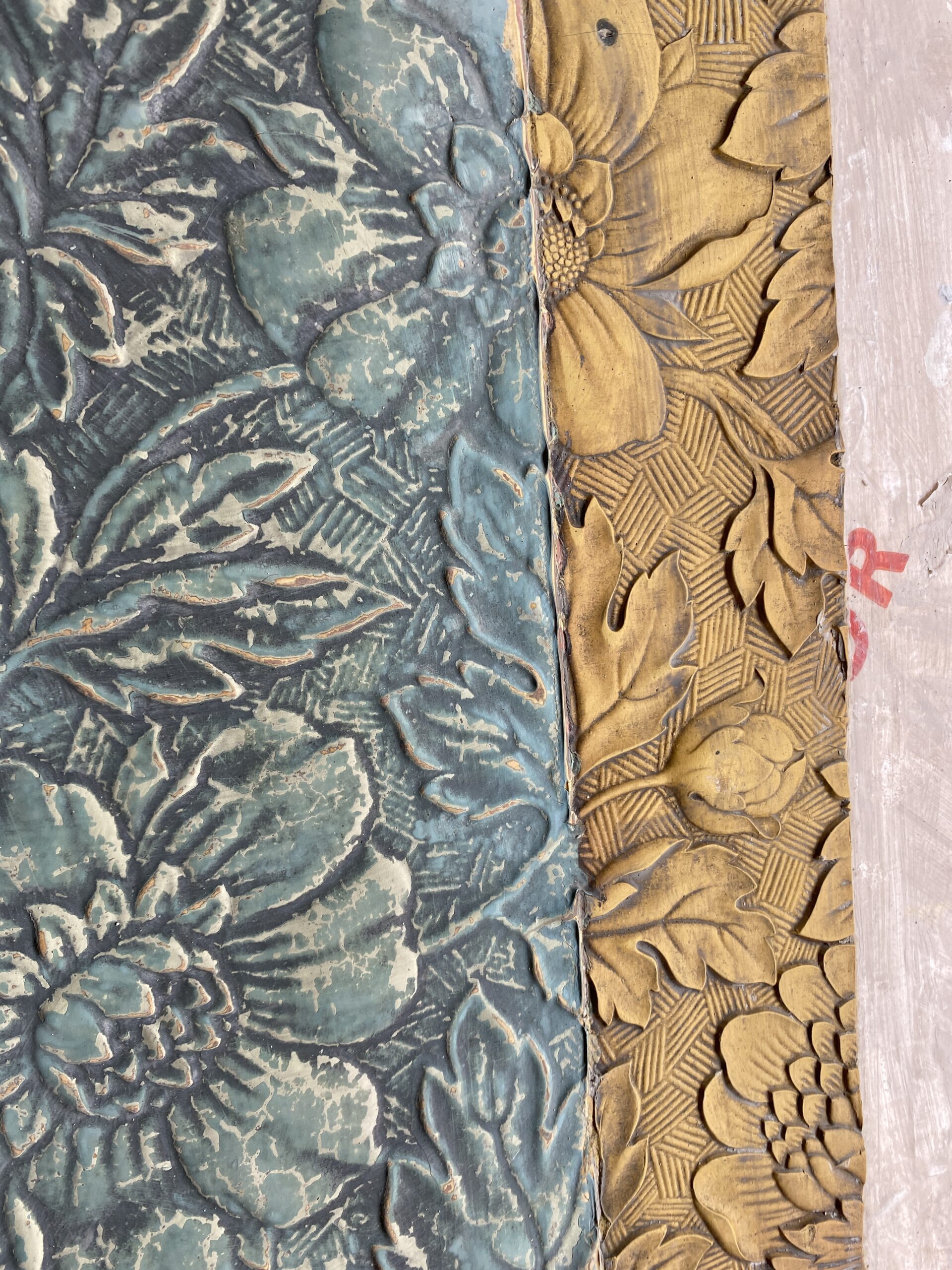
We delved into our archives and discovered these embossed canvas wallpapers, friezes, dado and decorative ceiling are all rare survivors, thought to be original to when the house was built in 1891. The Tynecastle Tapestry designs, were manufactured by William Scott Morton & Company, Edinburgh, founded in 1870. The remarkable Arts and Crafts style frieze in the Oak Room resembles old Scotch plaster. William Scott Morton, greatly influenced by the English Arts and Crafts movement, was at the forefront of developing wallcoverings that imitated leather, stucco or carved wood.
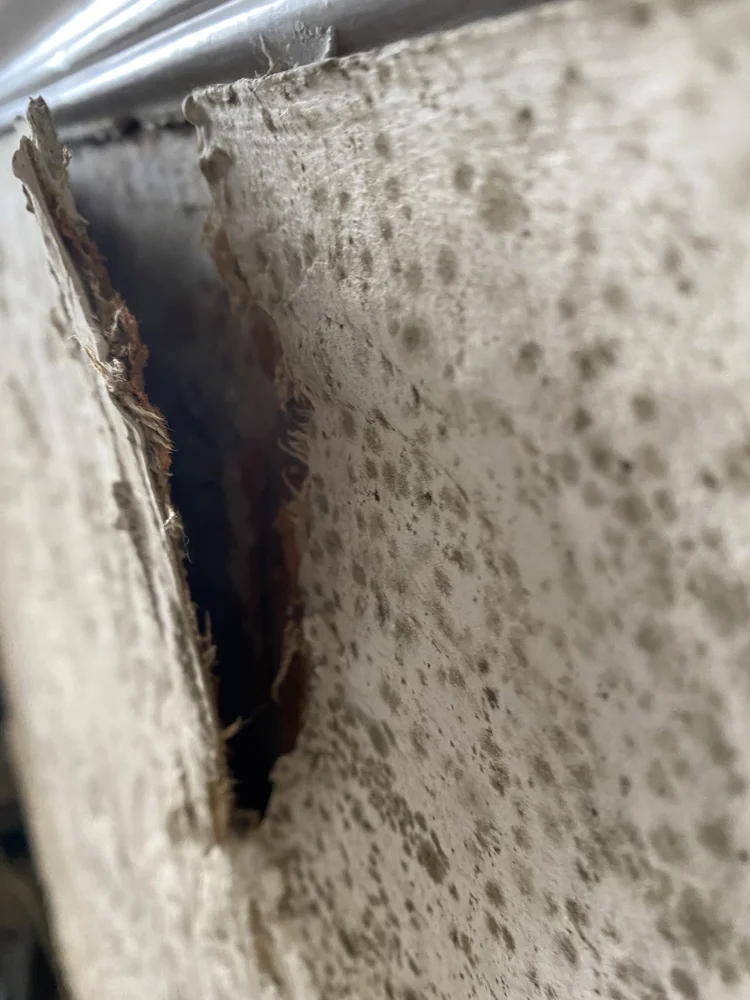
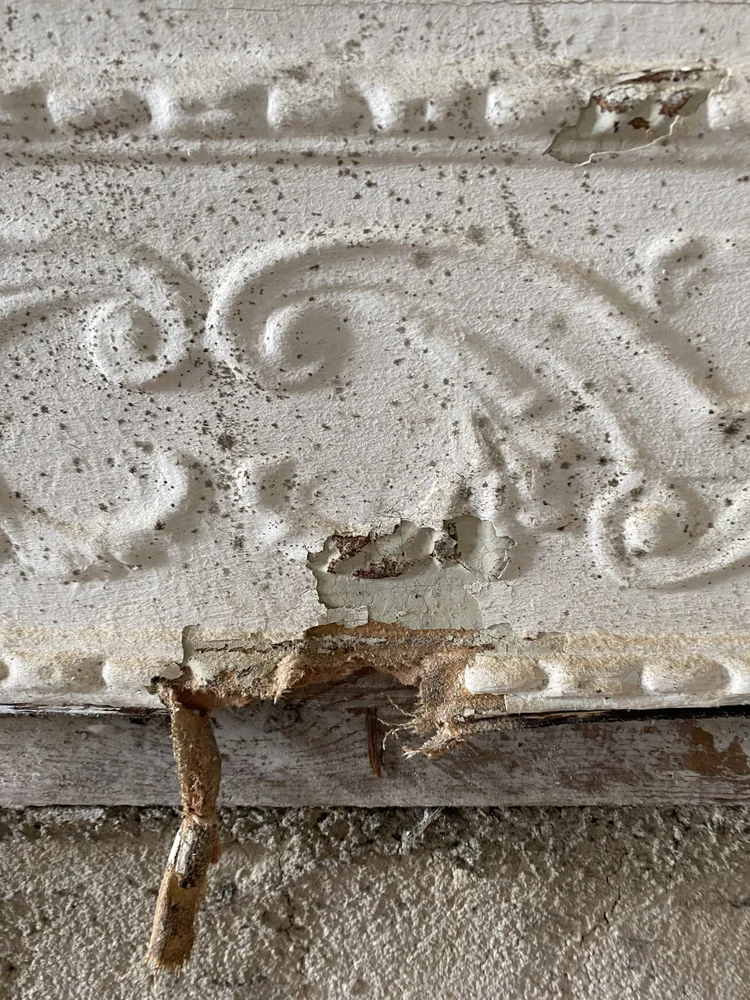
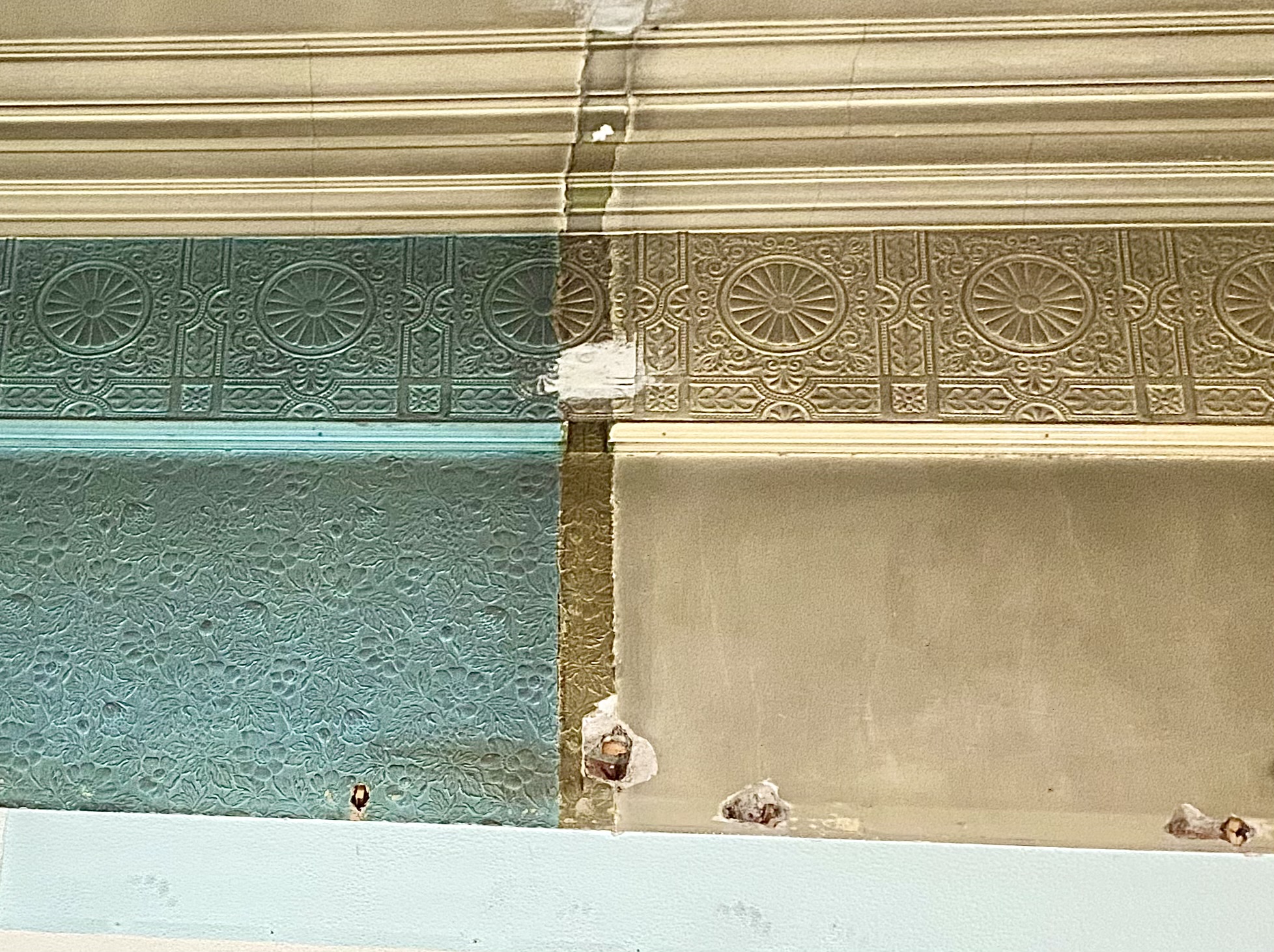
See our photo gallery below, including Tynecastle Tapestry archive images, before and after the repairs and refinishing with a subtle two-tone glaze to highlight the relief by Frank Holmes Fine Decor.
William Scott Morton embarked on a European study tour c.1881-2. Following his return, the Scott Morton (Tynecastle) Company Ltd. developed imitation leather wallpapers inspired by Italian and Spanish leather wall hangings.
Read our article about the history of British raised relief wallpapers here.
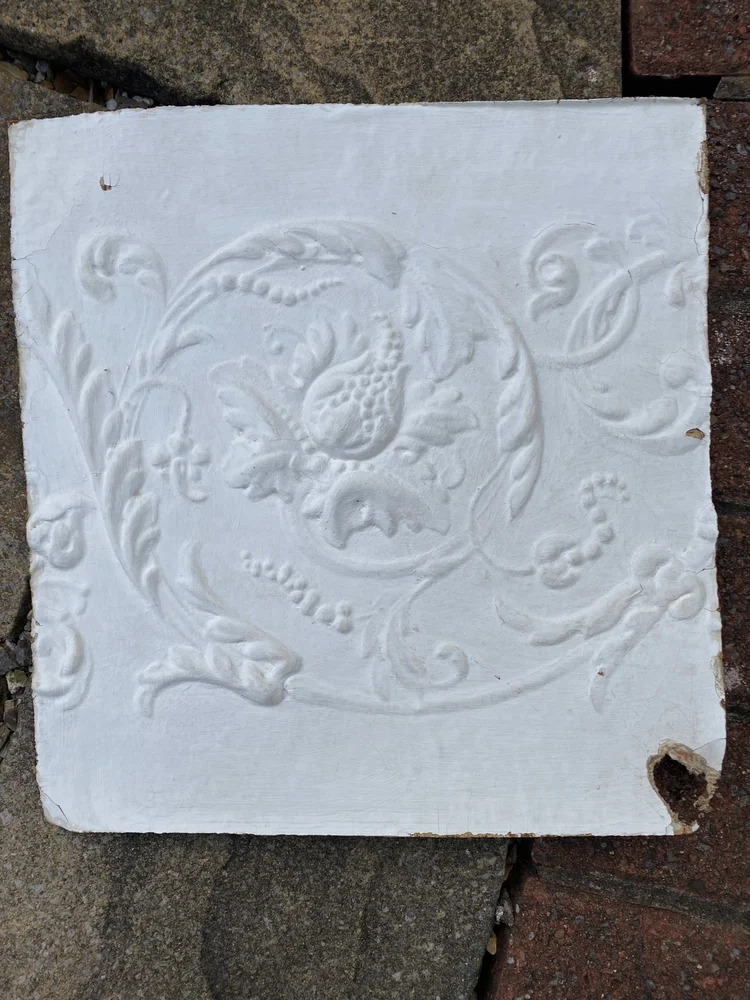
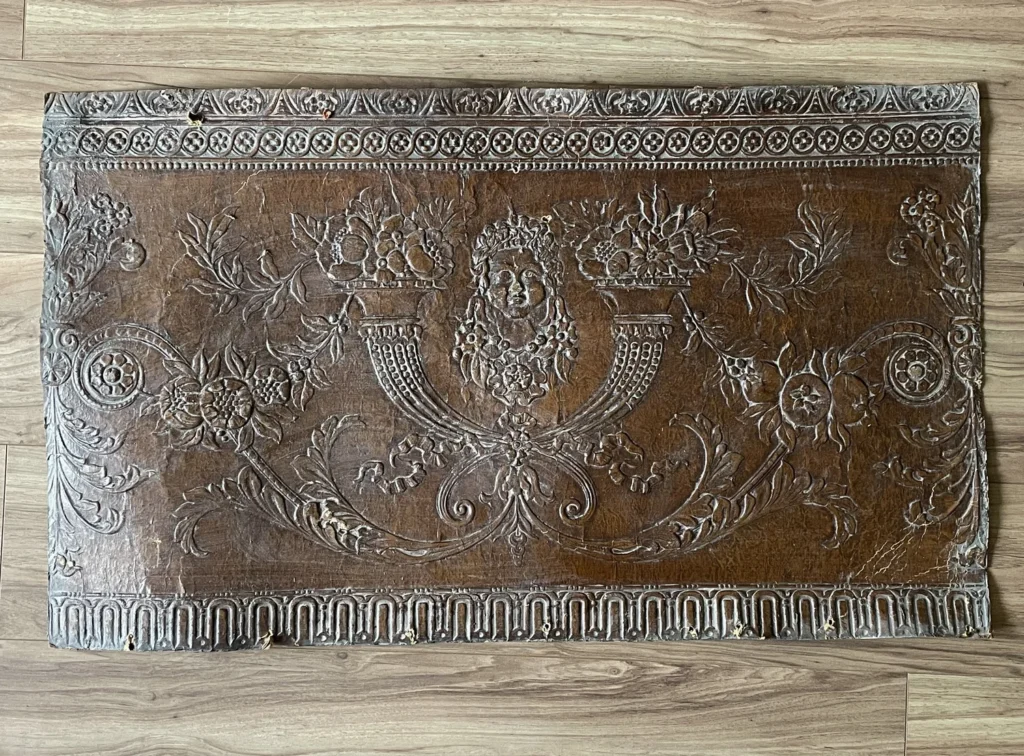
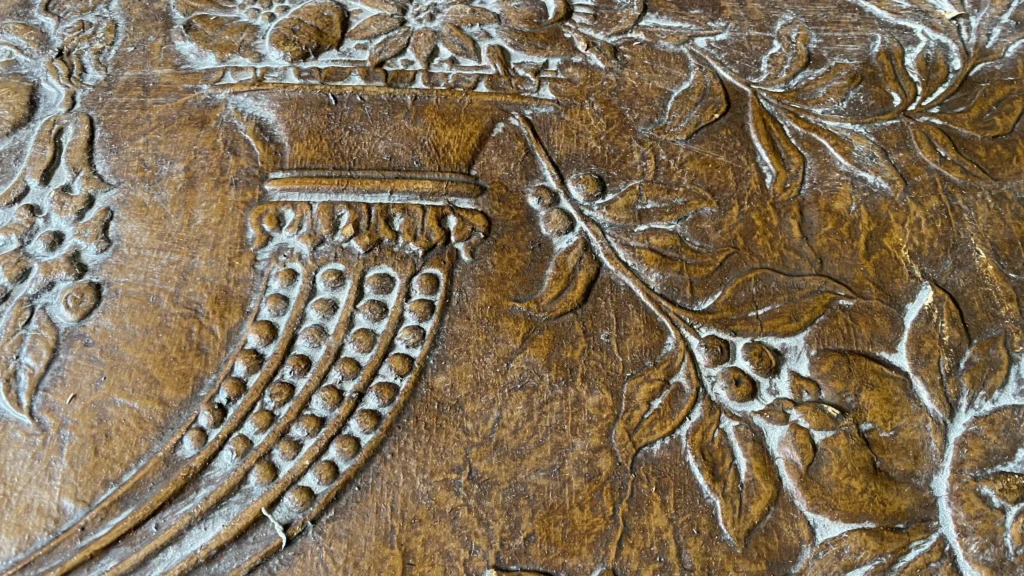
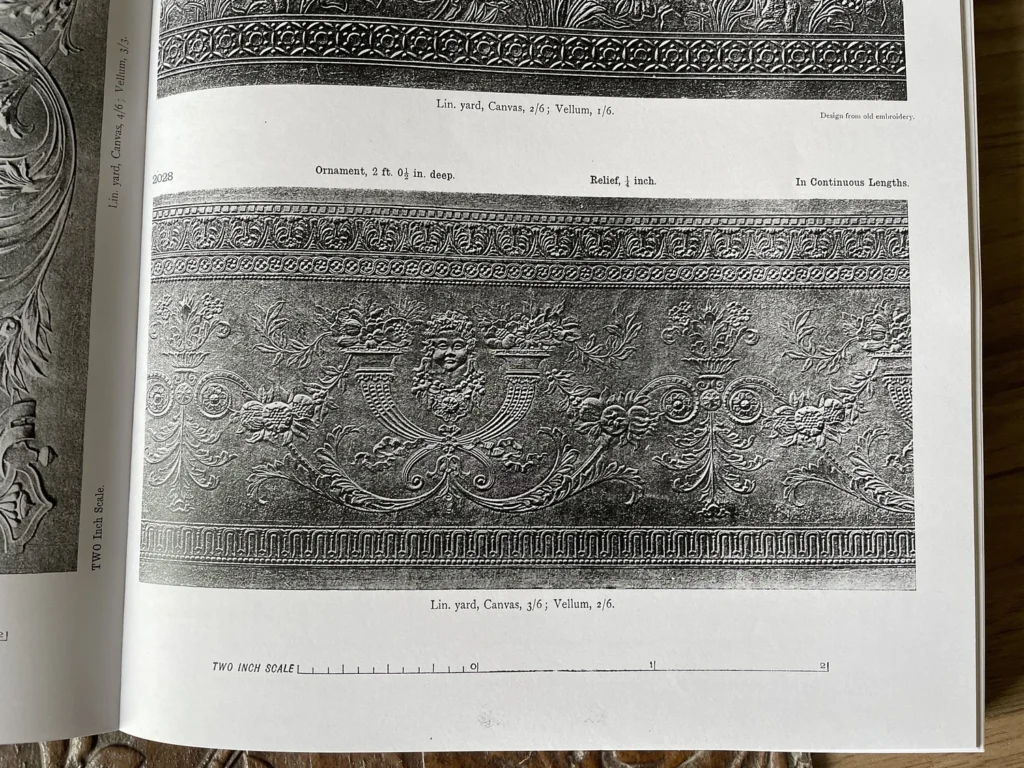
Tynecastle pattern no.2028. This surviving piece was rediscovered behind an over-mantle during renovations at Langdale Chase Hotel in 2023. Made from embossed canvas with paper backing, it retains the original faux leather finish. Still in remarkable condition, apart from a squashed nose on the cherub, Frank saved it and it is now part of our own growing archive collection.

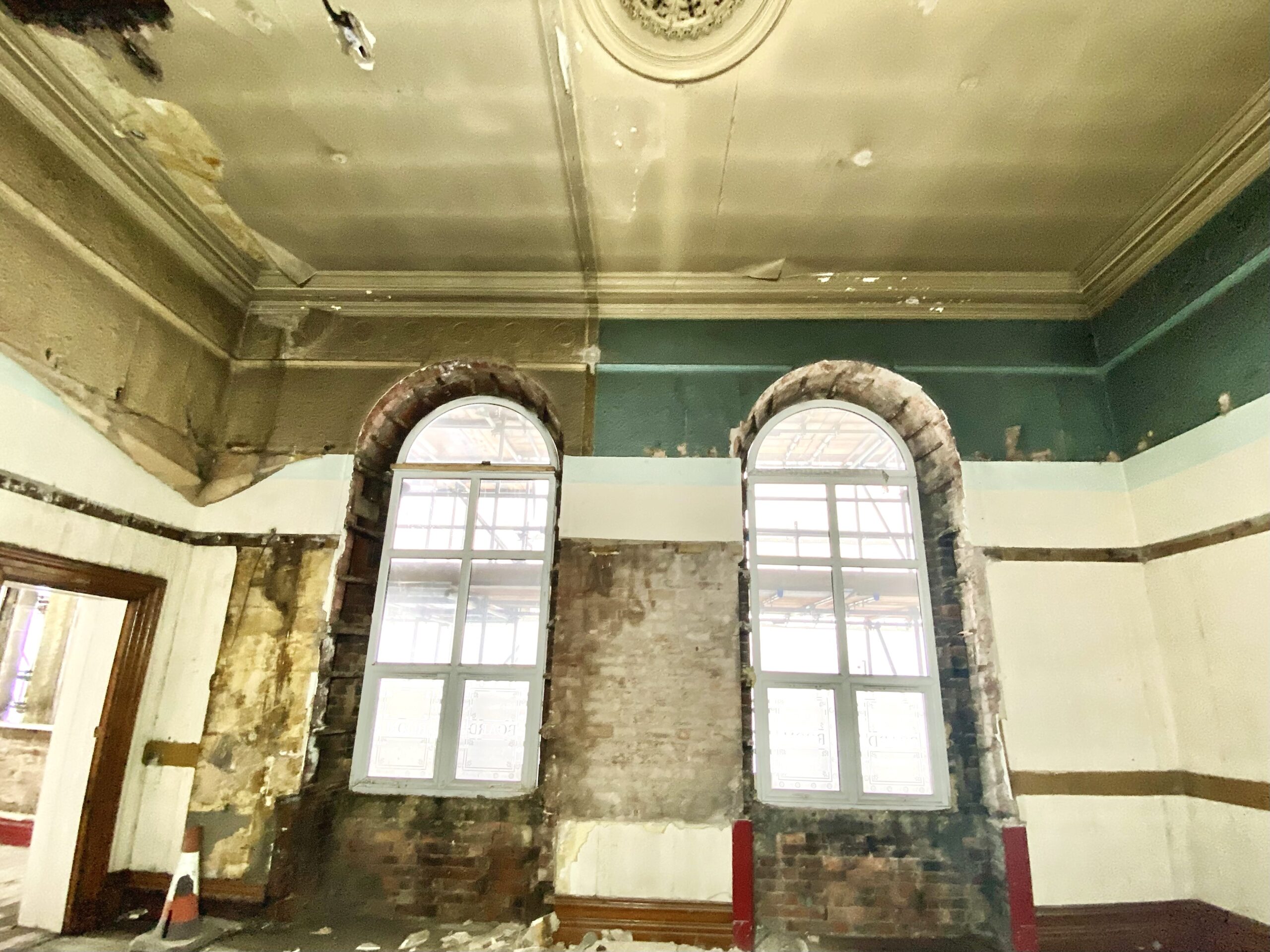
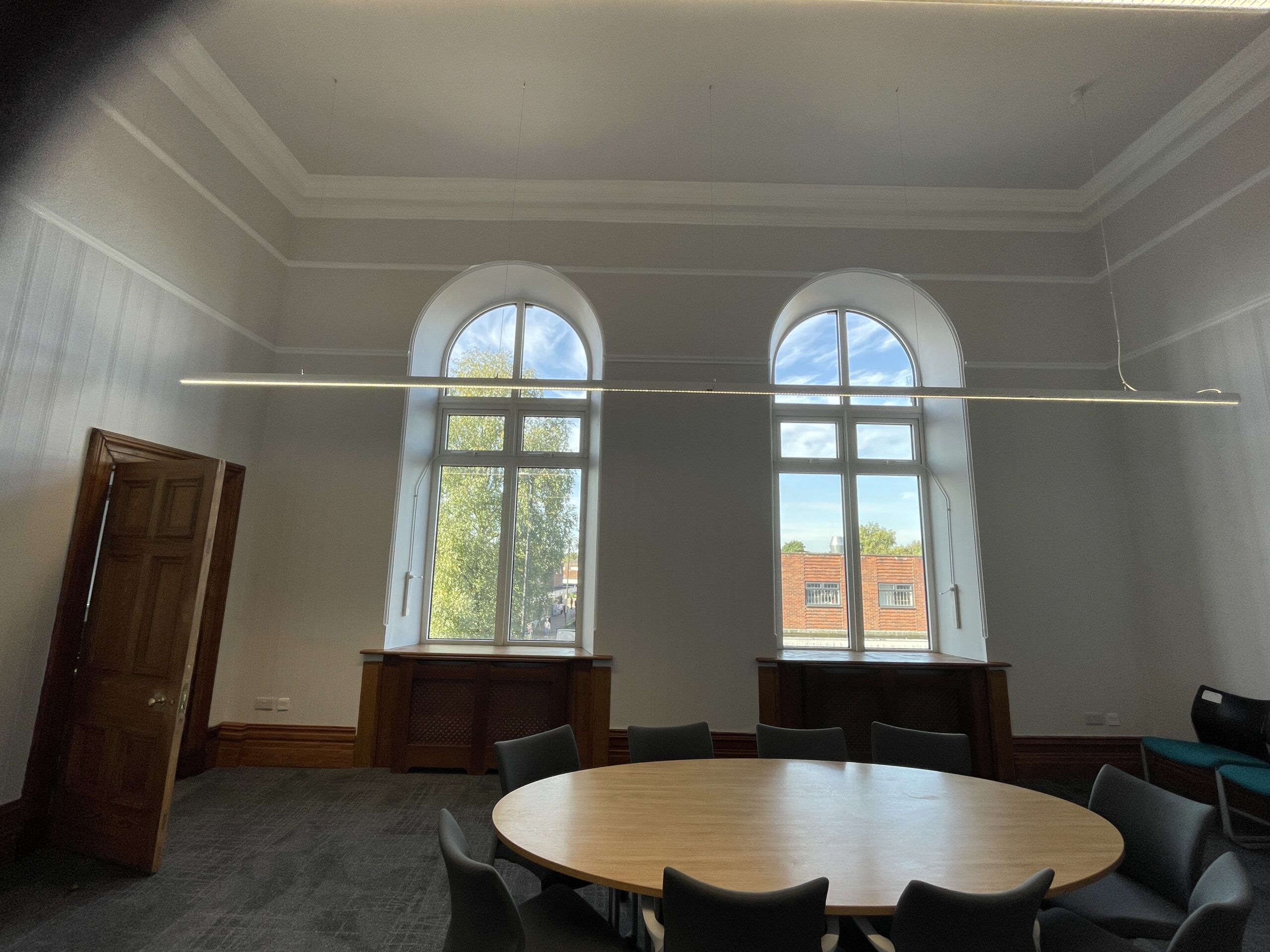
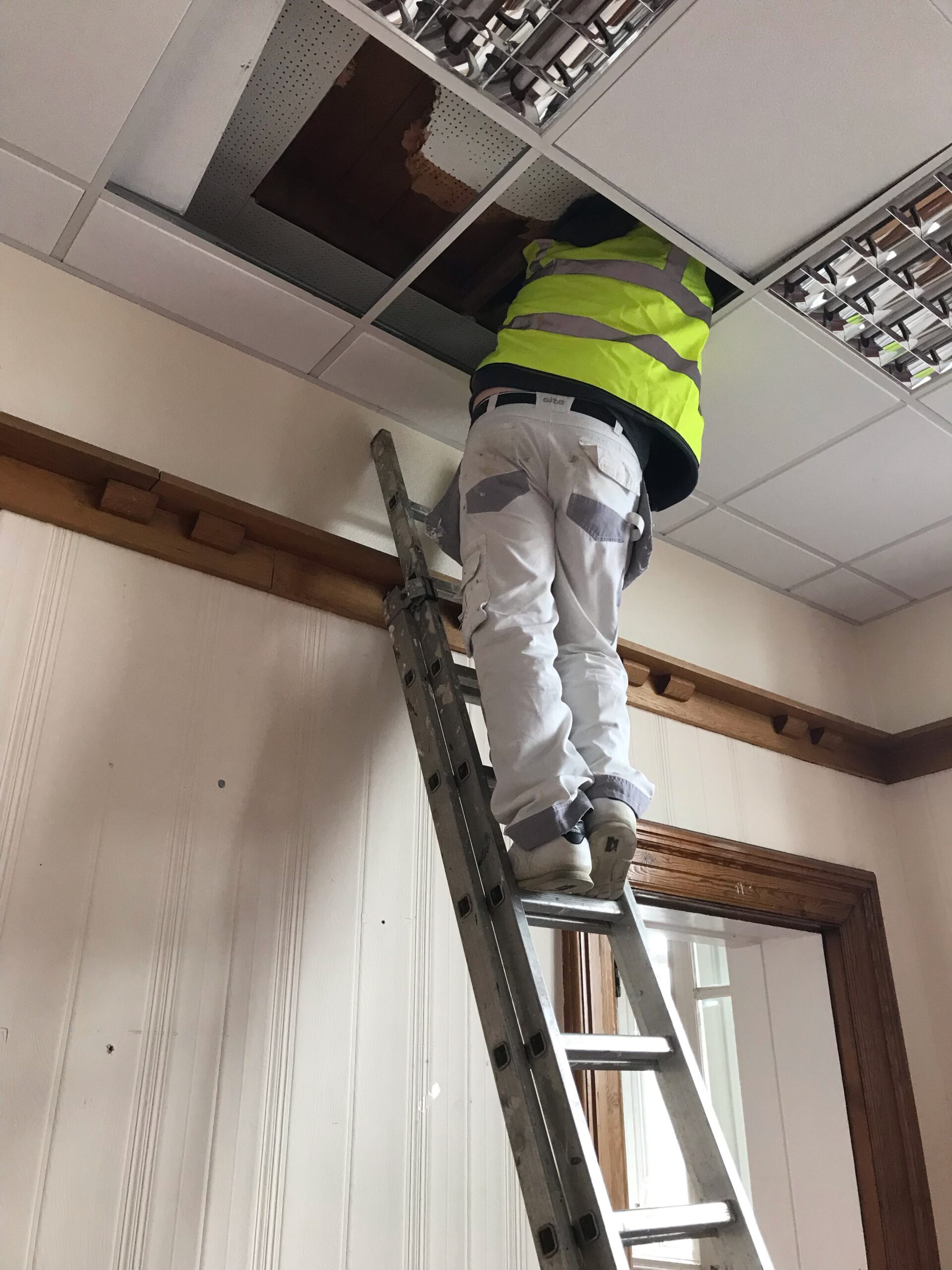
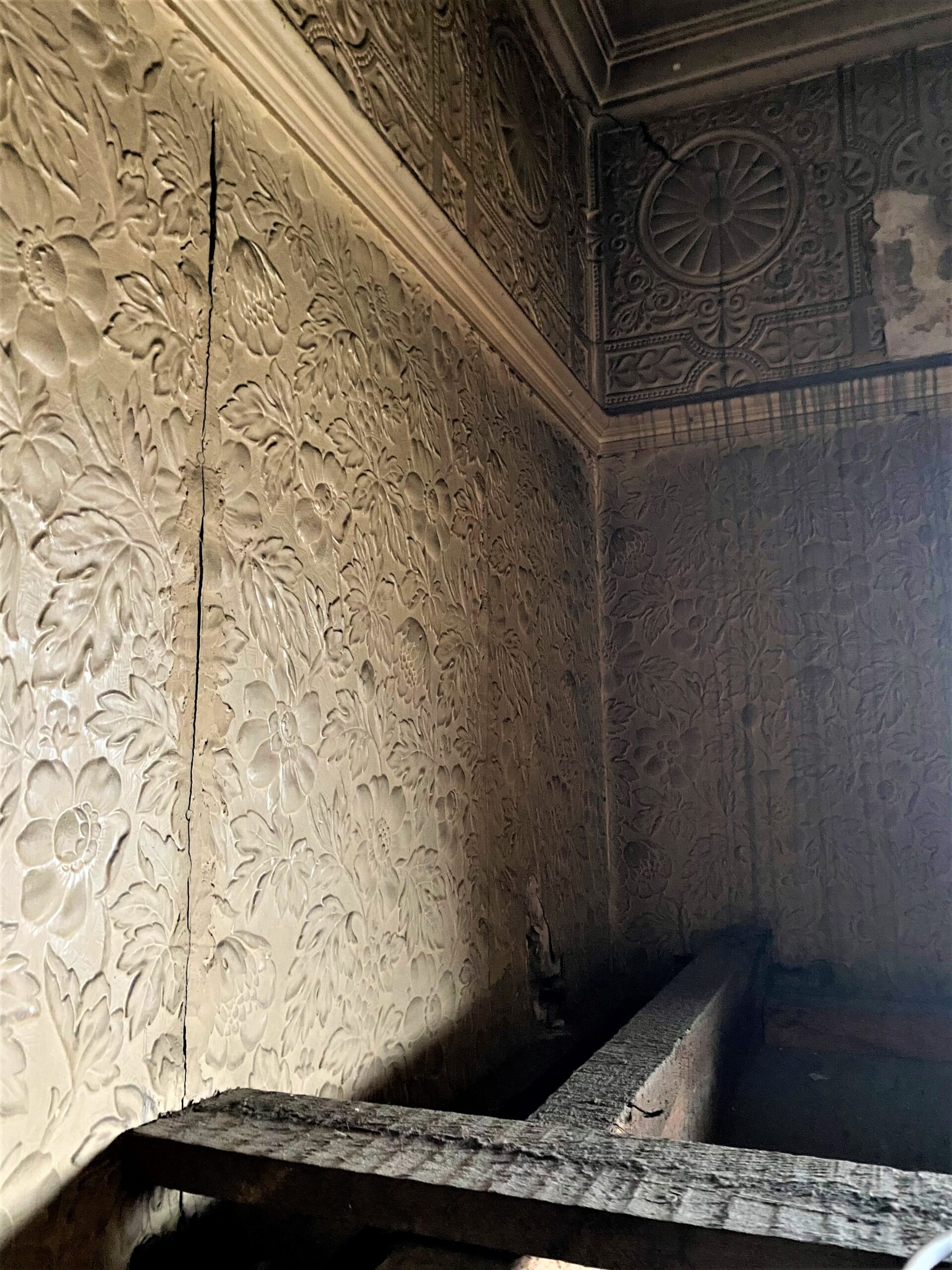
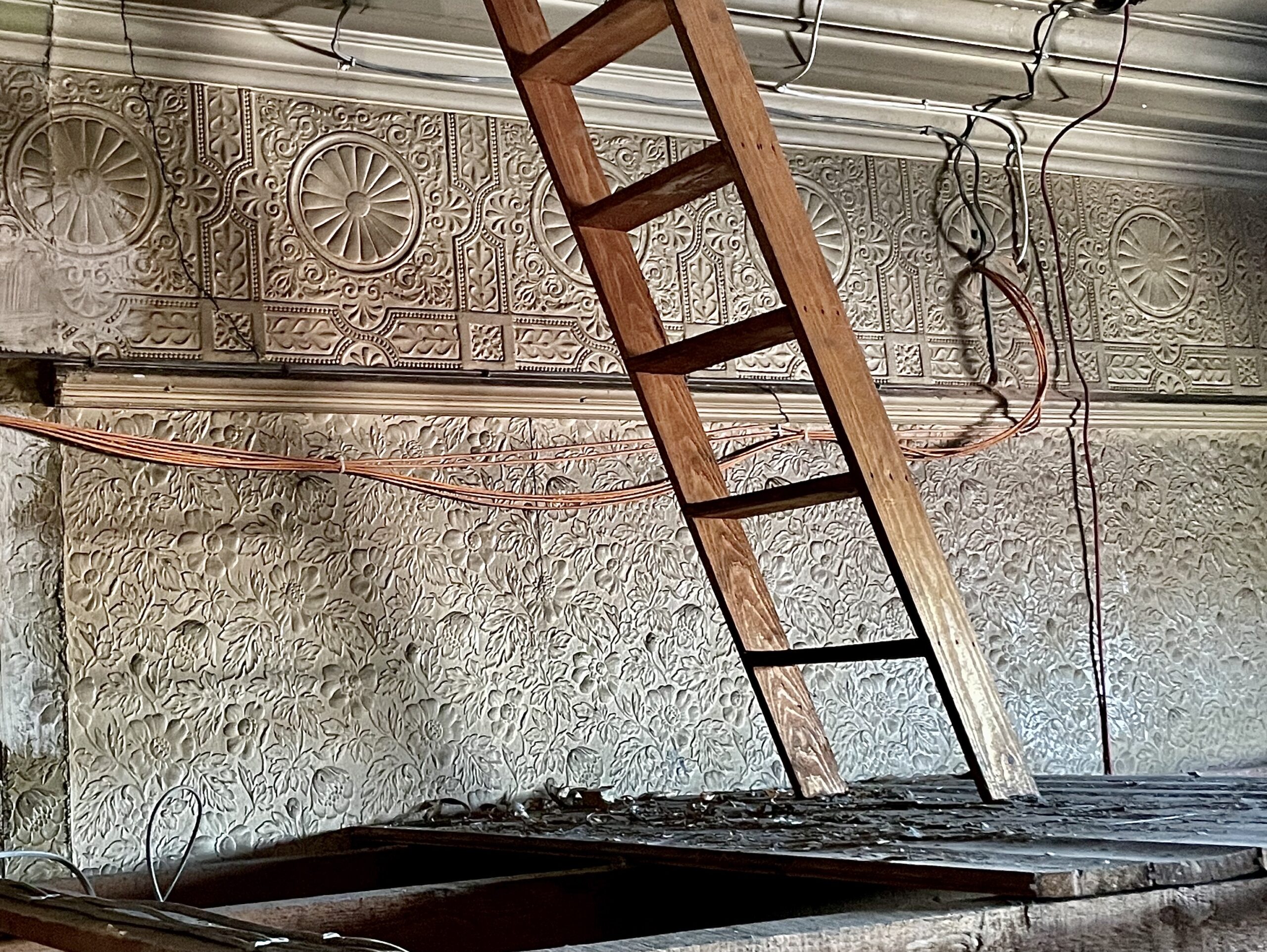
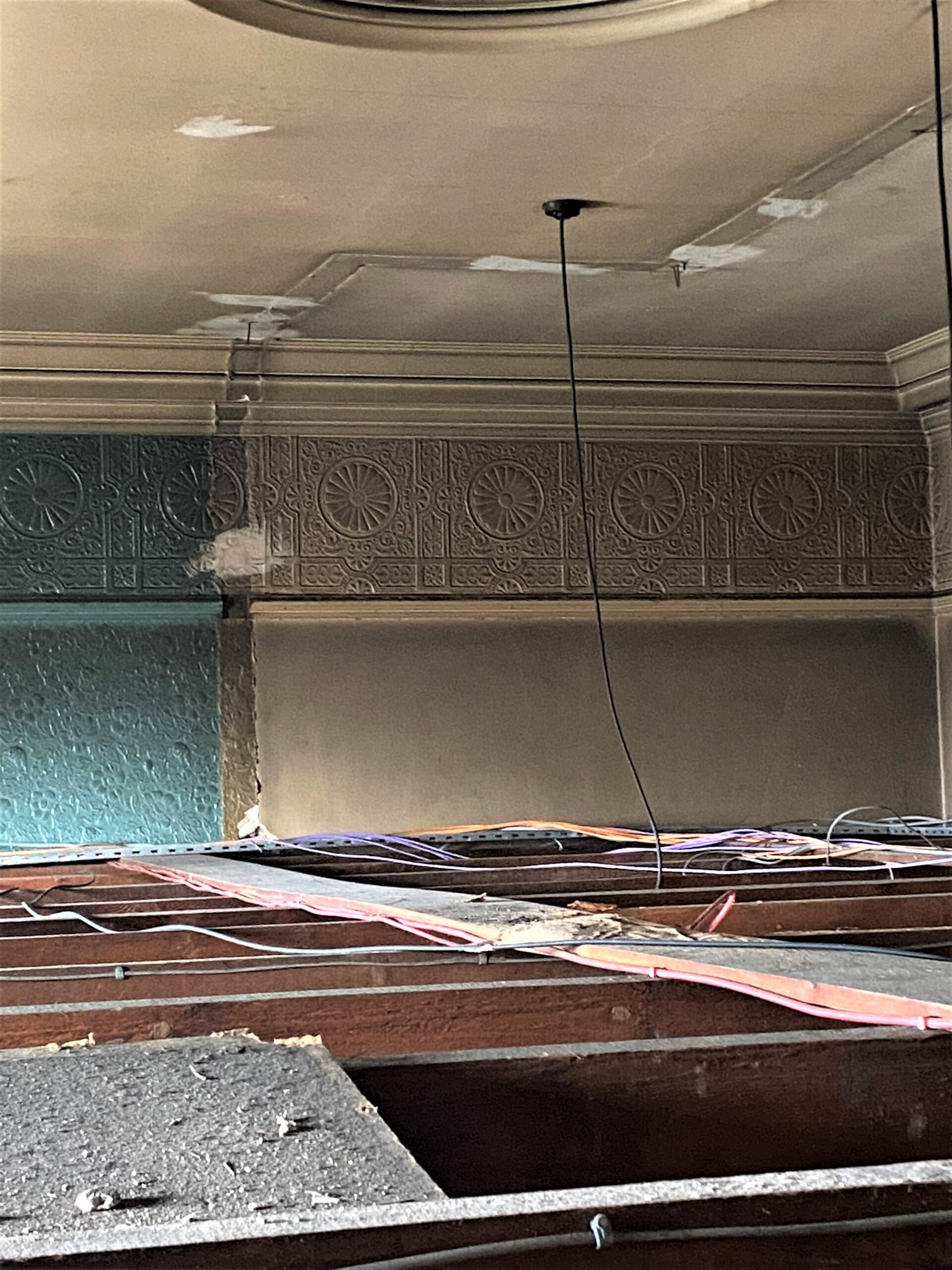
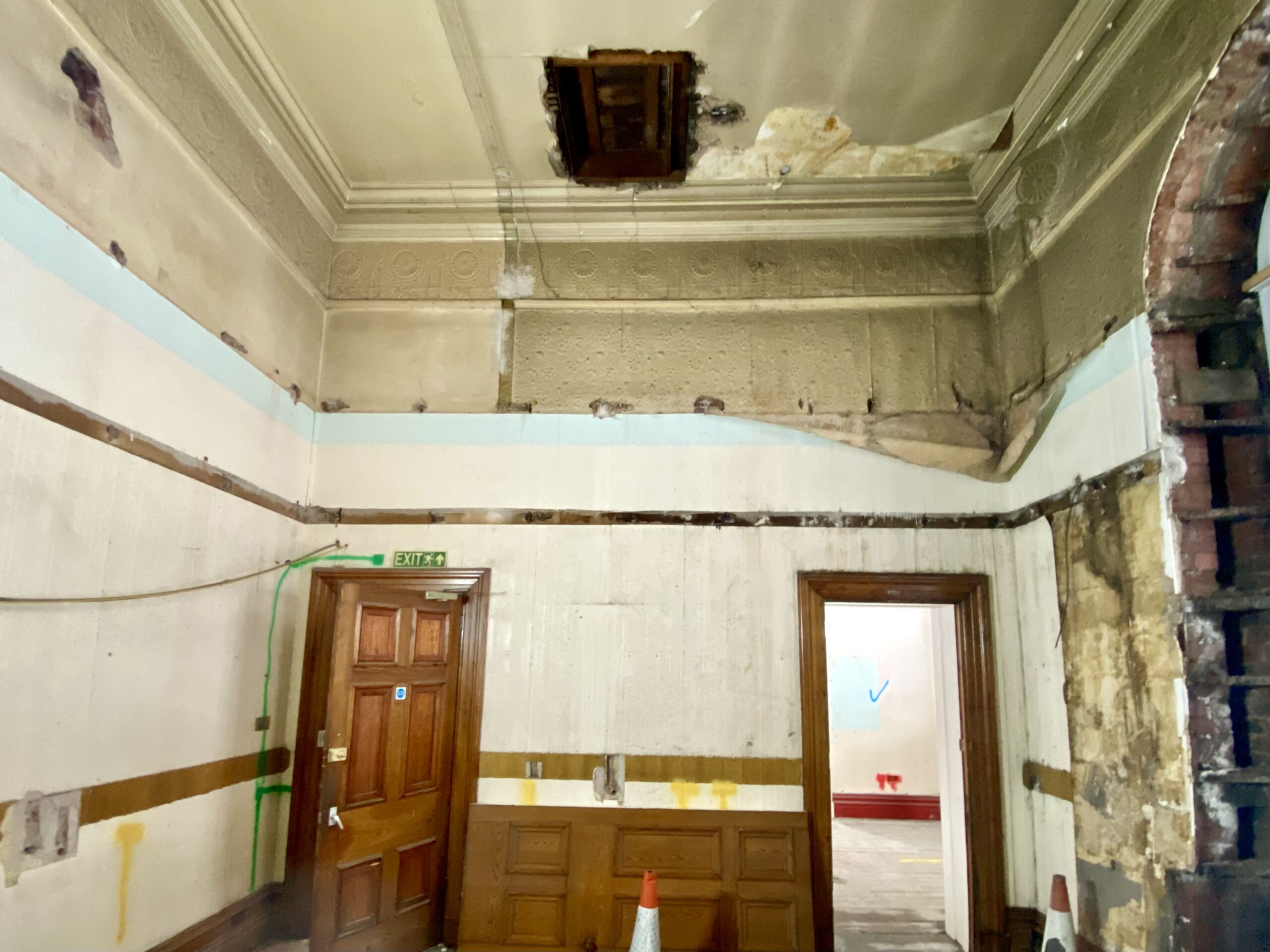
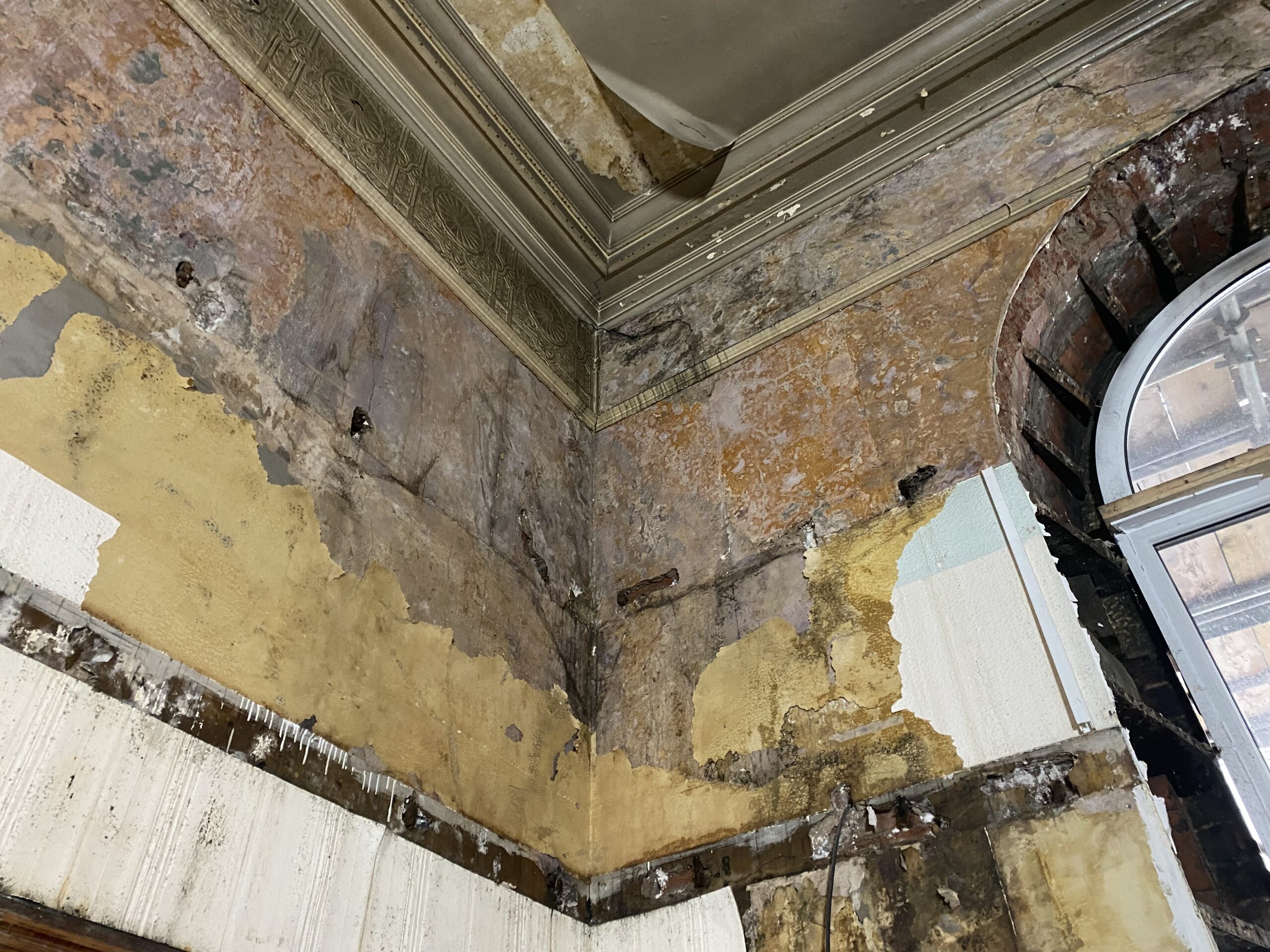
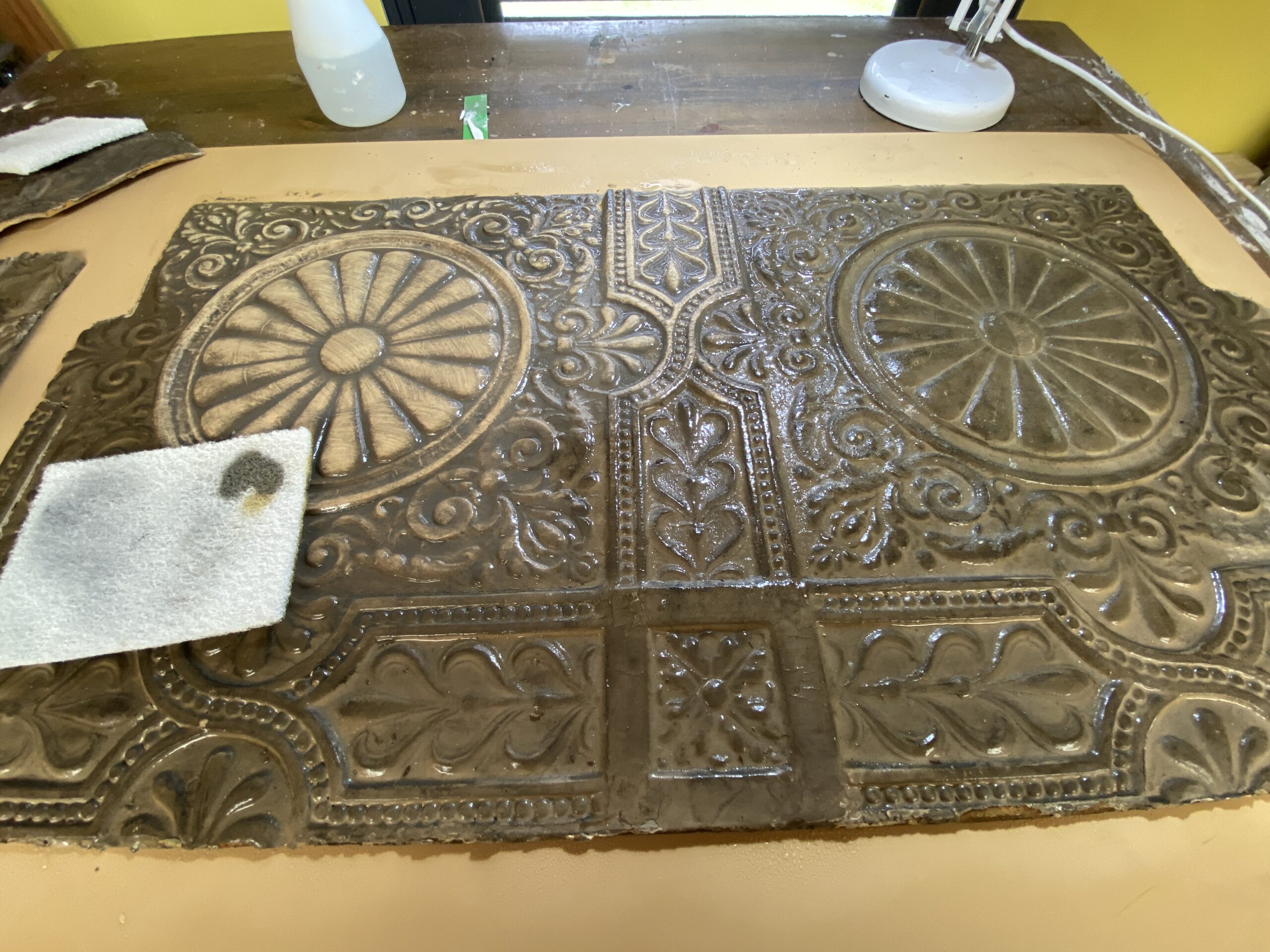
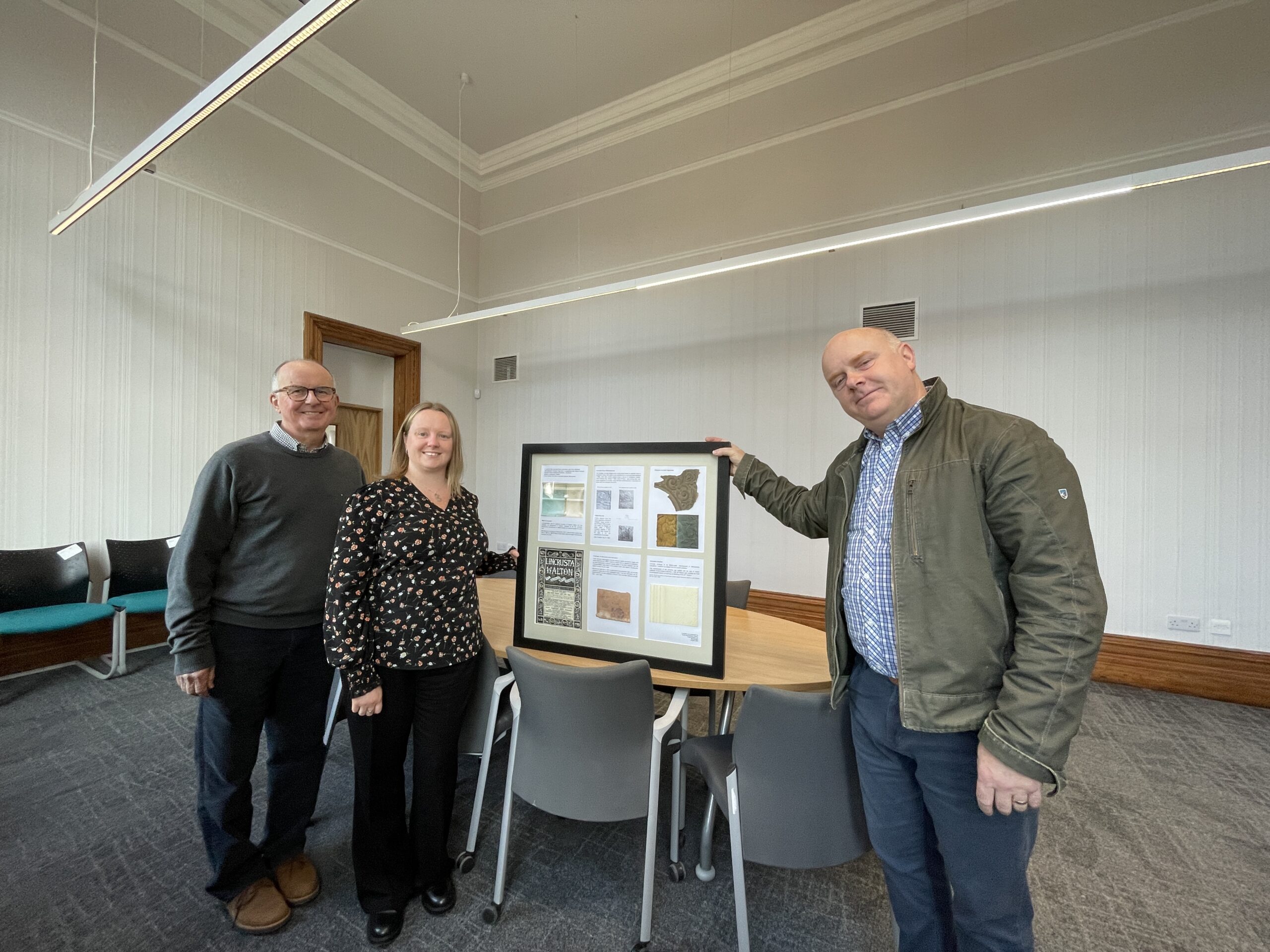
Kepczyk Pearce Sanderson Architects contacted us when two heritage Lincrusta designs were re-discovered hidden for decades above a suspended ceiling. See the gallery below to see before, during and after the Lincrusta restoration.
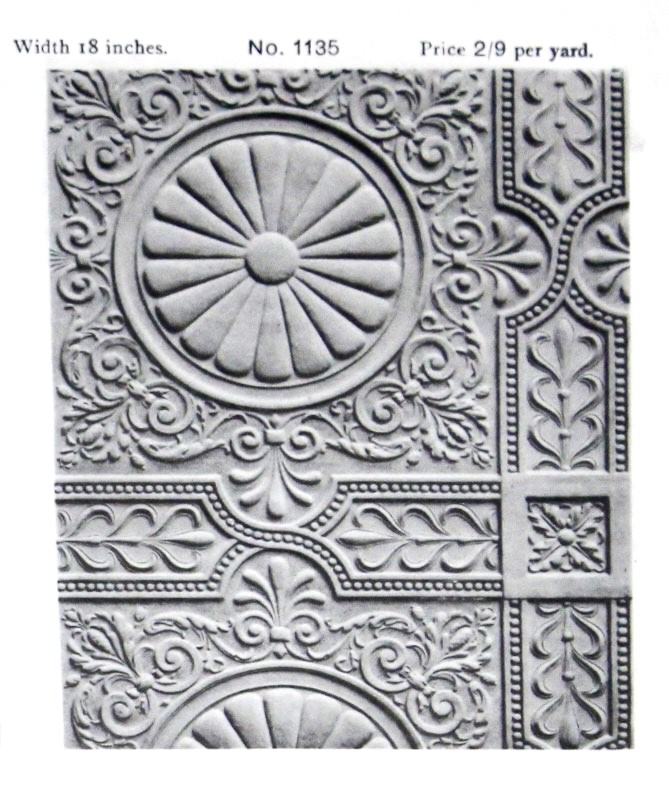
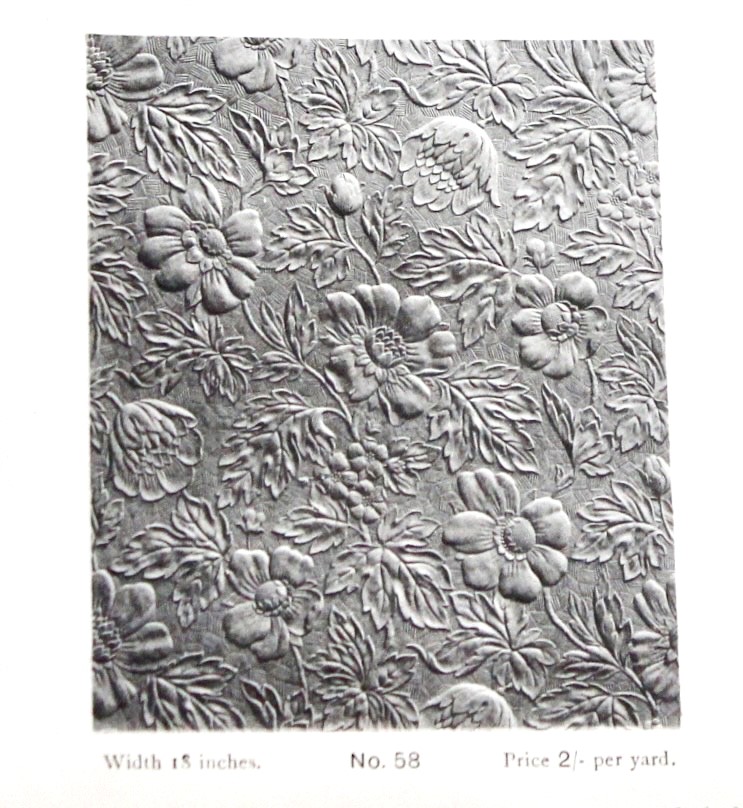
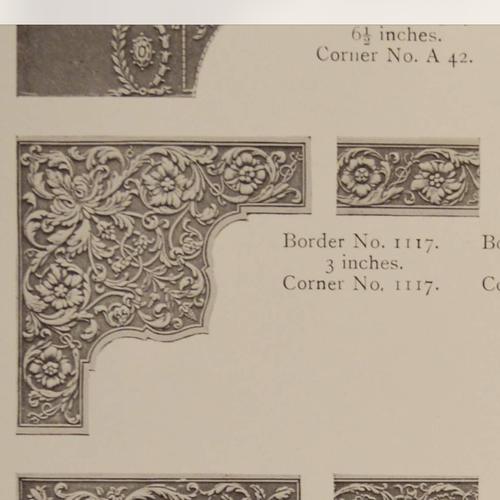
We identified both patterns from a surviving trade catalogue c.1880s, which also contains designs known to be by Dr Christopher Dresser. Lewis Foreman Day, George C Haite, Owen W Davis, were among other well-known designers of Lincrusta, along with many of their contemporaries of decorative art styles within the Aesthetic Movement.
Further research found the patent registration of the floral wallpaper design (No.58) in the US Patent Office records. This names the designer as Albert Leisel, a German immigrant residing in New York, who likely worked for FR Beck & Co, the US manufacturer of Lincrusta. Date of patent Aug 12, 1884.
Amazingly, we can go a step further to date the installation!
Sadly, storm damage caused water ingress. Frank removed waterlogged Lincrusta sections before renovations began and slowly dried them out to save what he could. When it came to cleaning them, we were astonished to discover several pieces of the floral wallpaper with old Lincrusta-Walton trade-marks on the reverse, including the pattern number 58 and a date.
We think the date (Nov 2 1891) is attributed to the production date, as Lincrusta continue to stamp this on their wallpapers today. From this information we can deduct that the Lincrusta installation at Royton Town Hall likely dates around late 1891 – early 1892.
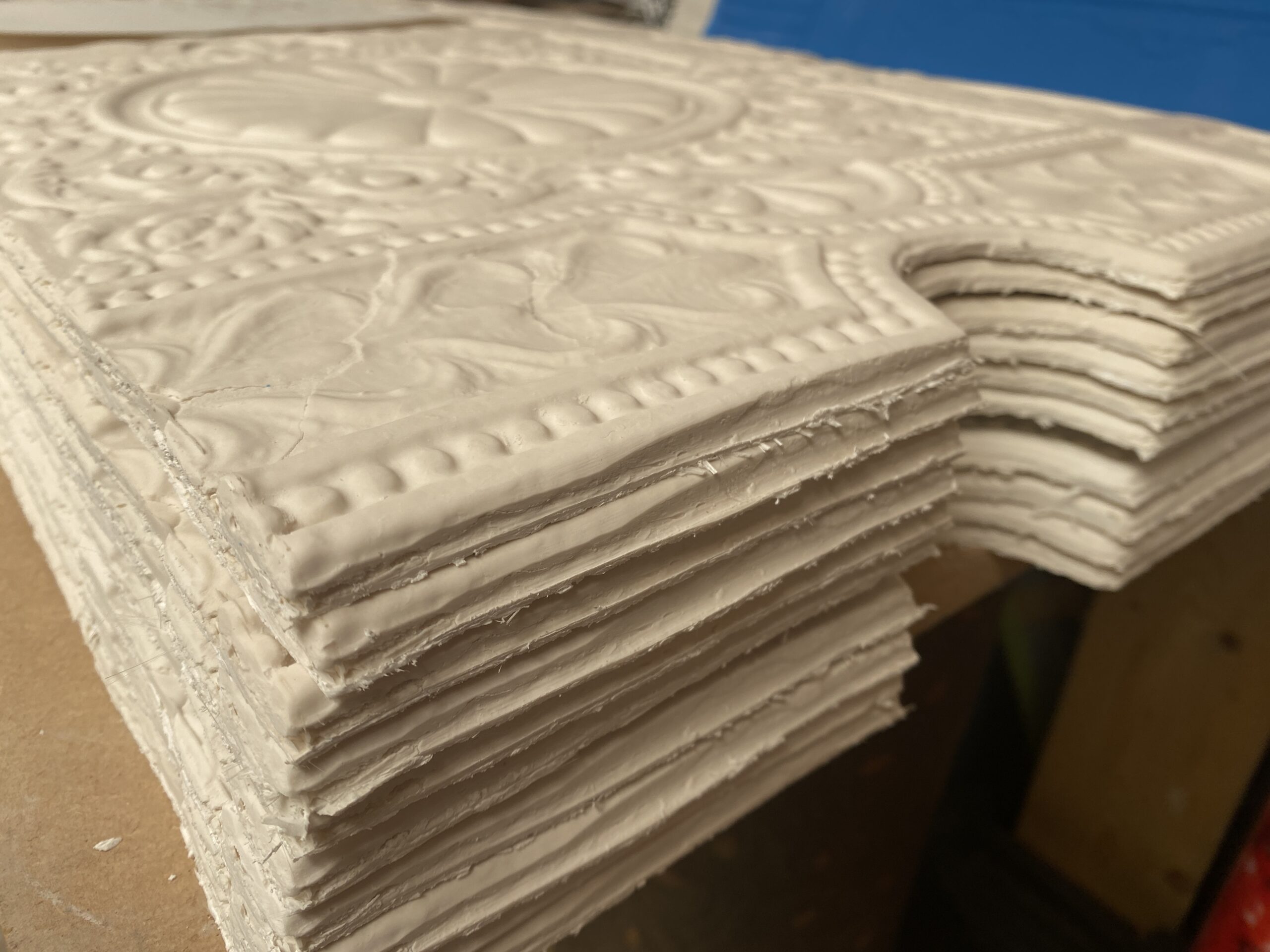
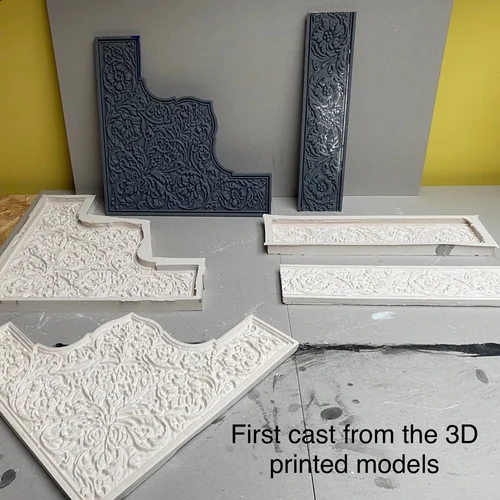
Frank stabilised and mounted original fragments to create a master of each design for making moulds, casting 75 replica panels in all. Frank then returned to site and re-instated both Lincrusta friezes around the room, making repairs and seamlessly blending old with new. Once painted you wouldn’t know which is the original.
Lincrusta continues to be British-made, manufactured in Morecambe, Lancashire. ‘Linenfold’ is a design from the current collection, introduced in the 1950s. This design was installed at Royton Town Hall below the two friezes.
This representation of oak panelling was created with the help of master craftsman Ernest Dobson of Burnley c.1950. Mr Dobson was ‘probably the most knowledgeable teacher of Graining and Marbling of the 20th Century’.
(source: The Life and Times of Ernest Dobson, Grainer, Marbler, Decorative Painter, by John Fleming and Terry Taylor, 2006)
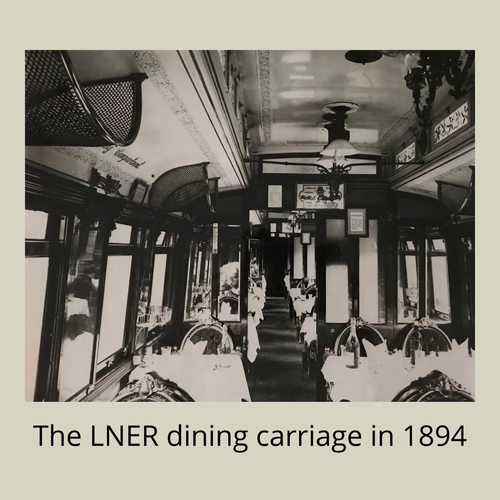
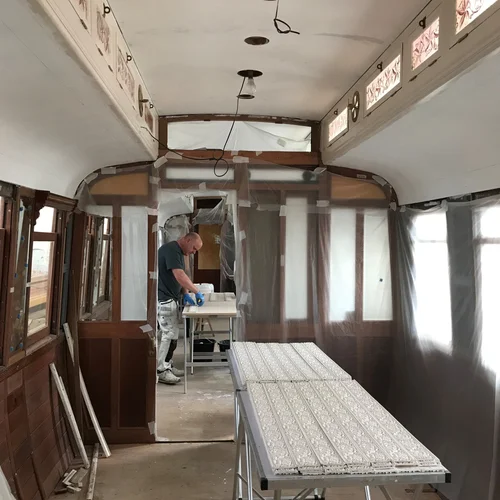
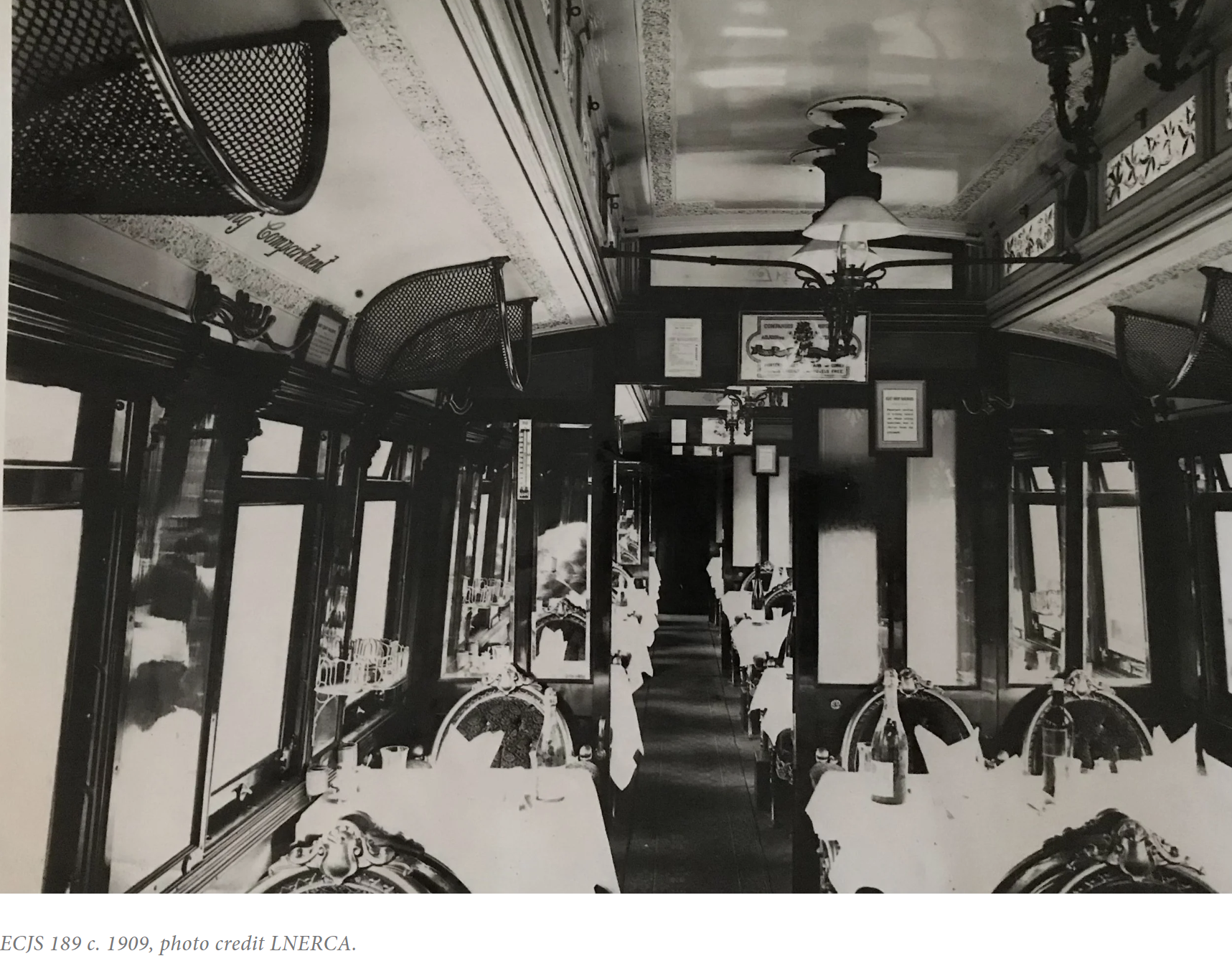
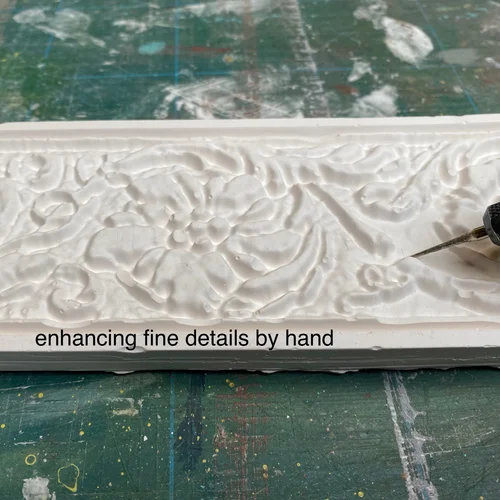
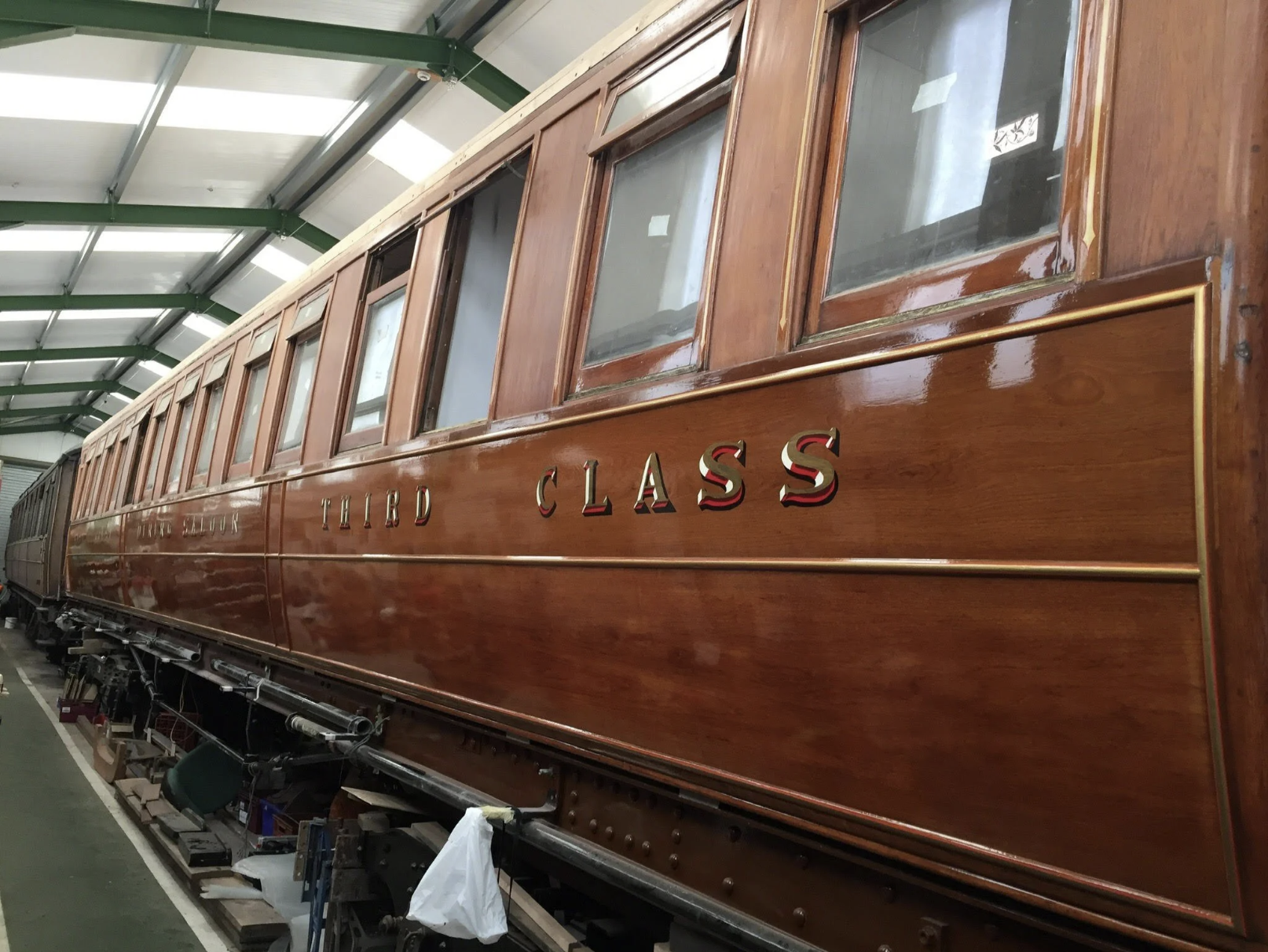
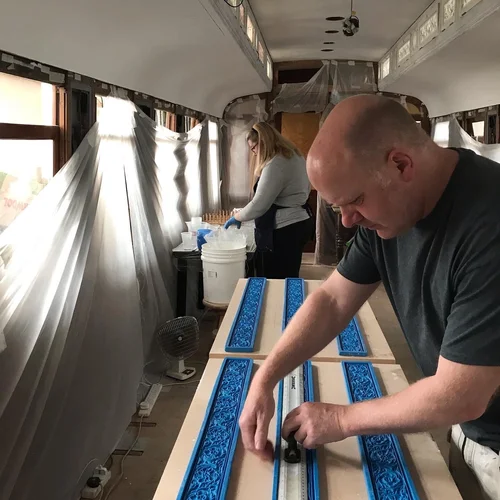
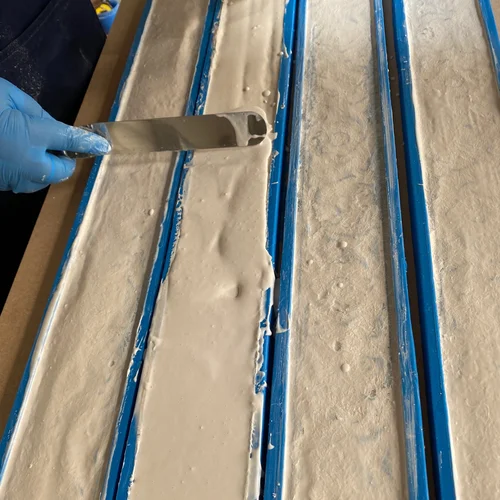
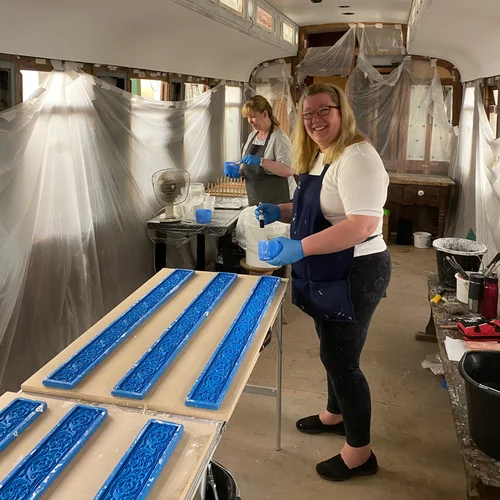
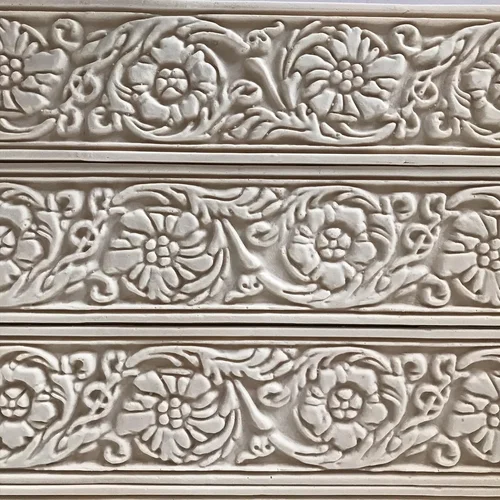
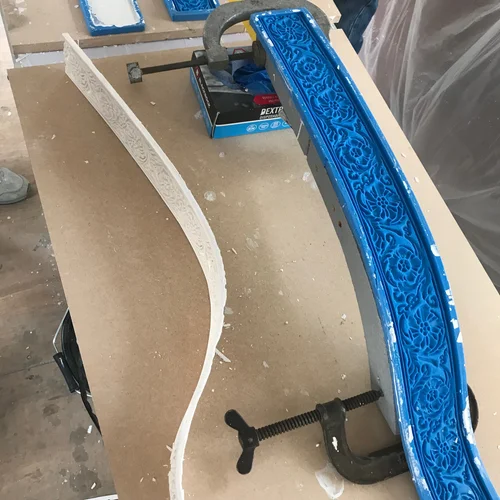
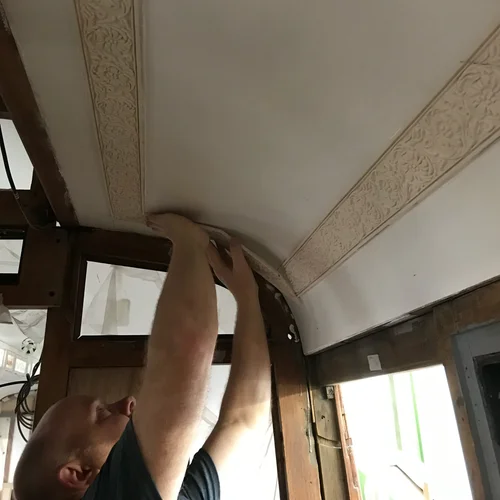
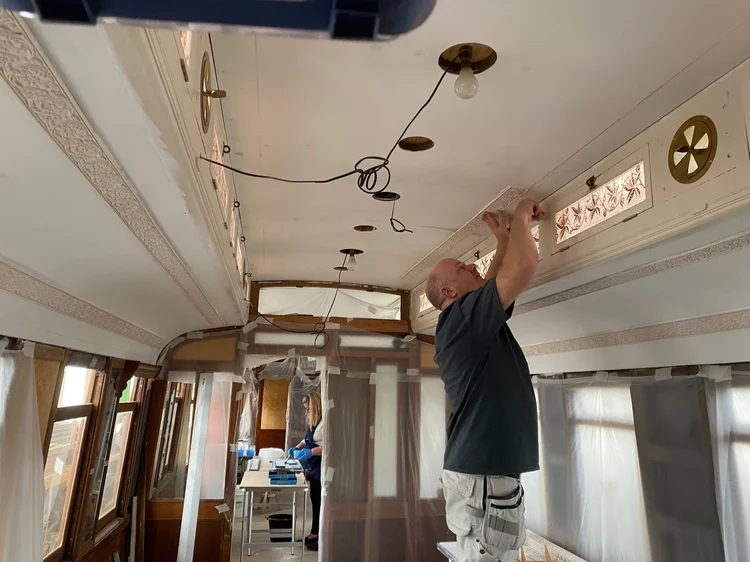
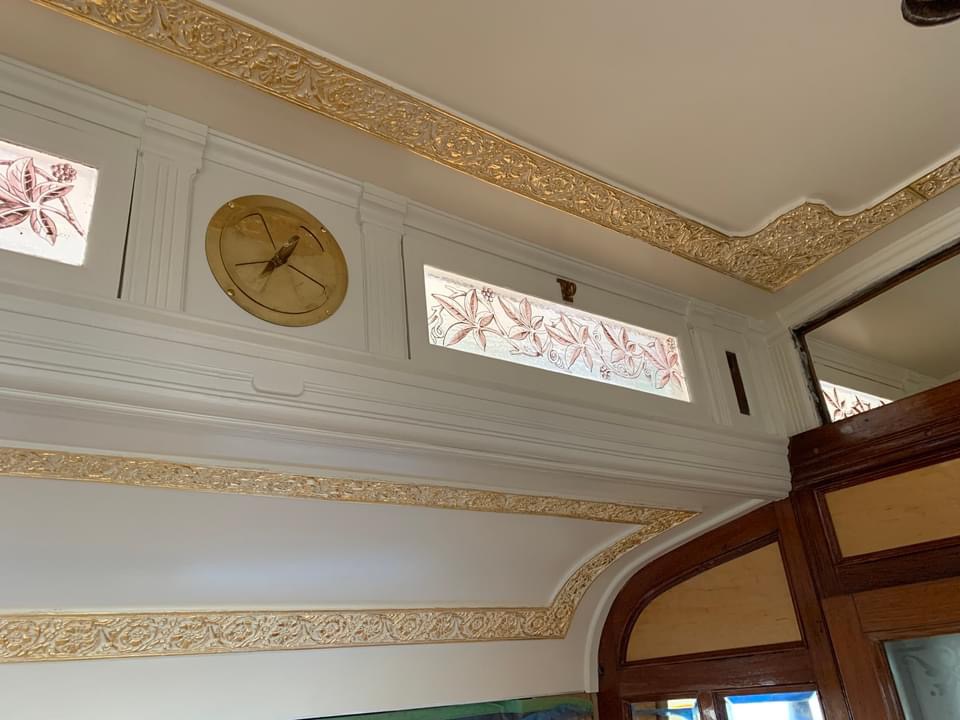
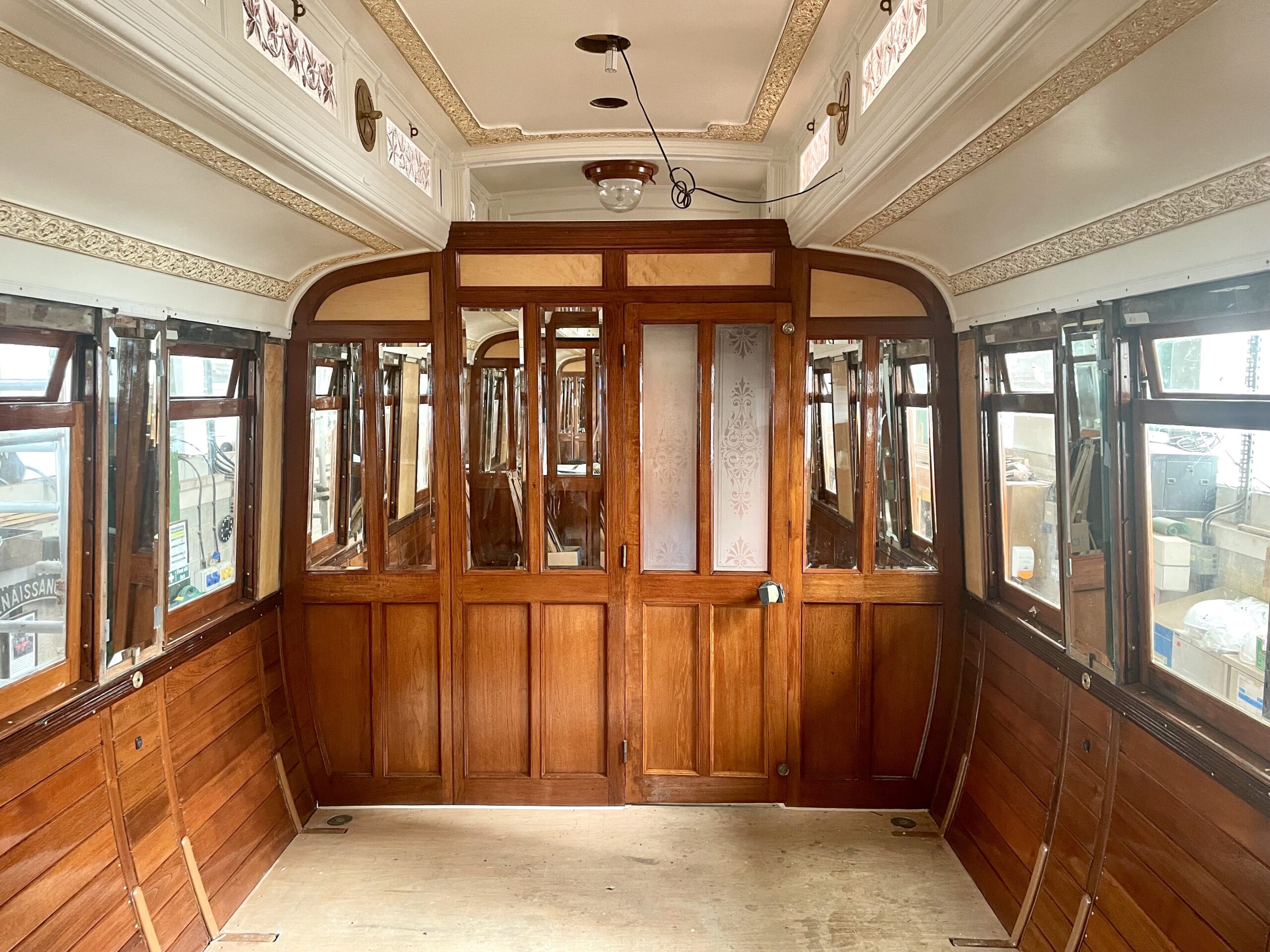
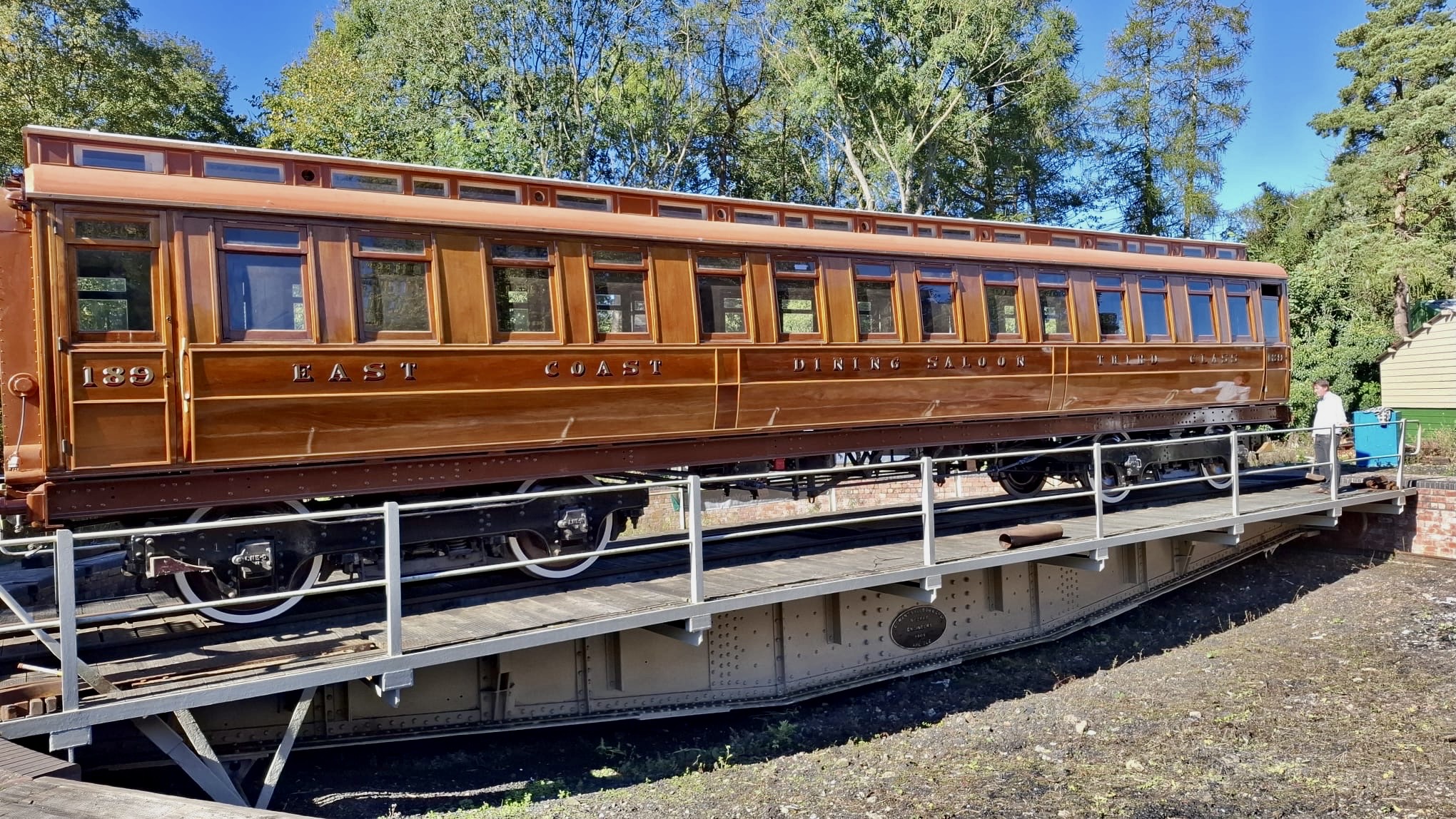
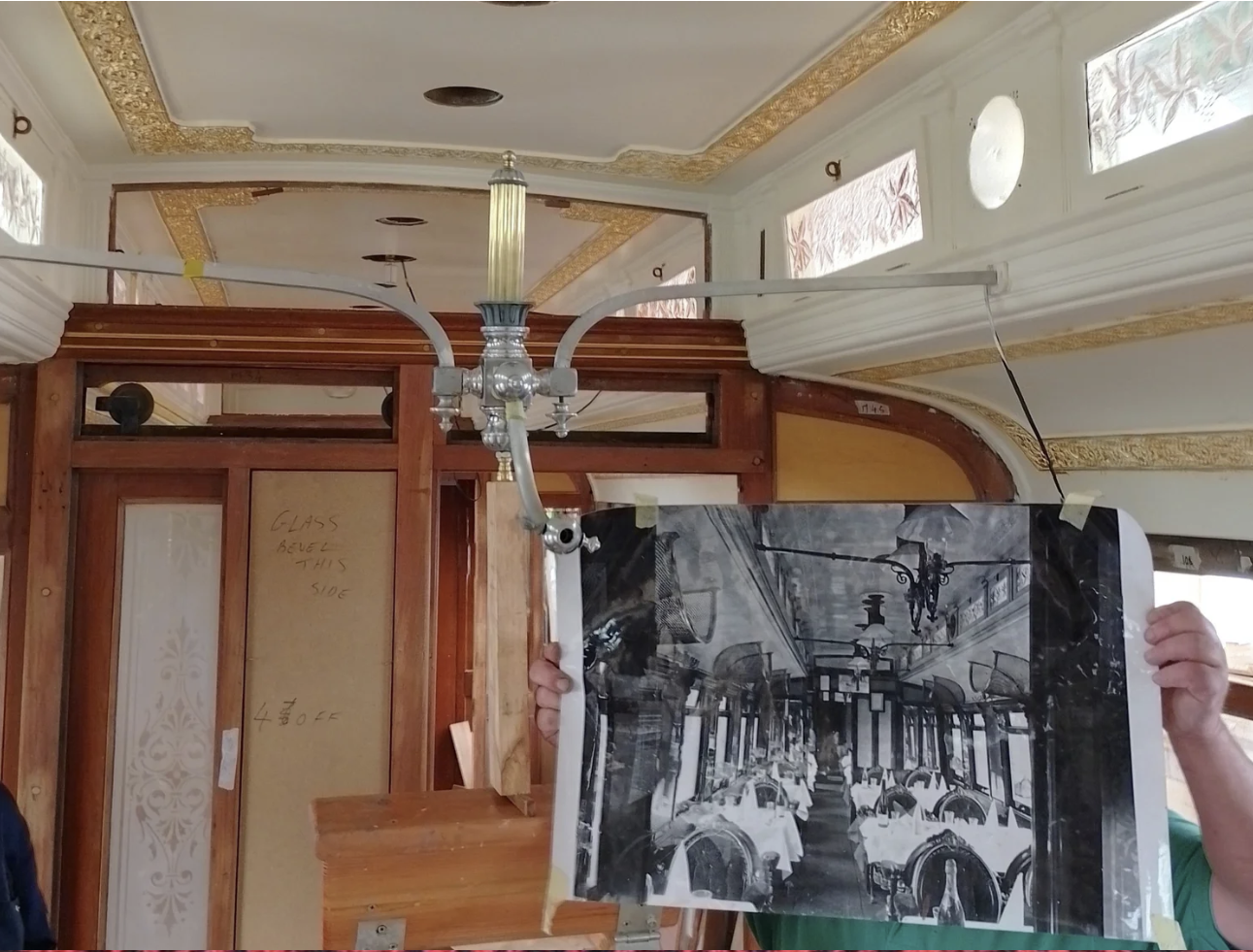
Frank was privileged to be asked by Helena Brazil, of Lincrusta Heritage, to assist with re-creating a historic Lincrusta border for this on-going Victorian dining car restoration for the LNER Coach Association. When this restoration is fully completed the dining car will run on the North Yorks Heritage Railway and we look forward to visiting again in due course!
Read our blog about the on-going restoration journey of LNER ECJS 189.